About the Author
Former Journalist
Lily Parker
Hi, I’m Lily Parker from the Planet Life editorial team. As a former journalist, I’ve honed my research skills, and I’m passionate about exploring global cultures. I write about unique traditions and fascinating customs from around the world. My goal is to spark your curiosity and show you a different side of the planet.
Just 10 minutes of tidying breaks the cycle of searching, wasteful spending, and exhaustion.
This article is a practical guide that illustrates this “systemization” through storytelling. The goal isn’t to scold, but to equip you with designs that actually work in real life (visualizing your current state, identifying hotspots, creating flow paths, and exit points for letting go).
A 10-minute timer, the red circle 3-point method, an OUT box at the entrance, address labels, daily sound triggers, Before/After photos, and small rewards on days 3, 7, and 14. Each time a corner of your desk clears, space for time and thought quietly expands.
Scattered reality
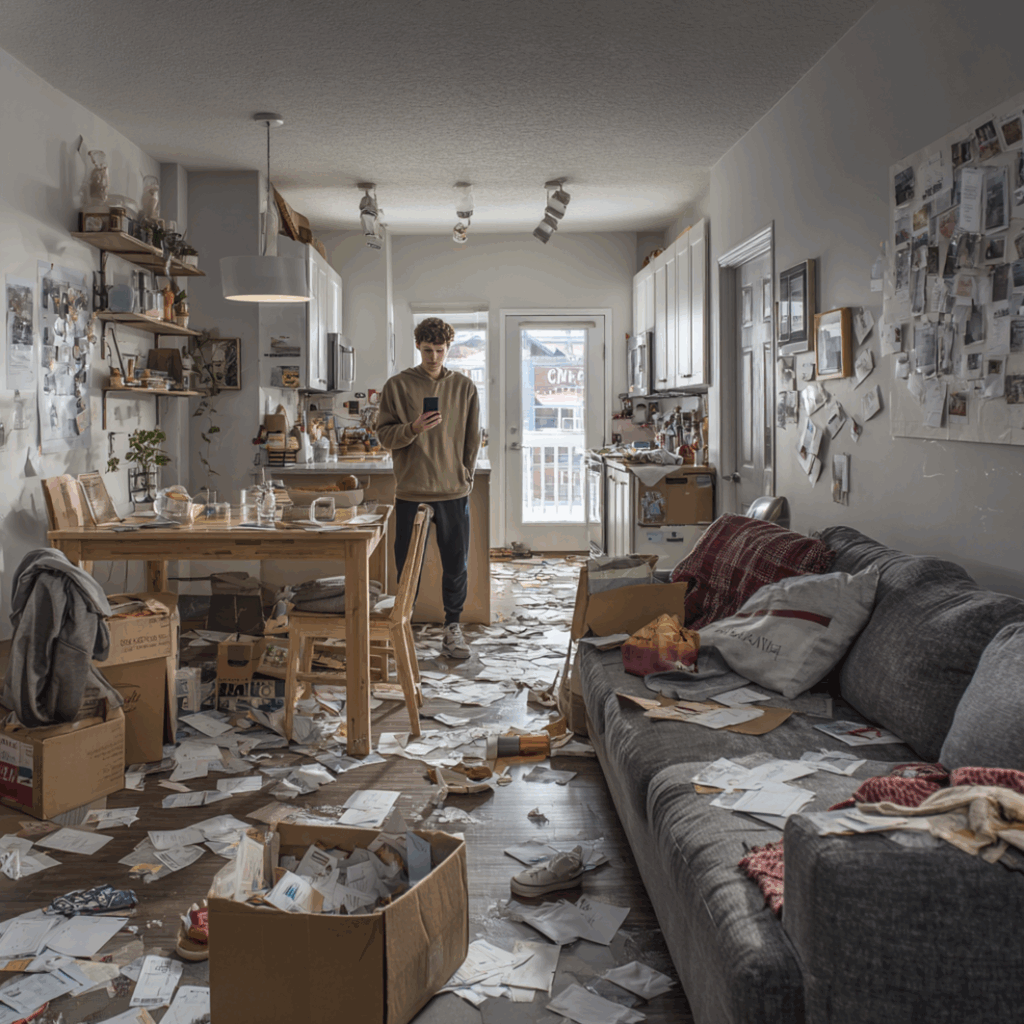
Portland, Oregon. Product designer Casey Morgan was losing five minutes every morning searching for her keys. Mail piled at the edge of the dining table, delivery boxes by the front door, a hoodie discarded on the sofa. She used to blame her messiness on “weak character,” but it was really just that the “flow of things” wasn’t designed. Every time deadlines piled up, her floor space shrank, and so did her thinking. Casey first set aside her embarrassment and photographed her room with her smartphone. The magic begins when you face reality head-on.
— Tips : Take “as-is photos” of your room from four angles. No excuses—visualize first. Name the album “Today’s Zero.”
10-Minute Spell

Trying to do everything leads to burnout. So I introduced a “just 10 minutes” timer. I set the alarm to the chorus of my favorite song. When the 10 minutes are up, I always stop—leaving it unfinished. The trick is to leave room for wanting to do more next time. When I finished, I could see half the table. Just 10 minutes, yet my morning breath felt deeper. Casey realized: Magic is about keeping it short, doing it daily, and repeating.
— Tips : Pin a “10-minute fixed timer” to your phone’s home screen. Create a short playlist with just 1-2 songs.
Map of Clutter

Clutter has its “sources.” Casey circled them with a red pen while looking at photos—next to the entryway mat (temporary luggage stash), dining room edge (pile of mail), sofa side (nest of charging cables). Hotspots are concentrated in three areas. Tackling specific points is faster than attacking the whole mess. She planned to clear the “traffic jams” one by one in 10-minute bursts, three times total.
— Tips : Mark the three hotspots with red circles on a floor plan or photo of your home. This week, tackle only those three points, one after another, for 10 minutes each.
Box with an exit

My home has an “entrance” (for buying and deliveries) but no ‘exit’ (for letting go). I placed an OUT box for donations by the front door and set rules: ① Put in items unused, ill-fitting, or duplicates. ② Once full, immediately take it to the donation center. ③ If unsure, take a photo before adding it. The guilt of discarding lightens when it finds a “new home” through donation. As the OUT box fills, my home grows lighter and my choices quicker.
— Tips : Label a 45L paper bag or box “OUT.” Full = time to take action. Save donation locations to your phone’s favorites.
Designing the home’s traffic flow

Clutter happens because “the designated spot is too far away.” Mail temporarily lands on the entryway tray, keys go on the wall hook, bags into the basket under the bench. Cables are gathered in a shallow box beside the sofa, creating a “just toss it in” system. People won’t stick with things if they’re too much trouble. When tidying up, “being able to put things back without hesitation” wins over “neatly arranging everything.” We made the 3-minute path from coming home the same for the entire family.
— Tips : Place the “three essential tools” in the entryway—tray (for mail), hook (for keys), basket (for bags). Keep the return distance within one step.
Visible results

Motivation won’t last if it’s invisible. Casey took “before/after” photos from the same angle and arranged them in an album. She also stuck a small checklist on the fridge, marking days she managed 10 minutes with a checkmark. She set small rewards for 3 consecutive days, 7 consecutive days, and 14 consecutive days. Watching the white area in the photos slowly increase made her brain register pleasure. Habits aren’t driven by obligation, but by reward.
— Tips : Create a “Before/After” album and take photos from the same angle. Place your achievement checker on the refrigerator. Set self-rewards for 3, 7, and 14 days.
The Address of Items

Items without addresses get lost. Batteries go in the “front left of the tool drawer,” manuals on the “blue-labeled file,” medicine in the “white box on the top kitchen shelf”—putting addresses into words and labeling them makes them clear to everyone. Organize storage by “least amount of opening required.” Frequently used items go lidless and front; items used a few times a year go top and back. Time spent searching turns into time for music.
— Tips : Label frequently used items in 3 categories with “address labels.” Minimize lids (use only removable ones). When putting things back, say the address aloud to confirm.
Keep the flow going

Success with 10-minute tasks hinges on when you do them. Casey triggers hers by starting the dishwasher after dinner, dedicating the 10 minutes until it finishes to tidying up. When the noise stops, she’s done. Same two songs for background music. Habits revolve around three points: cue, action, reward. On tired days, narrow the scope further—just the right half of the desk, just around the sofa. Keeping it small and consistent is ultimately the fastest way.
— Tips : Use household sounds as triggers (dishwasher, laundry, coffee brewing). Declare your scope before starting (e.g., “just the right half of the desk”).
The same map as my family

At first, my roommate Sam just watched. Casey didn’t scold him; she shared the map—three hotspots, the location of the OUT box, and the 10-minute schedule. On Saturdays, she proposed a “shared 10-minute sprint,” ending the game when the timer rang. No blame, no scoring, just gratitude. People stop when blamed, but keep going when praised. A home is easier to maintain with others.
— Tips : Share a “map” with family/roommates. Do the 10-minute sprint together once a week. Afterward, always say “That helped.”
A room where expenses decrease

Once tidying is organized, duplicate purchases disappear. Visualize stock and set inventory limits (e.g., shampoo: max 2 bottles). For online orders, open boxes at the door and immediately fold cardboard for disposal. Casey saw daily necessities expenses visibly drop within a month. Rooms became quieter, and mornings shorter and more organized. This 10-minute magic works in three directions: time, money, and peace of mind.
— Tips : Use a “quantity cap system” (label quantities). Open online packages at the door → fold cardboard immediately and OUT. Create a “Zero Duplicates” tag in your household budget app.
Habits That Grow

Three months later, Casey’s “10 minutes” became as routine as brushing her teeth. Even on busy days, before trips, or after guests left, she could squeeze in 10 minutes. Her room approached a state where she could “invite people over anytime,” and her work focus increased. The secret wasn’t willpower, but design. Casey looked back at the first photo in her album and smiled softly. She no longer called that mess “part of her personality.”
— Tips : Review the “first day photo” in your album monthly. Visualizing progress fuels the next 10 minutes. Strictly defend “just 10 minutes” before and after trips.