1. Collapsed on the Path

Waterbury, Vermont. One September morning, Edward Coleman was walking his usual route — a habit he had kept since retiring from teaching three years ago, rising at six every day for the same walk. Near the forest edge, something moved in the tall grass. He stepped closer. A small fox lay there, looking up at him, unable to stand. Its eyes were frightened, but it had no strength left to run. Why had this fox appeared in front of Edward, on this particular morning?
2. Assessing the Condition

Its hind legs weren’t moving, and its body trembled in small, rapid shudders. There were no visible wounds, but it may have been struck by a car or hit something. Without hesitation, Edward removed his jacket and gently wrapped the fox inside. It didn’t struggle — or perhaps it had no strength left to. The ten-minute walk home, the fox lay still inside the jacket, breathing shallow but steady.
3. To the Animal Clinic

Edward got in his car and drove thirty minutes to the animal clinic. The vet, Donna, examined the fox and said, “There’s no external injury to the hind legs, but there may be nerve damage. It’s also malnourished. Out there in this condition, it wouldn’t have lasted a day.” When he asked about survival chances, Donna answered, “With care, there’s a possibility.” How had Edward taken the weight of those words?
4. Edward’s Life Alone

Edward had been living alone since losing his wife seven years ago. He had no children; after retirement, his morning walks and volunteer reading sessions at the library were the pillars of his days. “Do you think I can manage the care?” Edward asked Donna. “I’ll teach you everything. Please don’t try to carry it alone — ask me anything,” Donna replied. He had never kept an animal before, but Edward chose to take the fox home. There was no way to know then that this decision would become the beginning of such a long story.
5. The Care Begins

Following Donna’s instructions, Edward fed the fox liquid food every four hours, kept it wrapped in a blanket for warmth, and each day assisted with gentle movements of the hind legs for rehabilitation. The first three days, it barely moved. On the fourth day, it raised its head. On the fifth, it drank water on its own. When Edward called Donna to say, “It drank water today,” her reply — “That’s wonderful, a very good sign” — was more reassuring than anything else he could have heard.
6. Giving a Name

After two weeks, the fox could stand, and though its hind legs were still weak, it was walking a little. Inspired by its copper-colored coat, Edward named it Copper. Where the fox had once kept its distance, after two weeks it began coming closer, and at mealtimes it was eating directly from Edward’s hand. “I think it’s warming up to me,” he told Donna, feeling a little sheepish saying so himself.
7. Signs of Recovery

A month later, Copper could run. The hind legs still moved with a slight awkwardness, but it caused no trouble in daily life. Watching Copper race around the yard, nose buried in the grass, digging at tree roots, Edward could see the wild instincts returning. When Donna said, “We should start thinking about returning it to the forest,” Edward understood that she was right. But understanding something and accepting it are not the same thing.
8. The Reason to Return

“Wild animals belong in nature. If they grow too accustomed to humans, they can’t return to the wild,” Donna explained, also noting that keeping a wild animal had legal complications. That evening, Edward stood in the yard watching Copper run through the grass. It looked like an entirely different animal from the fox he had found that day. It had grown fast, grown strong — Edward felt proud of that, and at the same time, it announced how close the parting had come. Had Copper recovered this far for whom?
9. The Day of Release

On a clear October morning, Edward placed Copper in a carrier, walked the path, and went a little into the forest near where he had found it. He opened the carrier. Copper didn’t move for a while. Edward said nothing. About a minute passed. Copper put one front paw outside the carrier, sniffed the ground. Then it ran — across the fallen leaves, and disappeared into the undergrowth. Until its retreating form vanished completely, Edward stood and watched.
10. The Quiet Walk Home

Walking home with an empty carrier, there was no trace of Copper anywhere in the forest. Back at the house, Edward made himself a coffee and looked at the spot where the blanket and water bowl and dishes had been — now clean and put away. That night, the house felt quieter than usual. He had been accustomed to living alone for sixty-eight years. And yet a fox he had been with for barely a month was gone, and the silence was this heavy.
11. The Front Door the Next Morning
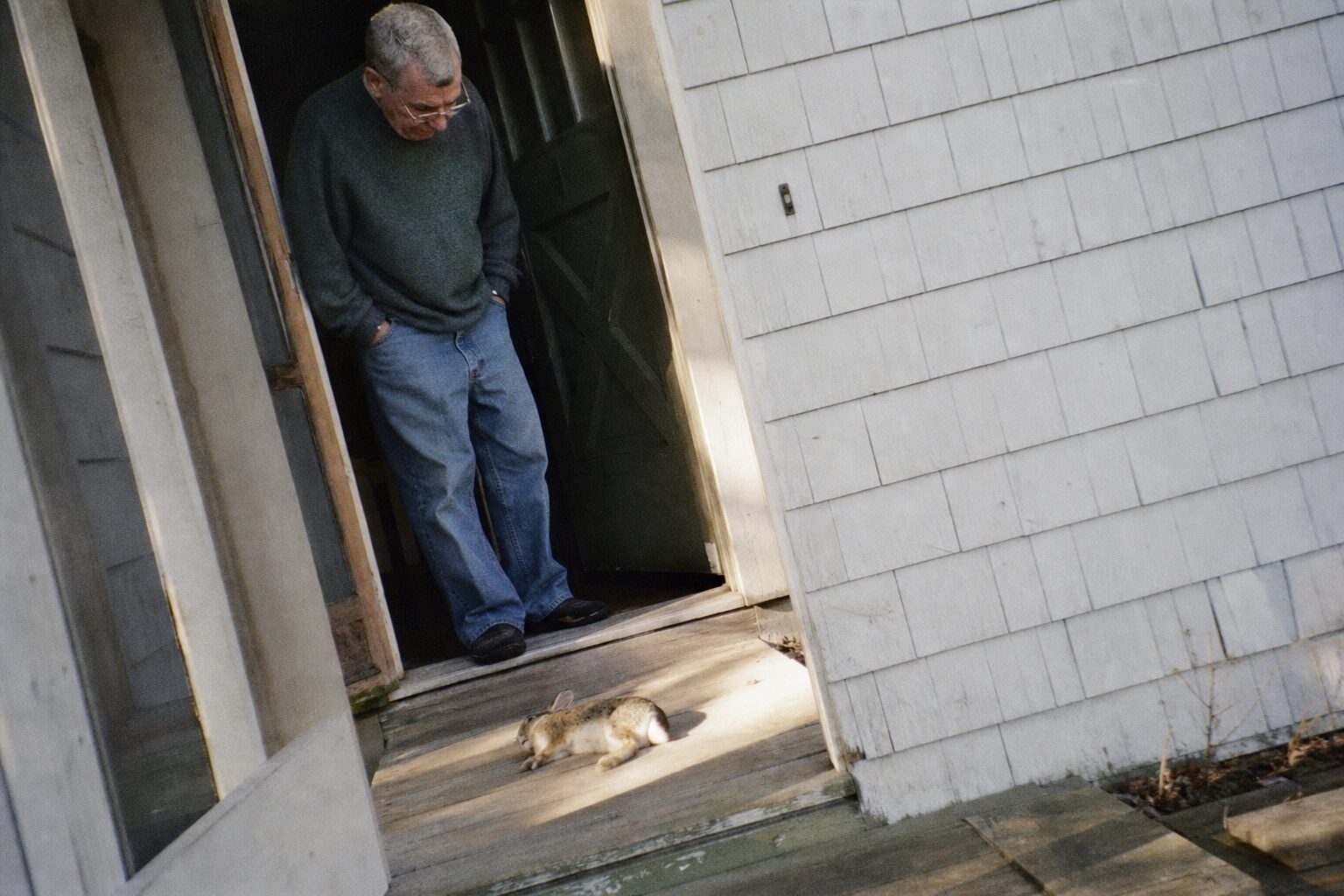
The next morning at six, Edward opened the front door to head out for his walk. There was something on the step. A wild rabbit. A small wild rabbit lying at his front door, as though someone had placed it there deliberately. His first thought was that a stray cat had left it, but strays rarely came this way. Edward buried the rabbit in the yard and went on his walk, but the strange scene stayed with him through the whole of it. Who had left it there, and why?
12. The Morning After That

The following morning, there was something at the door again. This time a mouse. Placed the same way as the rabbit the day before, right at the threshold. Two small animals left at his front door on consecutive days was beyond coincidence. Was a person leaving them, or some animal? That evening, Edward decided to install a small camera at the entrance.
13. Setting Up the Camera
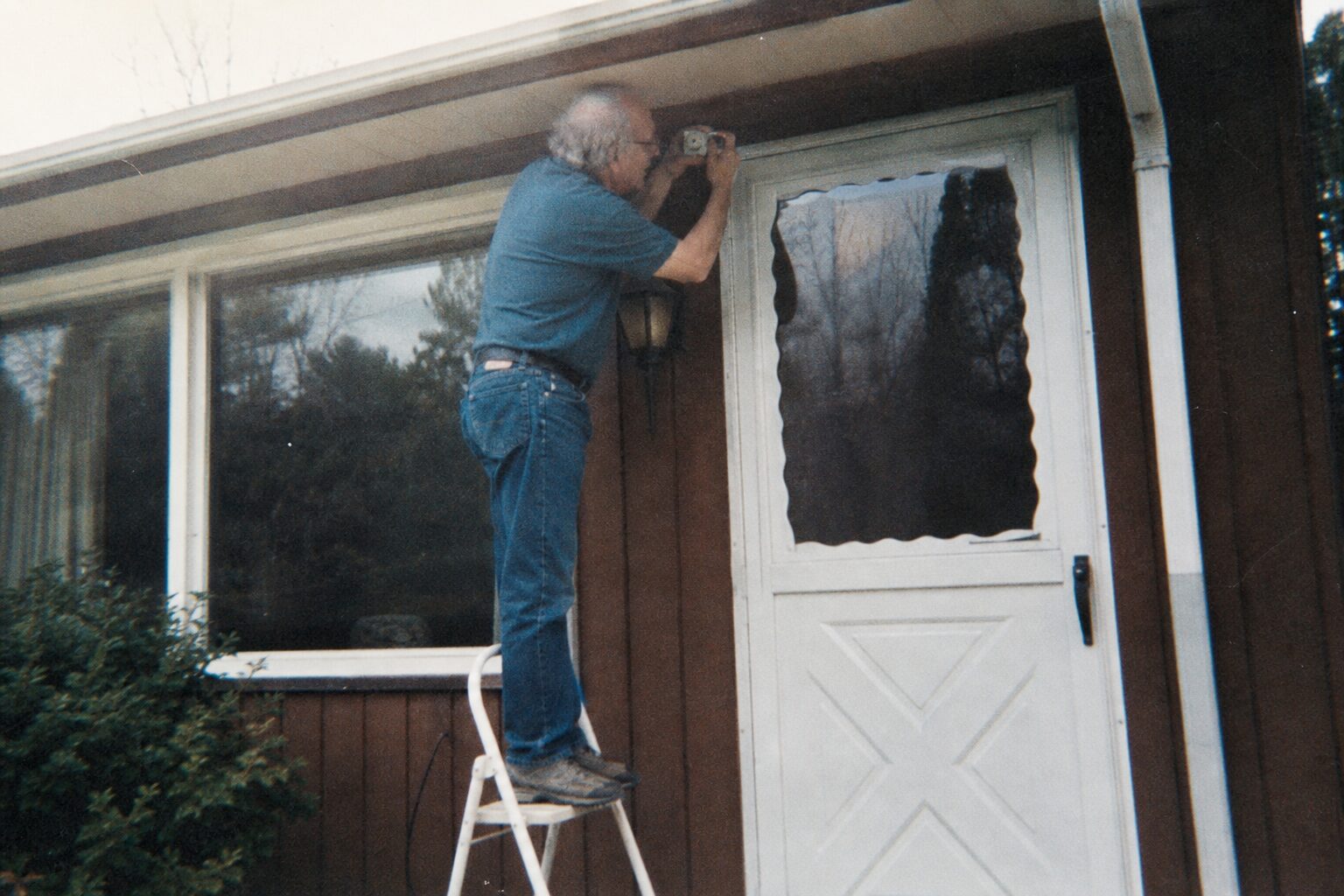
When he consulted Donna, she said, “That’s a good idea. Please keep a record of what kind of animal it is.” Edward installed a small night-vision camera beside the porch light, and the next morning checked the footage — another small animal had been left. He looked at the recording. Around three in the morning, something was moving. Edward zoomed in on the image. When he saw what was there, he forgot to breathe for a moment.
14. What the Camera Captured

On the footage was a fox. It came to the front door with something in its mouth, set it down on the ground, looked up at the door for a short moment, then turned and left. Edward stopped the video and watched it from the beginning again. The coat color was hard to make out in the footage, but the size of the body, and the faint awkwardness in the way the hind legs moved, looked familiar. Was this Copper — or an entirely different fox, come here for some reason?
15. Checking the Coloring

Edward showed the footage to Donna. “Look at the hind legs,” he said. Donna replied, “The right hind leg does look slightly unsteady.” “I think it’s Copper,” Edward said. Donna acknowledged, “I can’t say for certain, but it’s possible.” It had been less than a week since returning it to the forest, and yet a fox was coming to the house in the night and leaving things behind. Edward still couldn’t quite put the meaning of that into words.
16. It Continued Every Morning
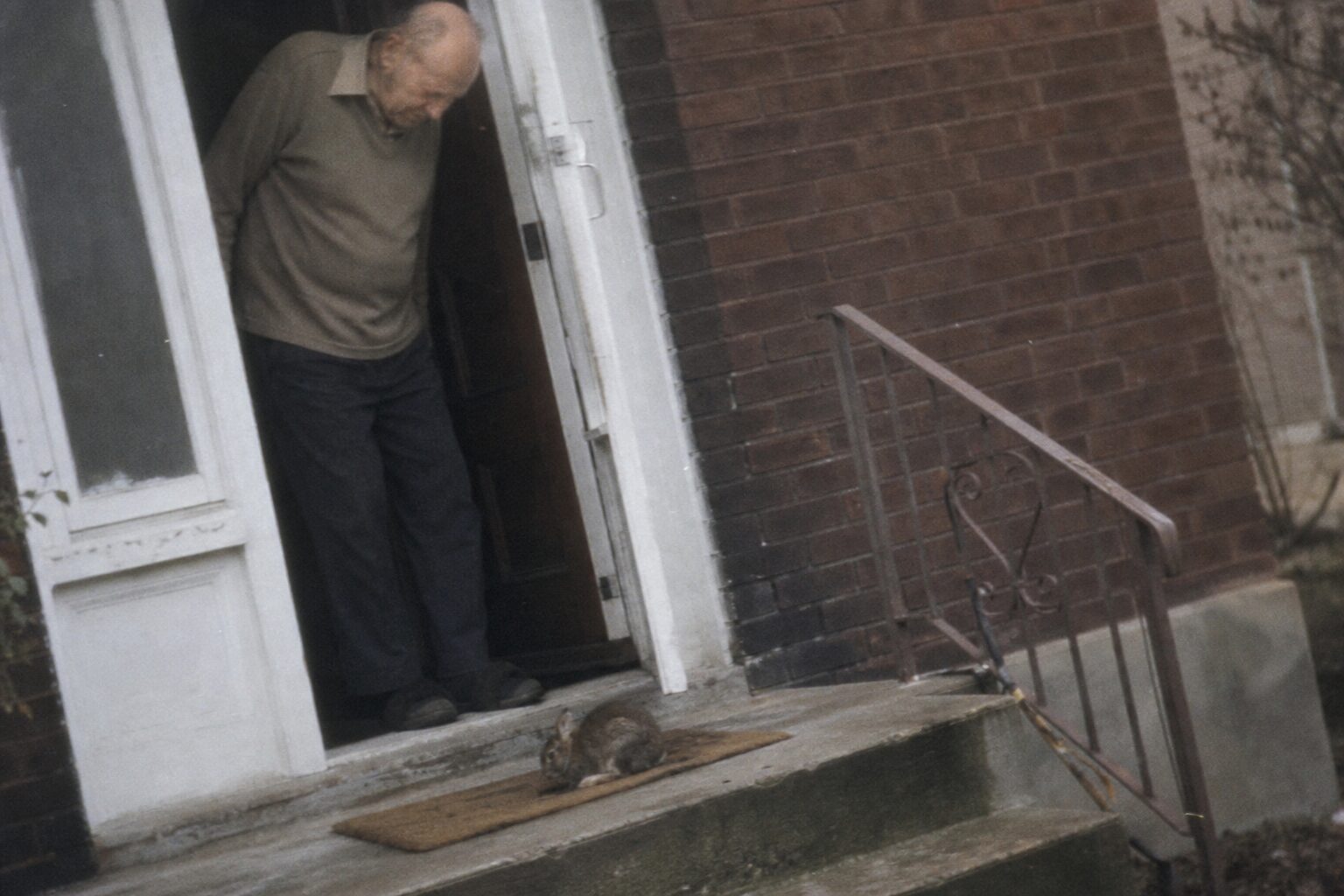
Every morning after that, something was left at the door. Mice, rabbits, occasionally birds. Every morning when he checked the camera, the same fox had visited around three in the morning. Donna said, “There are rare documented cases of wild foxes bringing food to humans’ homes.” She continued, “One theory is that it’s an extension of the behavior where a parent teaches cubs to place prey in a safe location.” Listening to that, Edward wondered — how did this fox know Edward’s home was a “safe place”?
17. Still Going After a Week

A week passed and it continued. Edward changed his walk time and waited at the forest entrance. A few days later, he saw a shadow moving in the undergrowth. It was looking at him steadily. Edward didn’t move either. The shadow didn’t move. For about a minute they held each other’s gaze, and then the shadow was gone. That was all it was — but Edward felt something certain in it.
18. Into the Second Week
The second week came and it continued. Edward was keeping count of the animals left behind. In fourteen days, fourteen times — not a single gap. “What do you think it’s doing this for?” Edward asked. Donna said, “I can’t say for certain. But perhaps it’s trying to communicate something.” What was it trying to communicate — that question stayed with Edward for quite some time.
19. Still Continuing at Three Weeks

The third week came and it continued. Every morning when he checked the camera, the same fox was there. And he noticed: the movement of the hind legs had become more natural than before. It had fully recovered. It had returned to the wild, was feeding itself, running — and still came here every night. “That’s good,” Edward thought quietly, watching the footage. Copper was alive, without question.
20. The Morning of the First Month
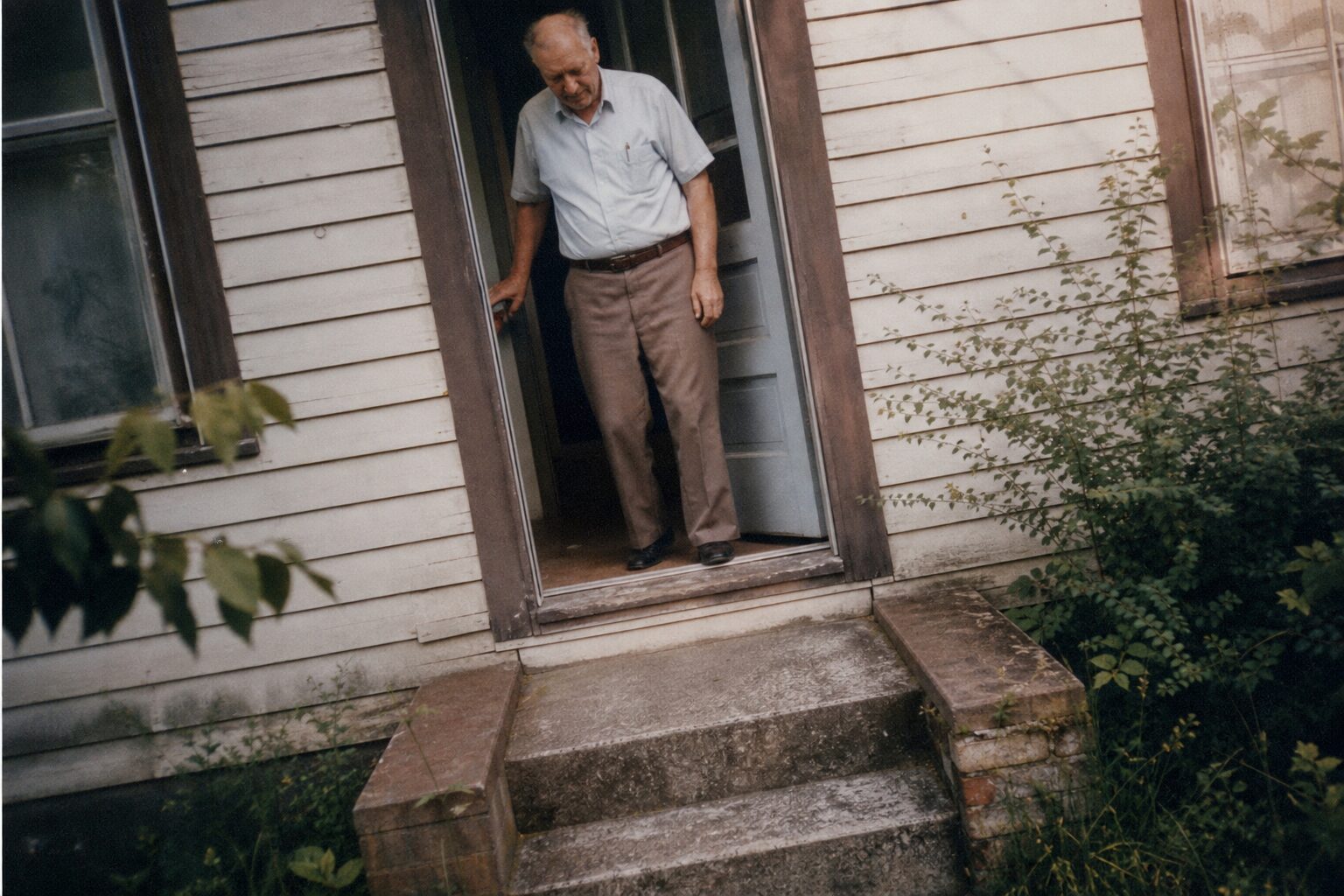
On the morning of the one-month mark, Edward opened the front door as usual. There was nothing. He checked the camera — no fox had come the previous night. He made coffee, went out for his walk, and went as far as the forest entrance, but there was no movement in the undergrowth. “I suppose it’s over,” Edward murmured. Those words dissolved into the morning air, more quietly than he had expected.
21. The Morning After It Stopped

The next morning, too, there was nothing at the door and nothing on the camera. That night, Edward reinstalled the camera he had taken down. Something made him want to. But the next morning there was nothing on it either. He turned his eyes to the yard — where the traces of one month were layered into the soil. What Copper had brought lay sleeping beneath that earth. Did the stopping mean it was over?
22. Reporting to Donna

Edward called Donna. “It stopped coming yesterday,” he said. “It kept on for a whole month,” Donna replied. “Twenty-nine days,” Edward answered, and there was a long silence on the other end of the line. “Why a month, why it stopped — I can’t explain it,” Donna said quietly. The fact that there was no explanation seemed itself to speak to the weight of what had happened.
23. Reviewing the Footage

Edward went back and watched all twenty-nine days of footage from the beginning. Each time, arriving at the same hour, leaving something, looking up at the door, going back. All twenty-nine visits were the same — except for the last one. On the final night, the fox looked up at the door for longer than on any other night. It looked up for about thirty seconds before turning to go. And that was the last time. Why, only on that night, had it looked up for longer?
24. The Twenty-Ninth Night’s Footage

Edward replayed the twenty-ninth night’s footage many times. The scene where the fox looked up at the door for thirty seconds — he watched it again and again. What was it thinking, what was it trying to communicate — he didn’t know. What he did know for certain was that it had looked up for thirty seconds, then quietly turned away, and that was the last time. Edward paused the footage and kept staring at the fox’s face. Its profile seemed to be saying something he couldn’t quite hear.
25. Reading Aloud at the Library

The following week, Edward went to his library volunteer reading session. It was his usual routine, but that day he chose a different book than usual — a picture book featuring a fox. When he began to read, the children all turned their eyes to the pages at once, and no one looked away. Edward turned the pages a little more slowly than usual, feeling somehow as though he was reading this story for himself.
26. A Change on the Path

He continued his morning walks after that, and looking toward the undergrowth at the forest entrance became a habit. Many months later, one morning, he saw two shadows in the undergrowth. A large fox and a small one. When Edward stopped, the shadows stopped too. He crouched down slowly, and for about thirty seconds they held each other’s gaze before the shadows disappeared. Whether it was Copper and a cub, or completely different foxes — Edward couldn’t know. But still, something warm spread inside his chest.
27. A Final Report to Donna

Edward called Donna. “Today in the forest I saw two foxes. A large one and a small one,” he said. “That’s good news,” Donna replied. “I don’t know if it was Copper,” Edward said. “I don’t either,” Donna said. After hanging up, Edward opened the folder of camera footage on his computer. Twenty-nine days of recordings were lined up there. He couldn’t bring himself to delete them.
28. Beneath the Garden Soil

At the end of autumn, Edward tended the garden. In the spot where he had buried what Copper had brought, grass had grown in. Edward dug into it a little, and breathed in the smell of the earth. Twenty-nine traces lay sleeping beneath this soil. He set down the shovel, looked at that spot for a while, and then covered the grass back over. Next spring the grass will grow here again, Edward thought. And somehow that felt like something important returning to the earth — and that wasn’t a bad thing.
29. The Path Has Changed

The next year he walked the same path every morning. Sometimes he would encounter one; more often, he wouldn’t. When he did, Edward would crouch down. The fox would stop. They would hold each other’s gaze. That was all. No words, no touch — just an exchange of looks. And yet why did that morning become the most fulfilled part of his day?
30. The Morning Walk Continues

This morning too Edward rose at six and went out for his walk. He passed the forest entrance and looked toward the undergrowth, but today there was nothing. Some mornings there is nothing. Some mornings there is something. On mornings when there is, he stops and crouches. Three years have passed since that autumn morning when he picked up the fox lying in the grass. Nothing is left at his front door anymore. But Edward’s morning walk has unmistakably changed since that morning.