1. The Parrot’s Words

Margaret Wilson, 70, lived in New Orleans, Louisiana. It had been three months since her husband Robert died suddenly of a heart attack. One evening, she sat knitting in the living room when a voice came from the corner of the room. “Look behind you.” It was Einstein — their African grey parrot. Margaret looked up, startled. Einstein had said almost nothing since Robert died. But now, in a voice that sounded exactly like the husband she had listened to every day for forty years, the bird had whispered those words.
2. A Voice That Sounded Like His

The next morning, Einstein repeated it again. “Look behind you.” “Behind the clock.” As Margaret carried his food to the cage, she looked directly into the parrot’s eyes. Robert had always said that African greys don’t simply repeat words — they sometimes understand context. But now that Robert was gone, why was this bird choosing only these words, over and over?
3. First Words in Three Months

Two nights later, Einstein said something new. “Margaret. Make sure you find it.” The tone was completely Robert’s — the low, quiet voice she had known for forty years. Margaret stood frozen before the cage, her hands trembling. “Did Robert leave something behind for this bird to tell me?” she whispered, tears filling her eyes as she reached for the phone to call her daughter Claire.
4. How They Met

Margaret and Robert had married forty years ago. Robert worked as an engineer at a local construction firm; Margaret taught at an elementary school. In the house they moved into together in New Orleans stood a tall grandfather clock inherited from Robert’s grandfather — the oldest thing in the home. Their life together had always moved to the slow, steady rhythm of that clock.
5. Einstein’s Story

Einstein had come to the Wilson home twenty-five years ago — a three-year-old African grey Robert received from a friend. The bird was quick-minded and soon learned everyone’s names, eventually mimicking Robert’s cadence so precisely it was uncanny. Margaret had been wary of parrots at first, but Einstein’s intelligence won her over. Before long, the bird had become their third family member.
6. Their Morning Ritual

Every morning, Robert would open the cage door, let Einstein settle on his shoulder, and read the paper over coffee. The two of them exchanged sounds like a conversation, with Einstein adding his own variations to Robert’s words. Margaret always laughed watching them. Robert had talked to Einstein every single day without fail. Did the parrot still hold all of it?
7. The Bond Between Them

When Robert was hospitalized, Einstein barely touched his food for three days. The moment Robert returned home, the parrot called his name and flew around the room. “It’s like family coming back,” Margaret said. Robert held Einstein against his chest and replied quietly: “He knows. No matter where I go, he remembers where home is.”
8. The Last Conversation
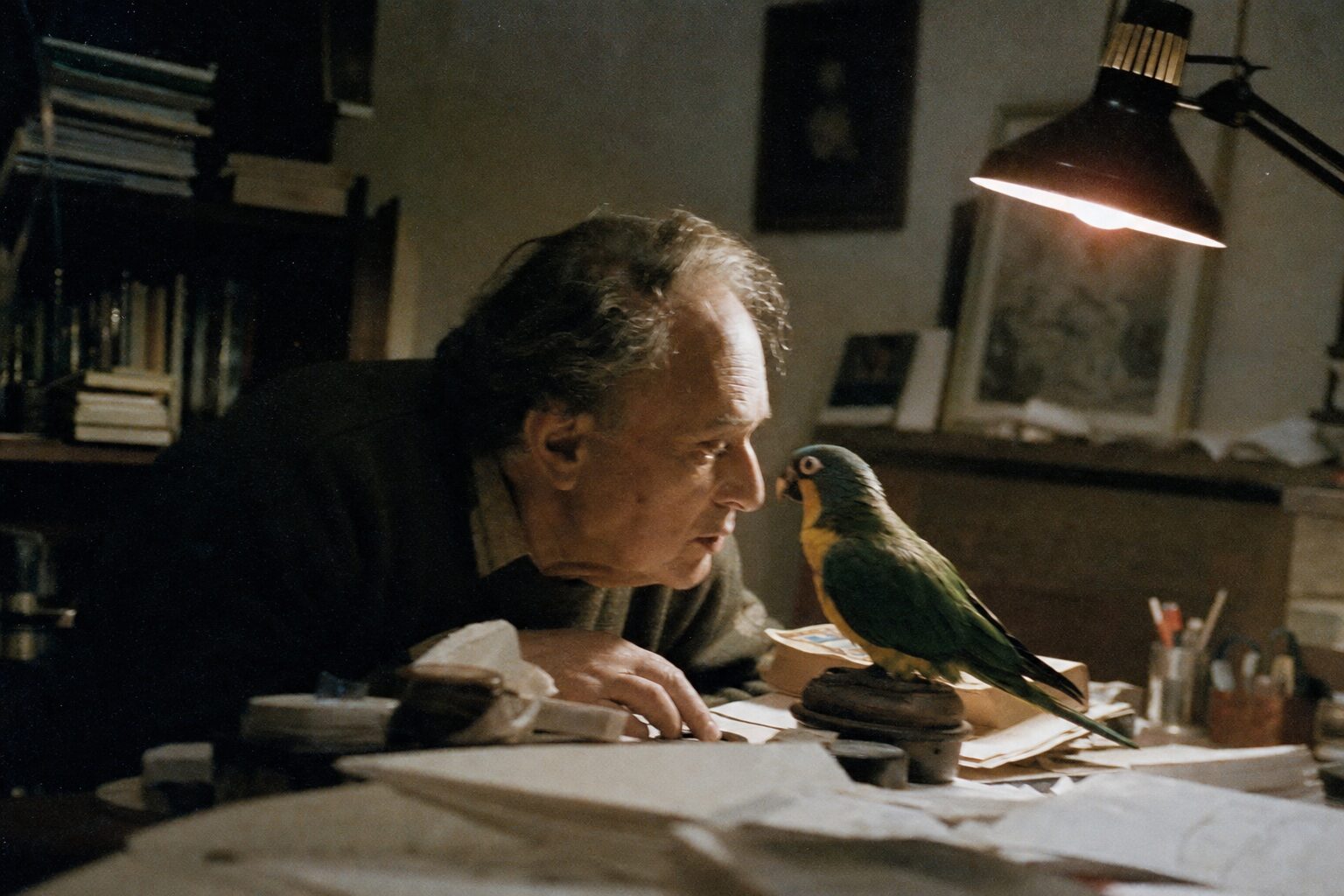
Four days before Robert died, Margaret heard him talking at length to Einstein in the study. She caught fragments: “Do you remember… make sure to tell her… behind the clock… tell Margaret.” She thought she would ask him about it in the morning. But Robert collapsed before she had the chance. Had those words meant exactly what they seemed to?
9. The Day of Loss
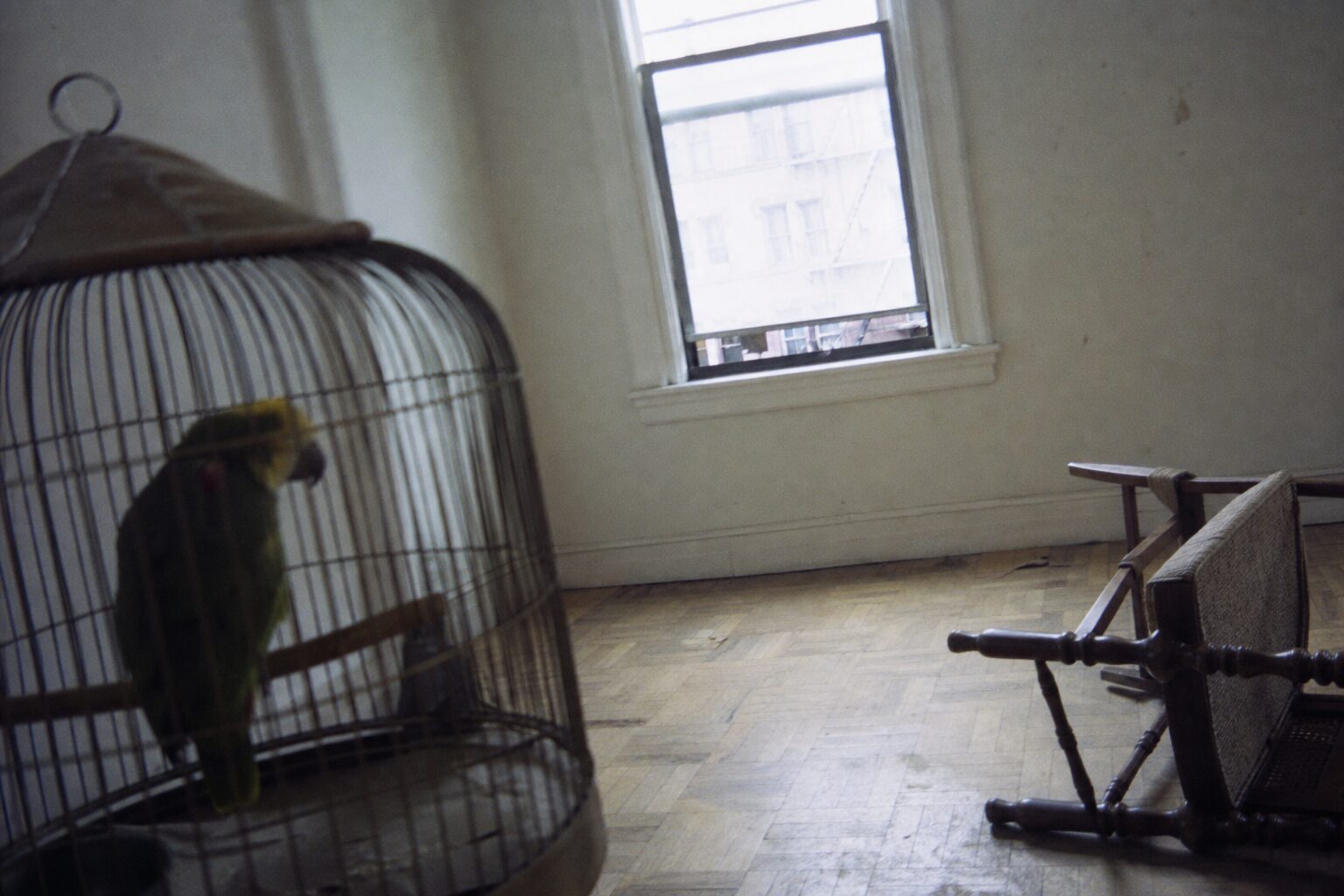
Robert collapsed on an ordinary Tuesday morning. As the ambulance arrived, Einstein beat his wings furiously inside the cage, crying out without stopping. Robert died at the hospital. When Margaret came home, Einstein was hunched silently on his perch. From that day on, the bird made almost no sound. The life the three of them had shared ended far too suddenly.
10. The Weight of Grief

Three months passed. Margaret woke at the same hour every day, cooked the same meals, ate while looking at the chair Robert would never sit in again. Each time she brought Einstein his food, his eyes seemed to search for Robert, and it broke her heart. Would selling the bird give her some distance from the pain? Or was Einstein the last living thread connecting her to Robert?
11. Claire’s Suggestion

The following week, their daughter Claire Harper came down from New York. “It must be so hard caring for him alone, Mom. Let me help find him a new home,” Claire said. Margaret almost nodded. But that evening, Einstein started again: “Look behind you.” Claire looked up from her phone. “Do you think Dad actually hid something? Could the parrot really be trying to tell us?”
12. Could He Have Left Something Behind?

Even after Claire left, Einstein’s words continued. “Behind the clock.” “Something precious from Robert.” “Find it for me.” Sitting in the dim living room listening, Margaret thought of Robert’s love of surprises. Every anniversary, he hid a small gift somewhere she would never think to look — behind books, under planters, inside shoe boxes. Could something still be waiting?
13. Words in the Night

At two in the morning, Margaret came to the living room, unable to sleep. Einstein was sitting on his perch with his eyes open, as if he had been waiting. When Margaret sat down, the bird spoke quietly. “Robert wrote it down. It’s all written down.” Turning the words over in her mind, Margaret remembered how often Robert had shut himself in the study in those final months. She wished she had thought to ask what he was writing.
14. Searching for “Behind”

The next morning, Margaret looked around the living room. Could “behind the clock” mean the grandfather clock? It stood more than two meters tall — a piece Robert had treasured. But from the front, it simply looked like there was nothing behind it but wall. She had to check anyway. Could she move something this heavy alone? Should she call Claire?
15. The Clock’s History

As she studied the clock from the front, Margaret recalled its history. Robert’s grandfather had brought it from Germany in the 1920s. Robert revered his grandfather and treated this clock as the most precious object in the house — winding its spring every month without fail, polishing its glass case. “Objects have memory,” he used to say. “Take care of something long enough, and eventually it speaks.”
16. Robert’s Habit

Robert had always loved hiding surprises. Every anniversary, he tucked a small gift somewhere Margaret would never find it on her own — in the gap between books, behind a plant pot, inside a shoe box. Einstein had been there every time, watching where Robert hid things. If Robert had told the parrot about something “behind the clock,” could it really be there?
17. Telling Claire

Margaret called Claire and explained everything. Claire booked a flight to New Orleans for the next day. “That’s so like Dad,” she said with a small laugh. “But do you really think there’s something there? Could it just be the parrot repeating things?” Margaret shook her head. “No. Einstein isn’t just repeating. He’s choosing his words. Robert always said so.”
18. Moving the Clock

Together, Margaret and Claire carefully pulled the heavy clock away from the wall. Circular marks on the floor showed it had never been moved in years. They could only shift it a little at a time. When they finally opened a gap of about twenty centimeters, Claire shone her phone light into the narrow space between the wall and the clock’s back. Something white was fixed to the wall. What could it be?
19. The Hidden Door

As Claire edged the clock further, the full picture came into view. Set into the plaster wall was a small wooden door — roughly twenty centimeters tall and fifteen wide — held shut with a small padlock. Margaret’s hands were trembling. “I never knew this was here,” she whispered. “Where’s the key?” Claire asked. Margaret turned and walked to Robert’s study.
20. The Key Marked “M”

In the back of Robert’s desk drawer lay a small silver key. A paper tag was tied to it with a single letter: M — the initial of Margaret’s name. She carried the key back to the clock and pressed it into the padlock. It clicked open. She breathed deeply, and slowly pulled the small wooden door open.
21. Three Things Inside

Inside were three items: a white envelope, a small red velvet pouch, and a folded sheet of paper. On the envelope, in Robert’s handwriting: “For Margaret.” She sank to the floor and opened it. The letter began: “I’m writing this because I think I may go before you.” The date was six months before his death.
22. What the Letter Said

Robert’s letter read: “Six months ago, the doctors told me I had a year to live. I couldn’t bring myself to tell you — I didn’t want you to worry. But I wanted to leave you something. Forty years of gratitude. And my love.” Margaret’s hands trembled so badly she could barely hold the page. Had Robert spent six months carrying this alone, smiling every single day?
23. He Had Known

Claire cried out. Margaret held her tears and read on. “My heart was worse than we thought. The surgery carried too much risk. But I wanted to spend this last year with you — exactly as we always had. So I said nothing. Please don’t be angry with me.” Margaret pressed the letter to her chest. She wasn’t angry. She only wanted, just once more, to see his face.
24. The Travel Plan

The folded paper was a travel itinerary. “40th Anniversary Trip: 10 Days in Europe — Alsace and Paris, the places Margaret has always wanted to go.” The page listed places to visit and dishes to try, written out in careful detail. Robert had never once traveled abroad, had always claimed to dislike traveling. Yet he had planned this — every detail — for her.
25. Inside the Locket
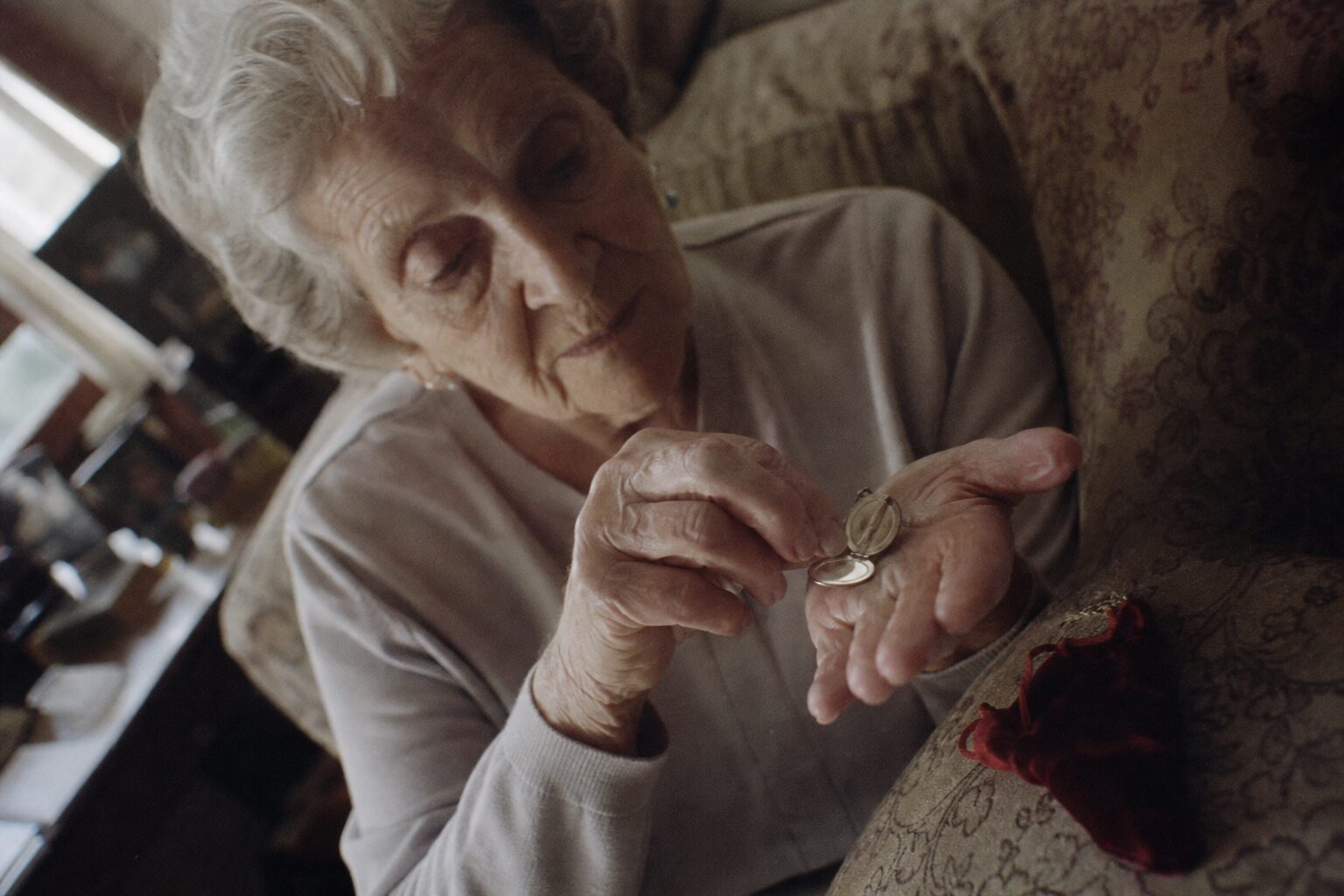
The red velvet pouch held a small silver locket engraved with the words “M & R 40.” Margaret pressed the clasp open with her thumb. Inside were two photographs — the two of them, young, taken on the bridge in New Orleans the morning after their wedding. The one photograph Margaret had spent forty years believing she had lost. Robert had kept it all along.
26. His Final Gift

The letter’s closing lines read: “If I go before you, ask Einstein. I told him where to point you. I want you to take that trip — bring Claire. Enjoy it twice as much, for both of us. That is my one last wish. Thank you. For forty years.” Margaret looked up from the letter. Had this parrot truly lived all forty of those years alongside Robert? Did he still carry Robert’s voice inside him?
27. What Einstein Had Been Doing

Margaret and Claire sat together on the floor beside the clock for a long time. From across the room, Einstein spoke quietly from his cage. “Did you find Robert?” Fresh tears came to both of them. Robert had asked the parrot to keep telling Margaret until she found it. For twenty-five years, Einstein had lived beside his person. And he had kept that promise faithfully.
28. Making the Call

The next day, Margaret and Claire called a travel agency. Robert’s itinerary listed Alsace and Paris. When the agent asked what kind of trip they had in mind, Margaret answered: “My husband planned it. He’s gone now. I’m going in his place — with my daughter.” After she hung up, Margaret walked to Einstein’s cage and whispered, “Thank you.”
29. The Morning of Departure

On the morning they left, Margaret dropped Einstein at a nearby veterinary clinic. “What a remarkably clever bird,” the vet said. Margaret smiled. “He passed on a message from my husband.” The vet nodded quietly. In the car to the airport, Margaret watched New Orleans slide past the window. If Robert had been sitting beside her, what would he have made of all of this?
30. In Front of the Clock

Ten days later, Margaret and Claire came home from Paris. They set down their bags, settled into the living room, and Einstein called to them from his cage. “Welcome home.” In Robert’s voice, exactly. Margaret laughed through her tears and opened the cage. Einstein stepped onto her shoulder and whispered close to her ear: “Robert says he’s glad.” The grandfather clock struck three in the afternoon. Its sound moved through the room in the same rhythm it had held for forty years. Robert was gone. But his voice was still here. Perhaps this is how love remains. *This story is fiction. All characters and events are entirely imaginary and bear no relation to any real persons or events. Photos are for illustrative purposes only.