1. The Museum Corridor
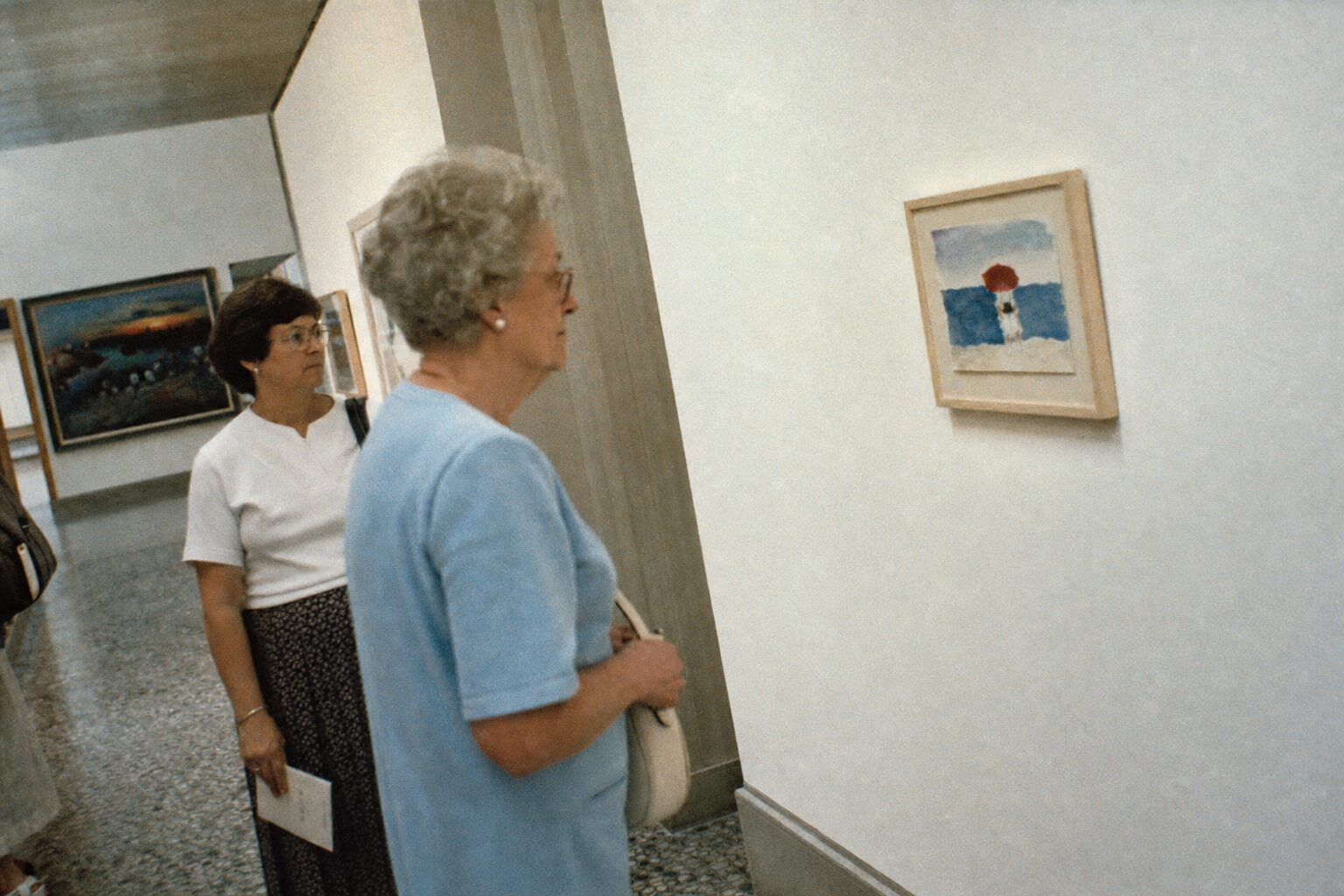
In the autumn of 2014, Dorothy Harper — 78 years old — walked through the Huntington Museum in Long Island, New York, led by her daughter Susan. It was a small exhibition about postwar American civilian life. Dorothy’s legs weren’t strong, and she let most of the displays pass by. But when she stepped into the third room, her feet stopped. She stood before one small painting on the wall and could not move. A blue sea. A white beach. A woman seen from behind, holding a red umbrella. Dorothy knew she had painted this picture seventy years ago.
2. Trembling Hands

Susan noticed. “Mom? What’s wrong?” Dorothy didn’t answer. She stood in front of the case that held the small watercolor — perhaps 20 by 30 centimeters — and stared. The paint was thin and pale, the brushstrokes clearly those of a child. “This painting…” Dorothy whispered. Susan looked at her mother’s face. It had gone pale. “Mom? Are you all right?” Dorothy turned her eyes to the small label beside the display. Could she believe what was written there?
3. The Label’s Mystery
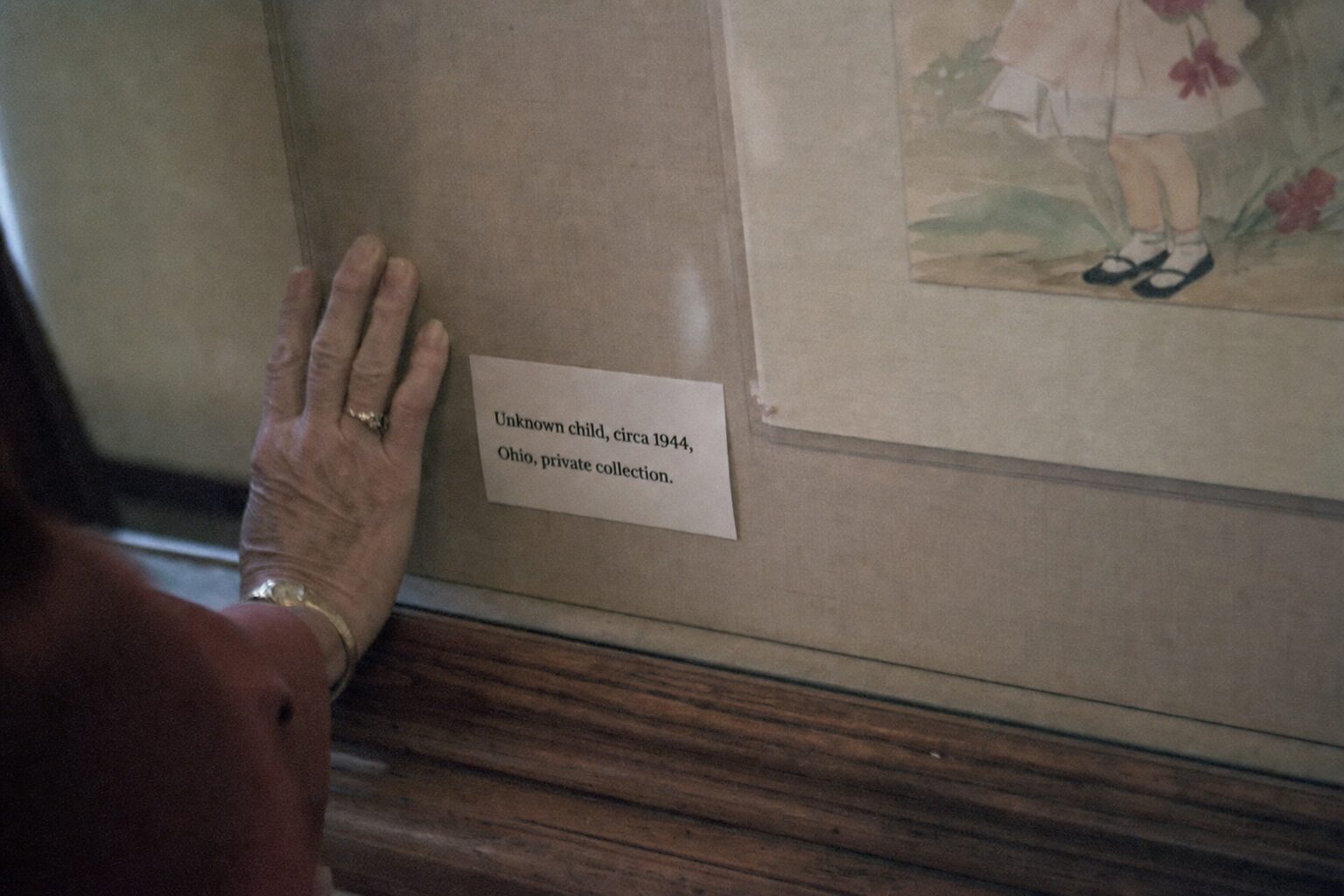
The label read: “Unknown child, circa 1944, Ohio, private collection.” Dorothy’s knees went weak. Ohio. 1944. There was no mistake — that was the year and place she had been evacuated to. Susan went to find a curator. Dorothy stepped closer to the case. In the lower left corner of the painting, very faint pencil marks were still visible. Even through the glass, she could read them. It was her handwriting. Was the name she had written there at age eight, seventy years ago, really still there?
4. Summer of 1944
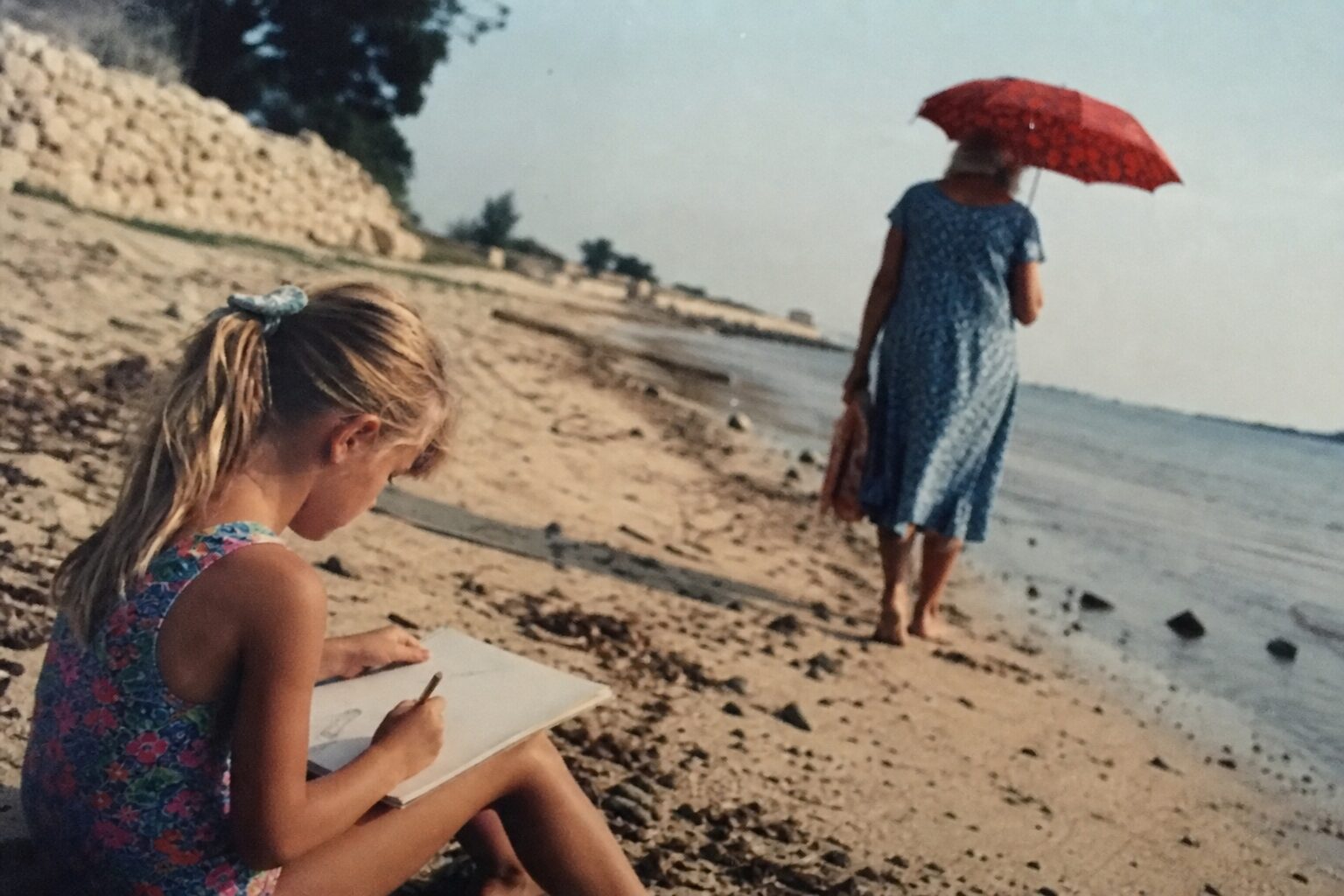
Seventy years earlier, Dorothy had lived in Cincinnati, Ohio. Her father worked at a munitions factory; she lived with her mother and him. There was a small river near the house, good for fishing in summer. Dorothy was a child who loved to draw. She frequently used the watercolors meant for school on her own paintings, and her mother often scolded her for it. She didn’t stop. That summer, at age eight, she painted her favorite picture — a coastal scene near her grandmother’s home, with the figure of her grandmother holding a red umbrella.
5. Grandmother and the Red Umbrella
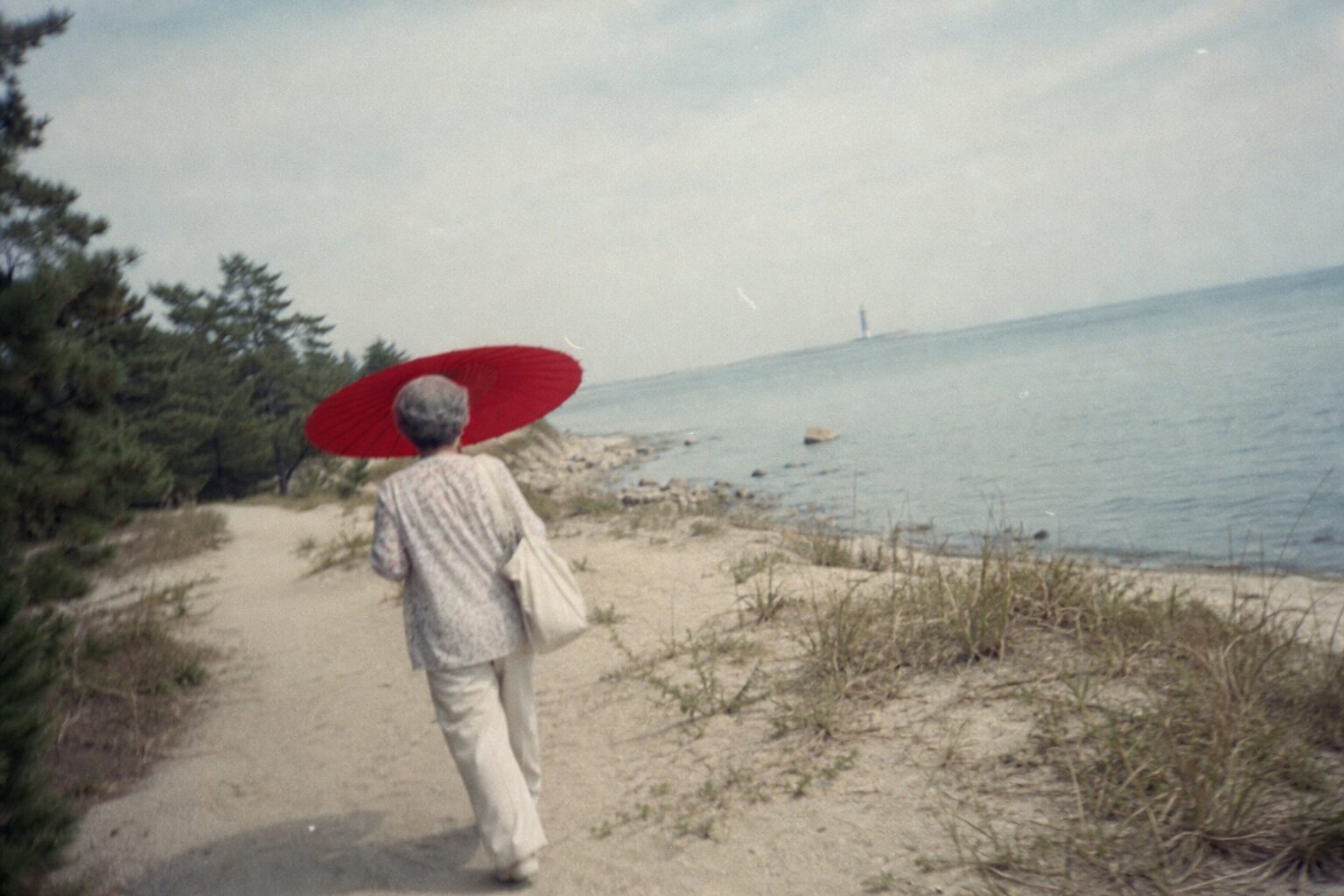
Dorothy’s grandmother Edna always carried a red parasol. Summer, winter — she kept it with her as a sunshade. “I like standing out,” she always said. On a visit to the Virginia coast, Dorothy sketched her grandmother’s silhouette in pencil. Back home, she finished it in watercolor: a blue sea, green pine trees, and a faint white lighthouse far away. And at the center — the back of a figure with a red umbrella. Dorothy kept the painting in her desk drawer as something precious. She could never have imagined it would one day hang on the wall of a New York museum.
6. The Morning of Evacuation
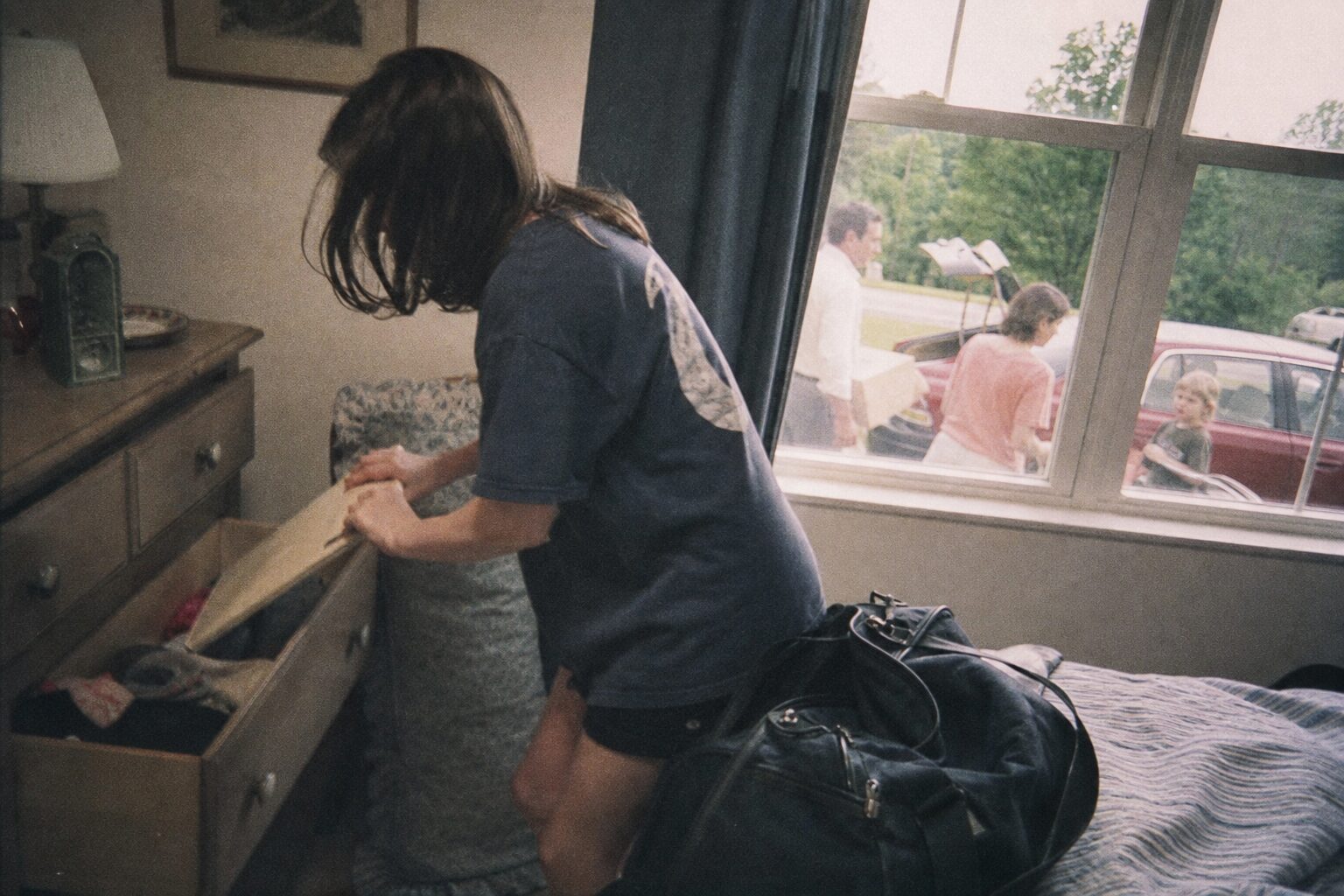
In the autumn of 1944, Dorothy’s father told her to go stay with relatives in the countryside for a while. She rushed to pull the painting from her drawer, wrapped it in paper, and put it in her bag. They loaded their things the next morning and set off. They stopped overnight at a roadside inn, and in the morning, moved the luggage again. That was when Dorothy noticed. The wrong bag. In the shuffle, bags had been switched. The one with the painting was gone. “The painting is gone!” she cried. Her mother said she could always draw another one. But Dorothy knew that picture could never be replaced.
7. After the War
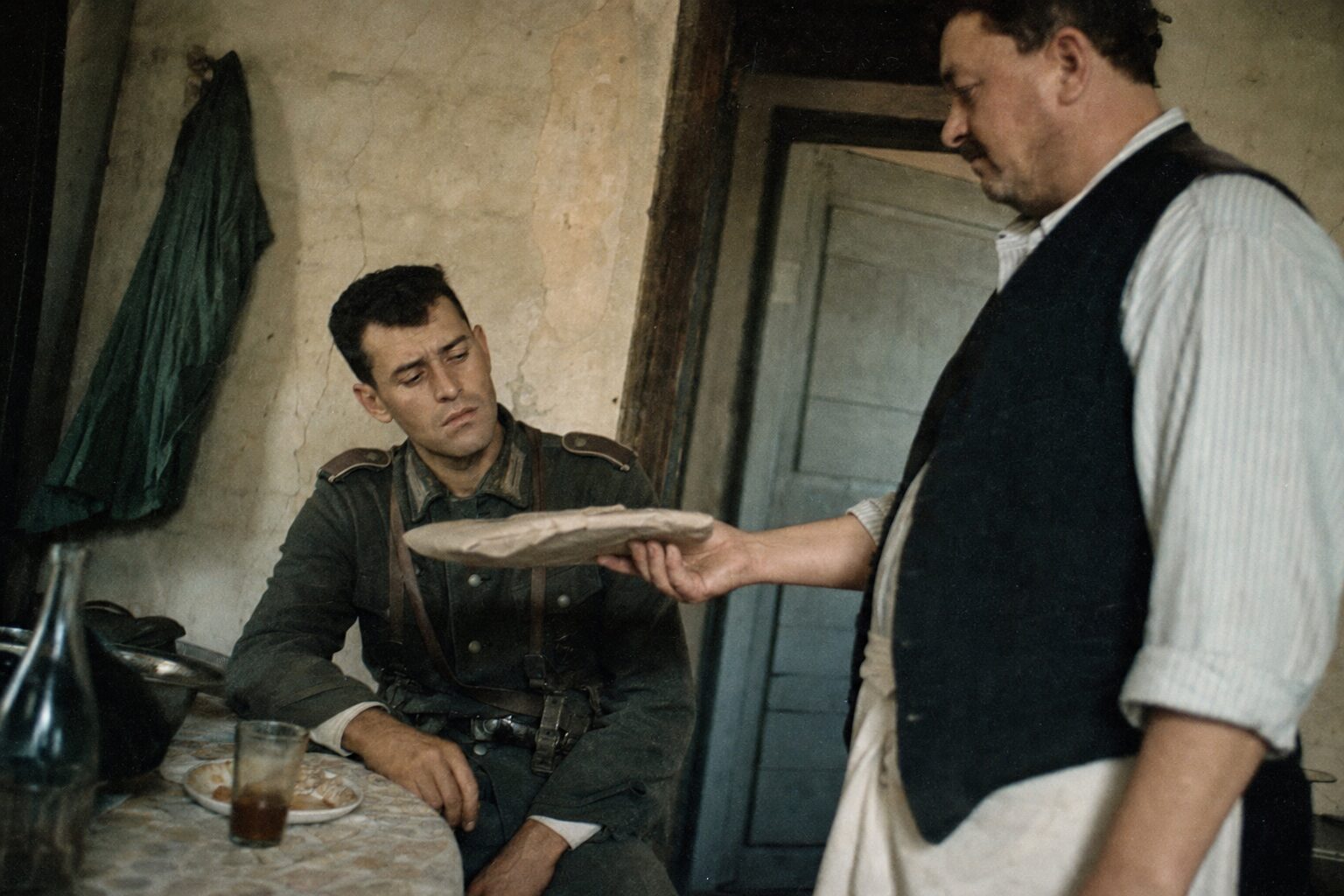
After the war, the family returned to Cincinnati. Dorothy looked for the painting, but of course, it was nowhere. She asked at the inn, but no one knew anything. She gave up. After that, she stopped drawing for a while — she couldn’t imagine making anything she liked better than that painting. The years passed. She grew up, married, had children, became a grandmother. Through all of it, she sometimes thought of the painting. Her grandmother Edna, with the red umbrella, had died before the war ended.
8. The Curator
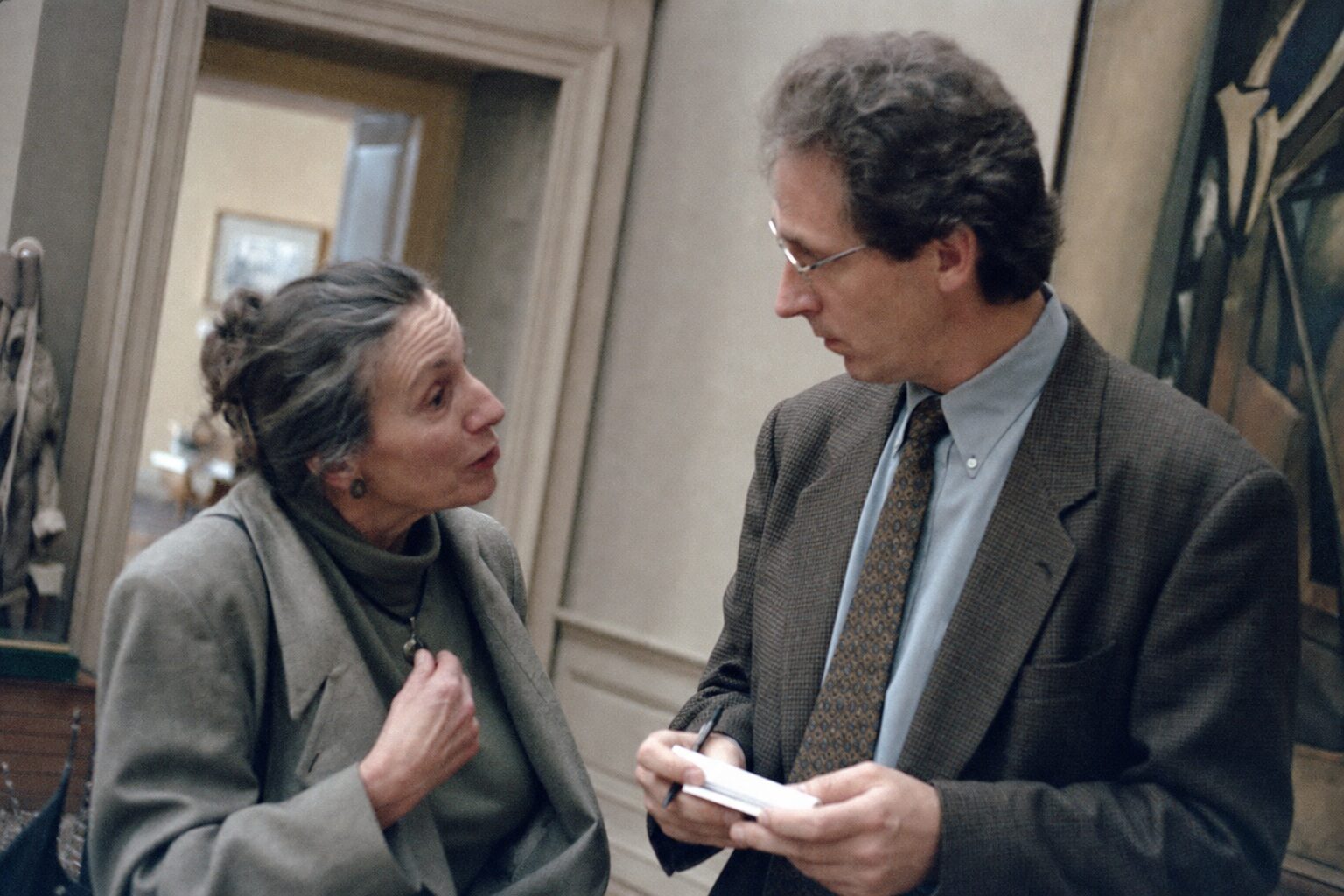
The curator Susan brought was a man named Edward Collins, around fifty years old. “What seems to be the matter?” he asked, carefully. Dorothy told him slowly. “This painting — I may have painted it, seventy years ago.” Edward’s expression registered brief surprise, then settled back into composure. “If you wouldn’t mind, could you tell me a bit more?” Dorothy mentioned the signature. Edward opened his notepad. Then he said: “Actually, this painting has a provenance.”
9. The Private Collection
According to Edward, the painting had been donated to the museum two years earlier. The donor was an elderly woman in New Jersey named Margaret Collins. Edward said, slightly embarrassed: “She’s actually my grandmother.” His grandmother Margaret had donated, after her husband’s death, the collection that Jack Thornton — her husband — had treasured. This watercolor was among those pieces. Jack had been a World War II army veteran stationed in Ohio. Edward continued carefully: “My grandfather apparently told her he’d found this painting in Ohio.”
10. Jack’s Story
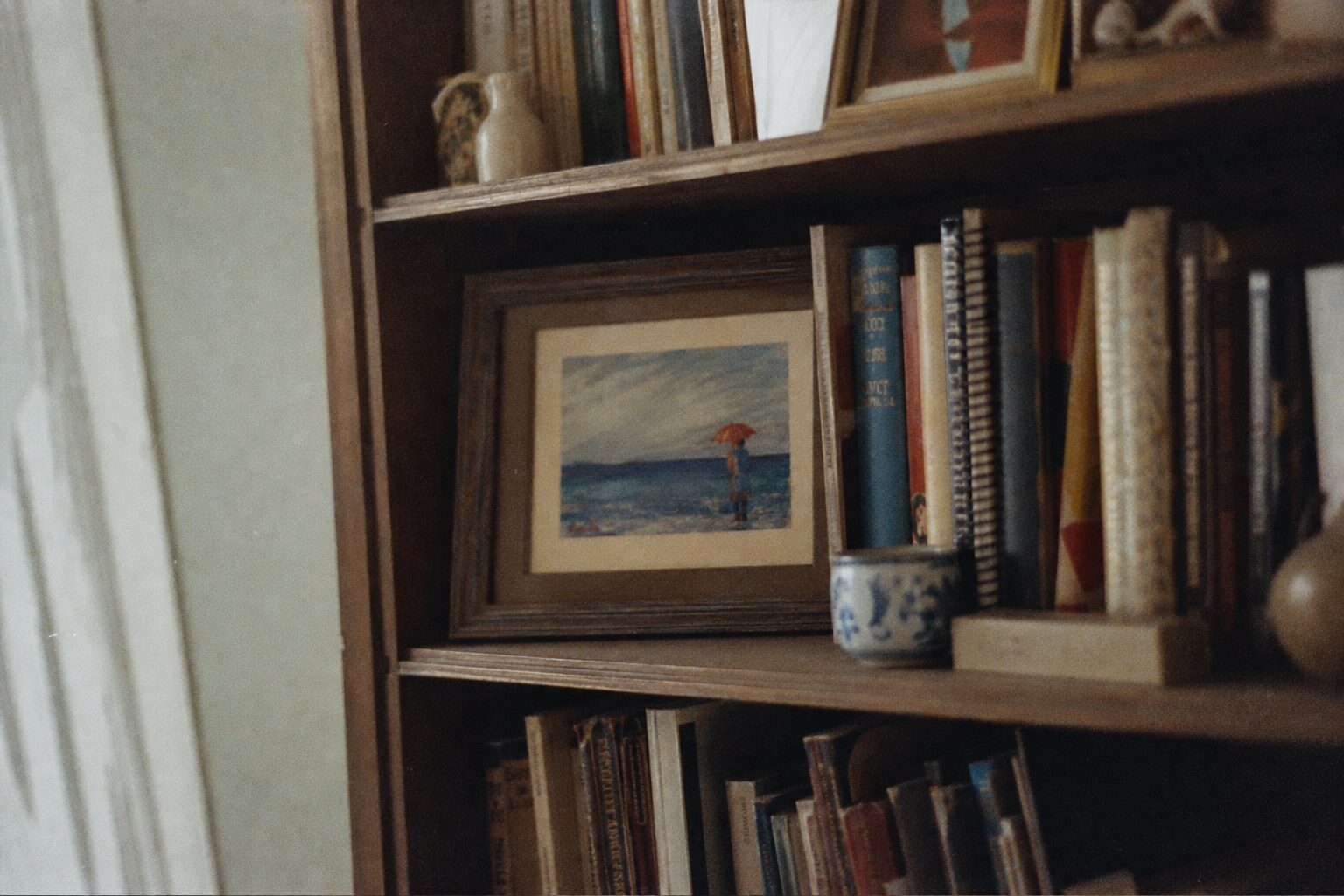
Edward relayed what his grandmother Margaret had told him. During the war, his grandfather Jack had once stayed at an inn in Ohio after an evacuated family had moved on. The innkeeper showed him some belongings a child had left behind. Among them was a wrapped watercolor painting. Jack wanted to find the owner and return it, so he took it with him. But in the postwar chaos, he was never able to track anyone down. “My grandfather always felt bad about it. He kept it carefully, believing the owner would appear someday.” Had Jack really believed, for seventy years, that the day would come?
11. The Writing on the Back
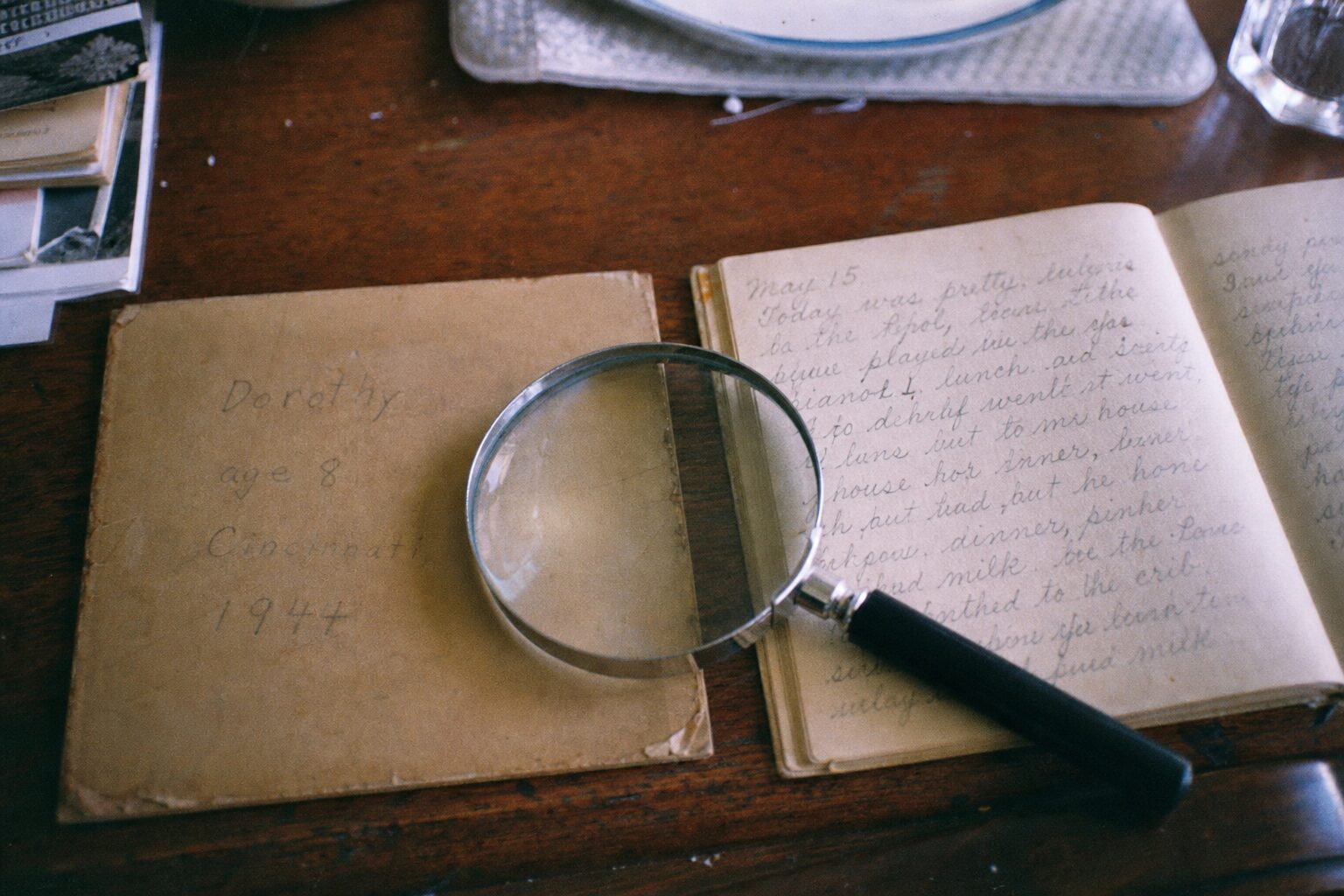
Edward brought the painting out from storage and showed it to Dorothy outside the case. Dorothy’s trembling hands turned it over. On the back: “Dorothy, age 8, Cincinnati, 1944.” Faded, but unmistakably her handwriting — the careful pencil letters she had learned to write from her teacher, who had told her always to put her name on her work. Edward looked at the back of the painting, and said quietly: “So it really is yours.” Dorothy stood holding the painting for a long time without speaking.
12. Jack’s Letter
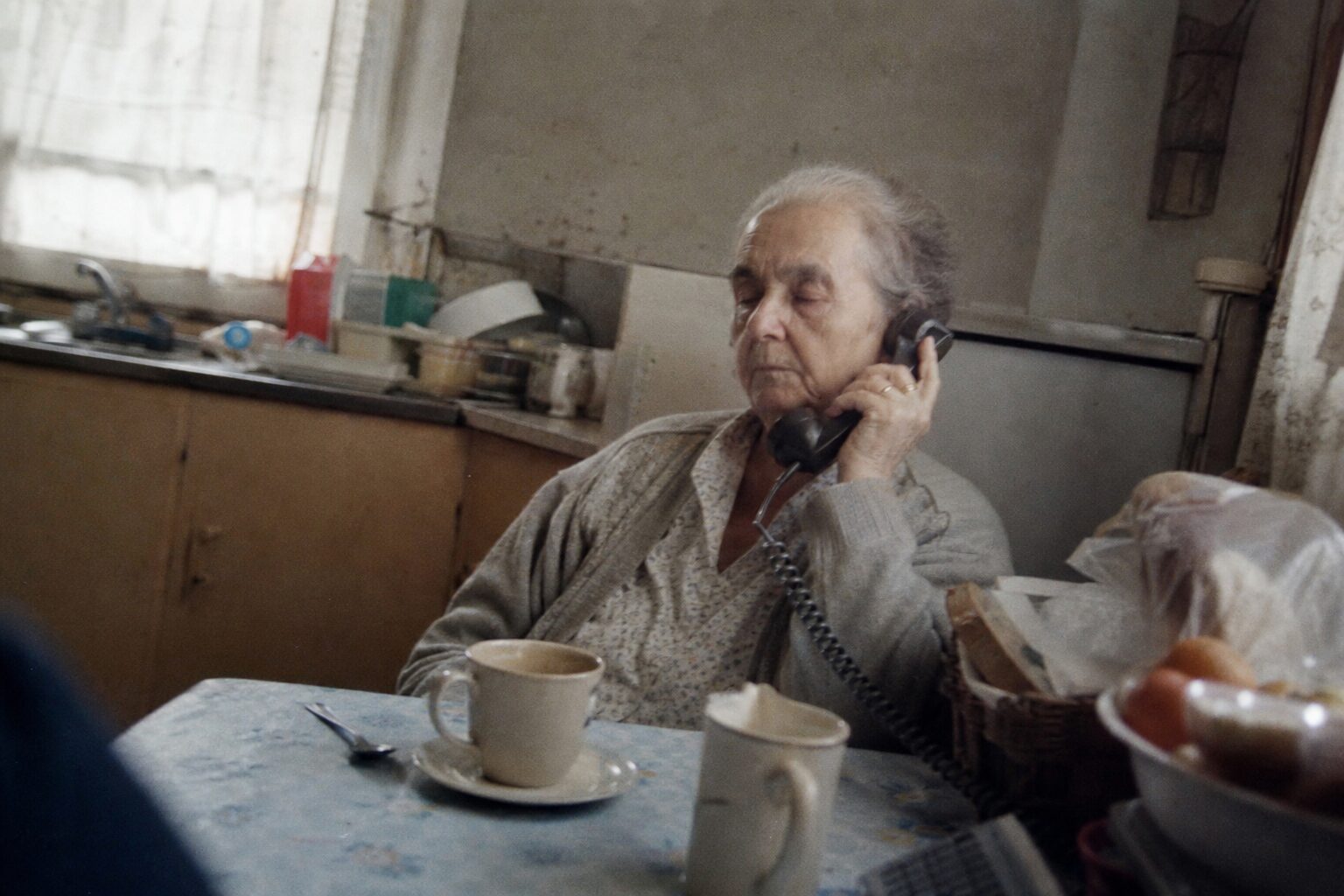
The next day, Edward called. “We found a letter from my grandfather, left in my grandmother’s home. It mentions the painting.” He read a passage aloud. “November 1944, Ohio inn — a child left a painting behind. The name Dorothy is written on the back. When the war ends, I want to return it to its owner. It’s a painting full of feeling — a woman with a red umbrella.” Dorothy held the phone and closed her eyes. The American soldier who had stayed at that inn — had he really been the one to find the painting?
13. Two Lines That Crossed
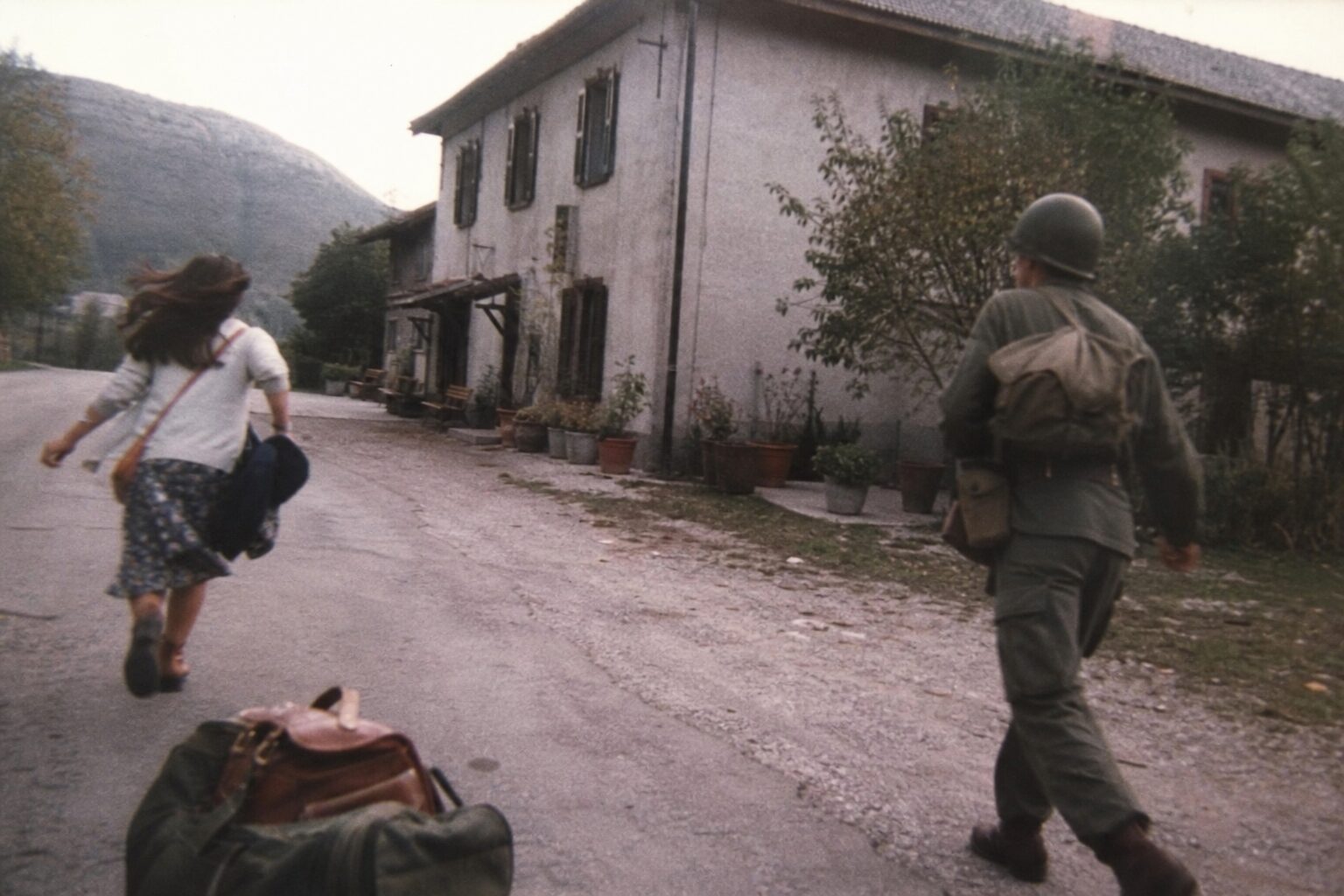
The day Dorothy’s family reshuffled their luggage, Jack arrived at the same inn. Their lines had crossed. When the innkeeper showed Jack the wrapped painting — “a child left this” — Jack opened the package. A watercolor of a blue sea and a red umbrella. Something precious to someone was held inside that small painting. Jack thought it would be wrong to throw it away. He wrapped it carefully and placed it among his own things. That night, he wrote in his journal: “I am bringing this home, in the belief that its owner will someday appear.”
14. Jack After the War
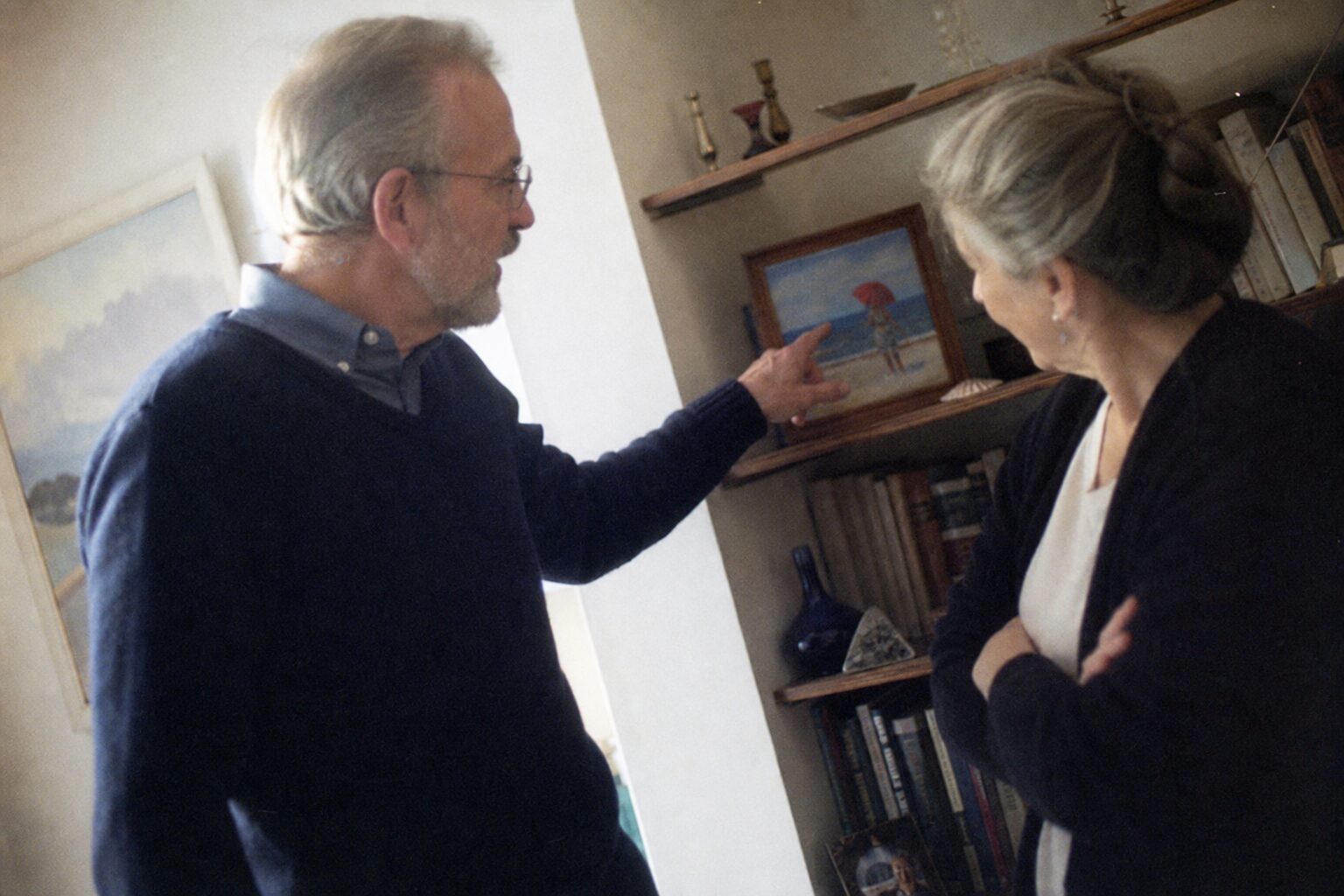
After the war, Jack returned to New Jersey and married Margaret. The painting was displayed on a shelf in his study. When Margaret asked whose it was, Jack said: “I found it during the war. A child painted it.” When she asked why he hadn’t returned it, Jack said: “I looked for a girl named Dorothy. I never found her.” Every so often, over the years, when something caused Jack to look at the painting, he would say: “I wonder if Dorothy is doing all right, somewhere out there.” How many times had Margaret heard those words?
15. The Grandson’s Decision
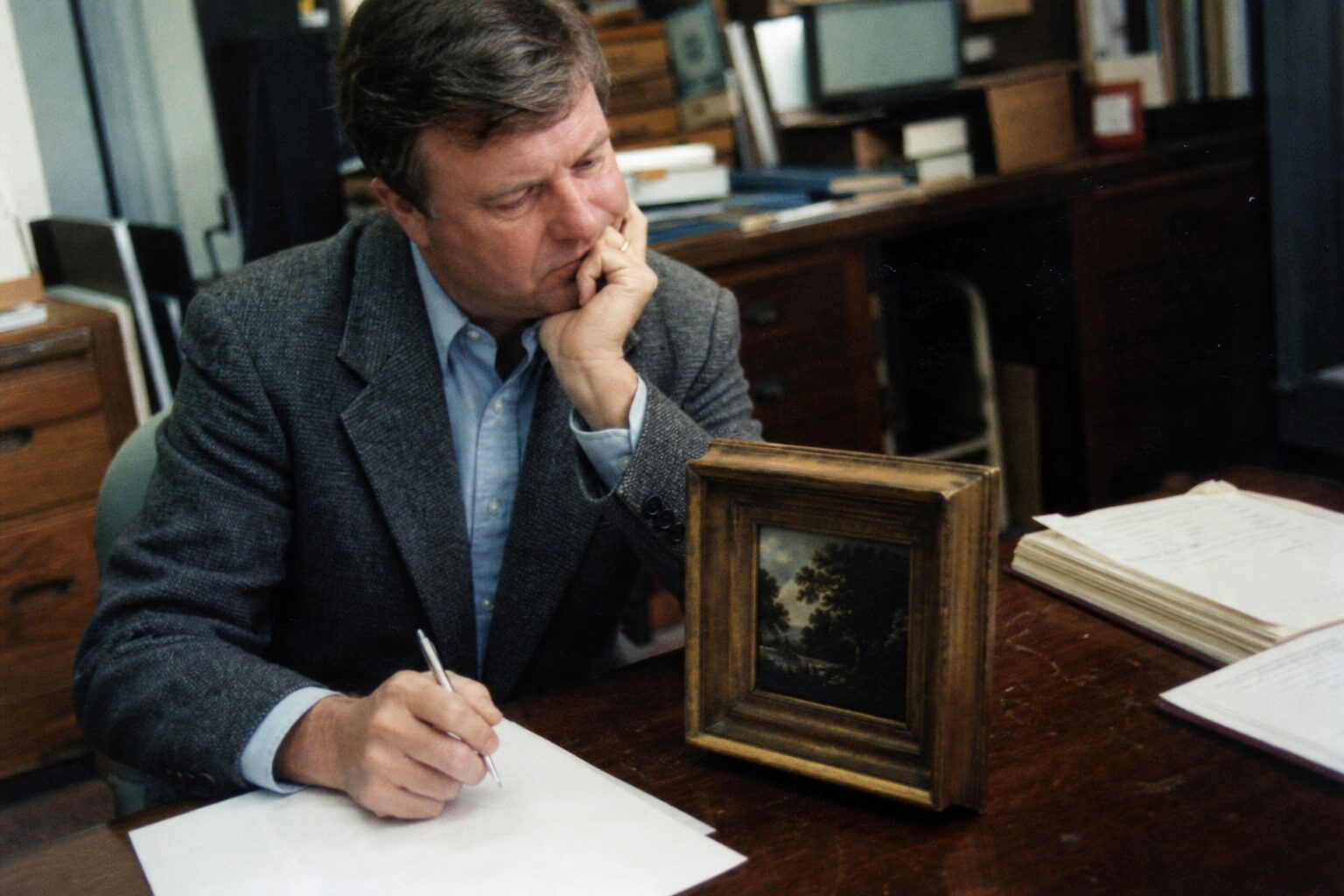
When Edward donated his grandfather’s collection to the museum, he hesitated over whether to include this painting — it felt too personal. But Margaret said: “Your grandfather always believed this painting would one day find its owner. If it’s exhibited, the right person might see it.” Edward followed her advice and donated it with one condition: if the owner ever appeared, please return it. Two years passed. And then Dorothy Harper, seventy-eight years old, came walking down the museum corridor.
16. Handwriting Analysis
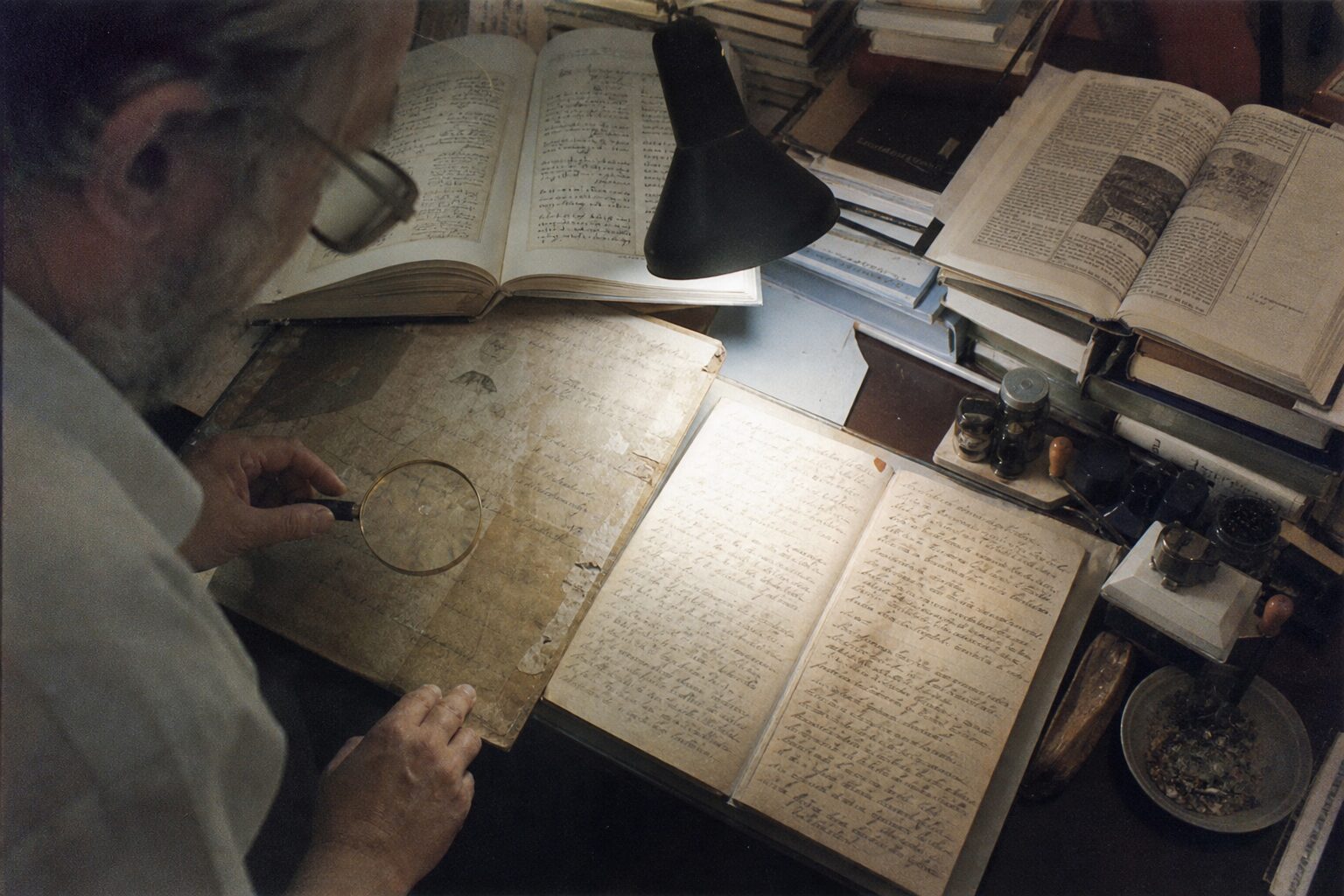
To follow formal procedure, Edward requested a handwriting analysis. Dorothy brought her childhood diary as a sample — the diary from when she was eight still existed. The analyst compared the two writing samples and gave a conclusion after one week. “The characteristics match. I can determine this was written by the same individual.” Edward called Dorothy with the result. For some reason, the words “congratulations” didn’t come right away.
17. The Decision to Return
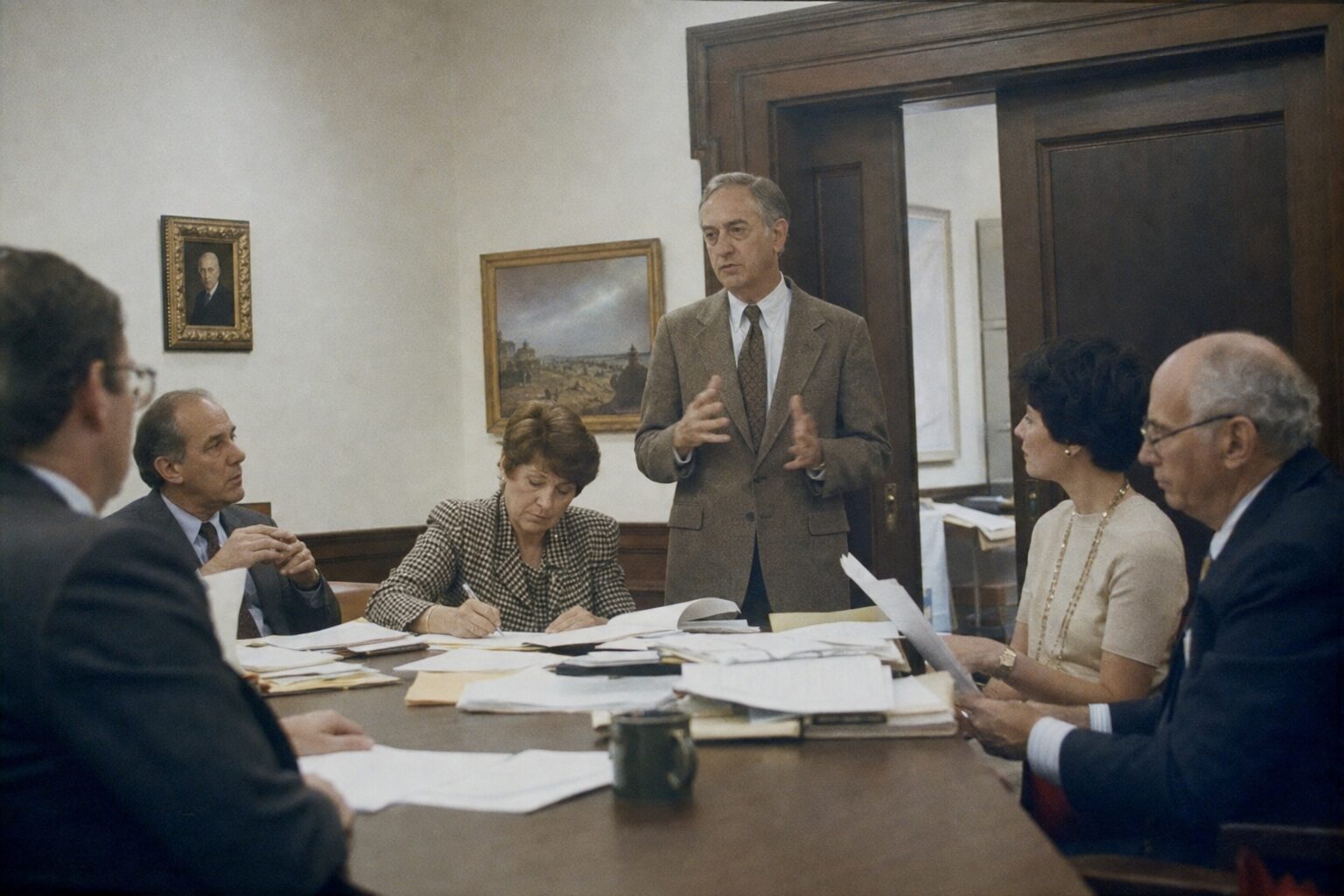
A museum board meeting was held, and the formal decision to return the painting was made. Edward explained: “Although we received this as part of a private collection, this was always something that should have been returned to its owner.” One board member said the circumstances should be documented. They agreed to extend the exhibition period by one month before returning the painting, with an updated label. A line was added: “This painting has an owner. She was found seventy years later.”
18. One Last Look
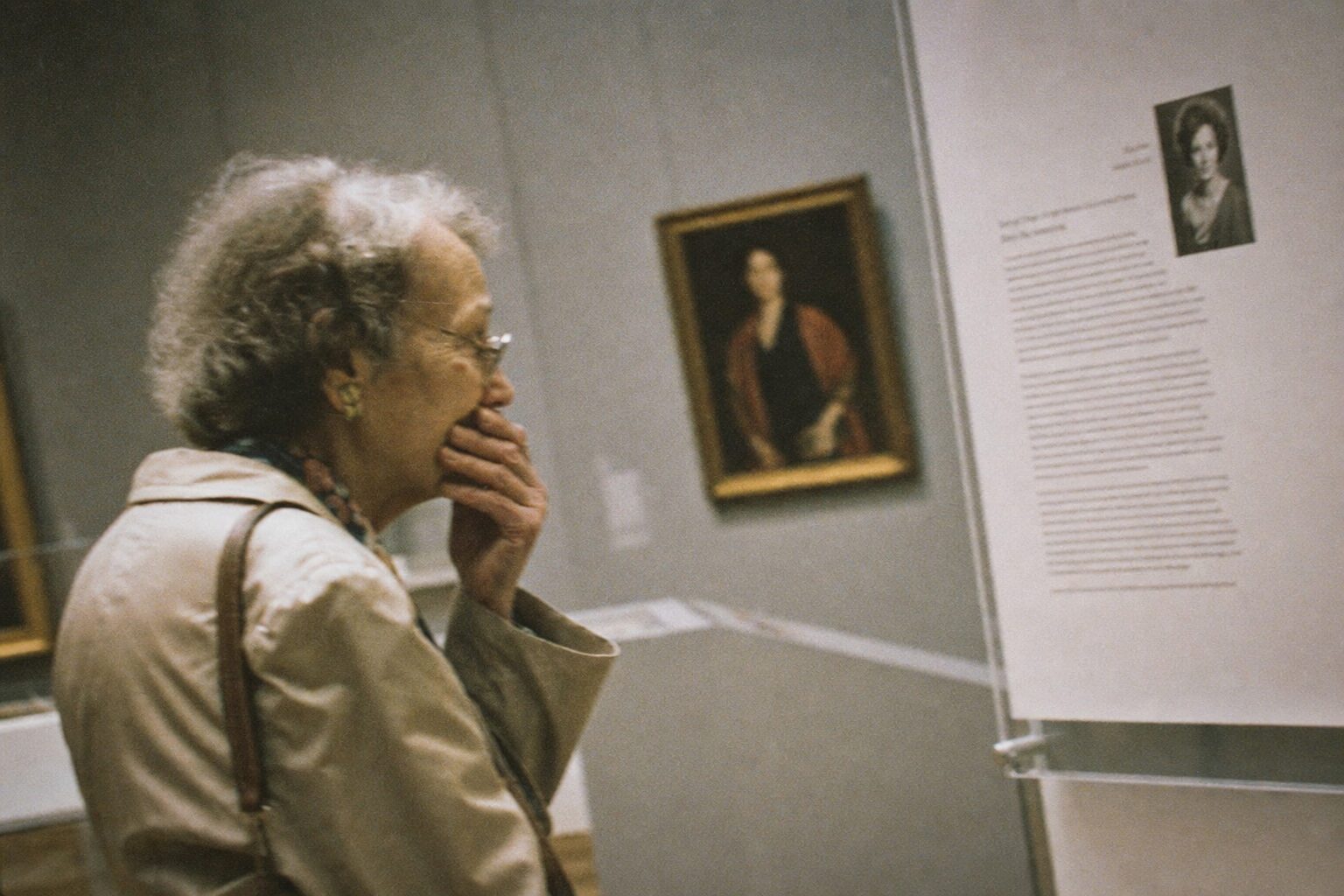
A month before the return, Dorothy visited the museum again — alone this time. She went to the gallery and stood before the painting. She read the updated panel. Her own name was there. “Dorothy Harper (née Mitchell), born 1936, Cincinnati, Ohio. The creator of this work.” Dorothy read for a while, then looked at the painting. The grandmother’s red umbrella, painted by her own eight-year-old hand. No other visitor in the room knew that the elderly woman standing before it was the painting’s author.
19. The Return
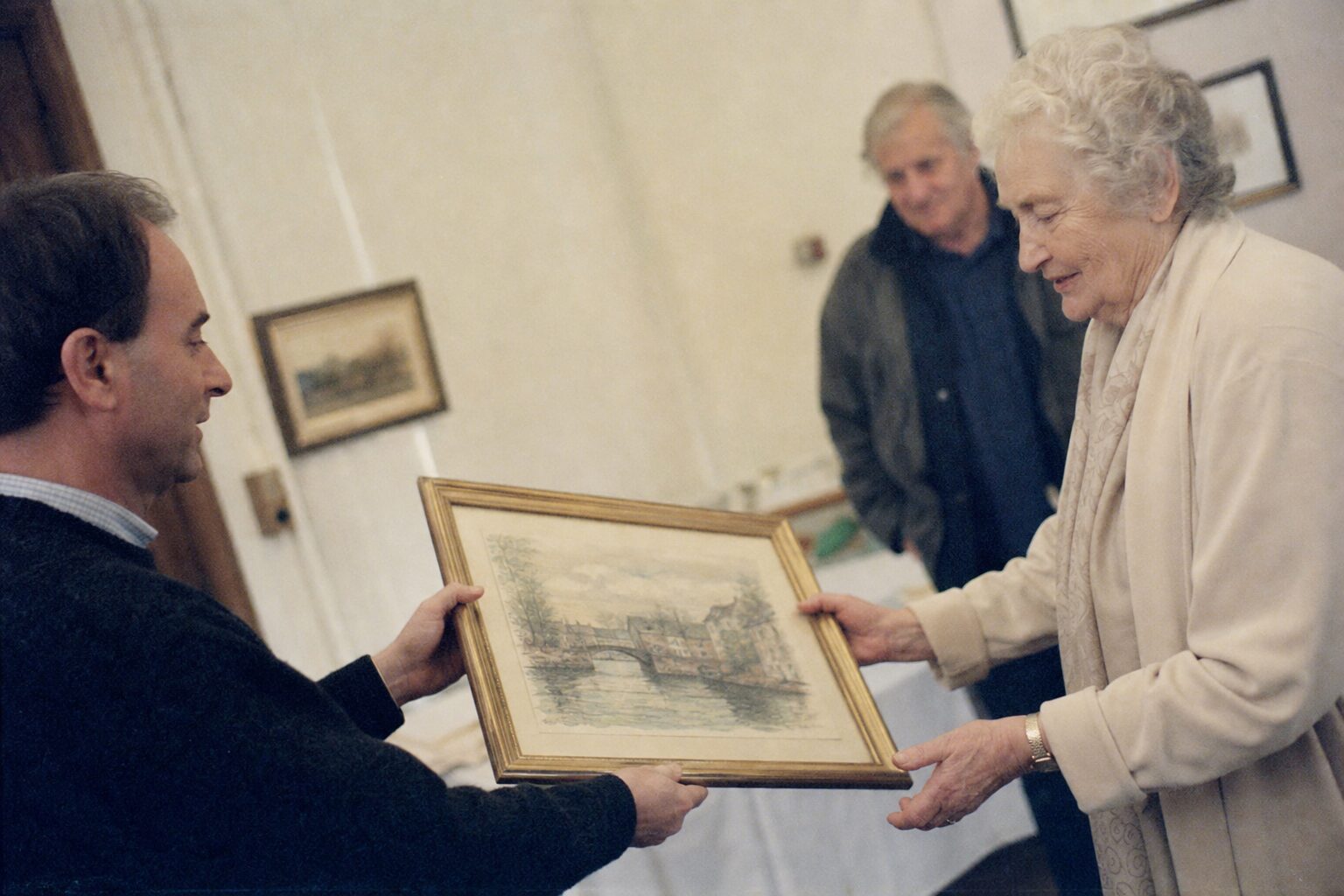
The handover ceremony was a quiet one. In a small room at the museum, just Edward, Dorothy, and Susan gathered. Edward held the small framed painting in both hands and extended it toward Dorothy. “I’m sorry to have kept you waiting for seventy years,” he said. Dorothy reached out and took it. It was light — lighter than she remembered. Had it really been this small? The paper had thinned a little, and the blue had faded. But the red umbrella was still red. Dorothy pressed the painting to her chest.
20. Grandmother’s Voice
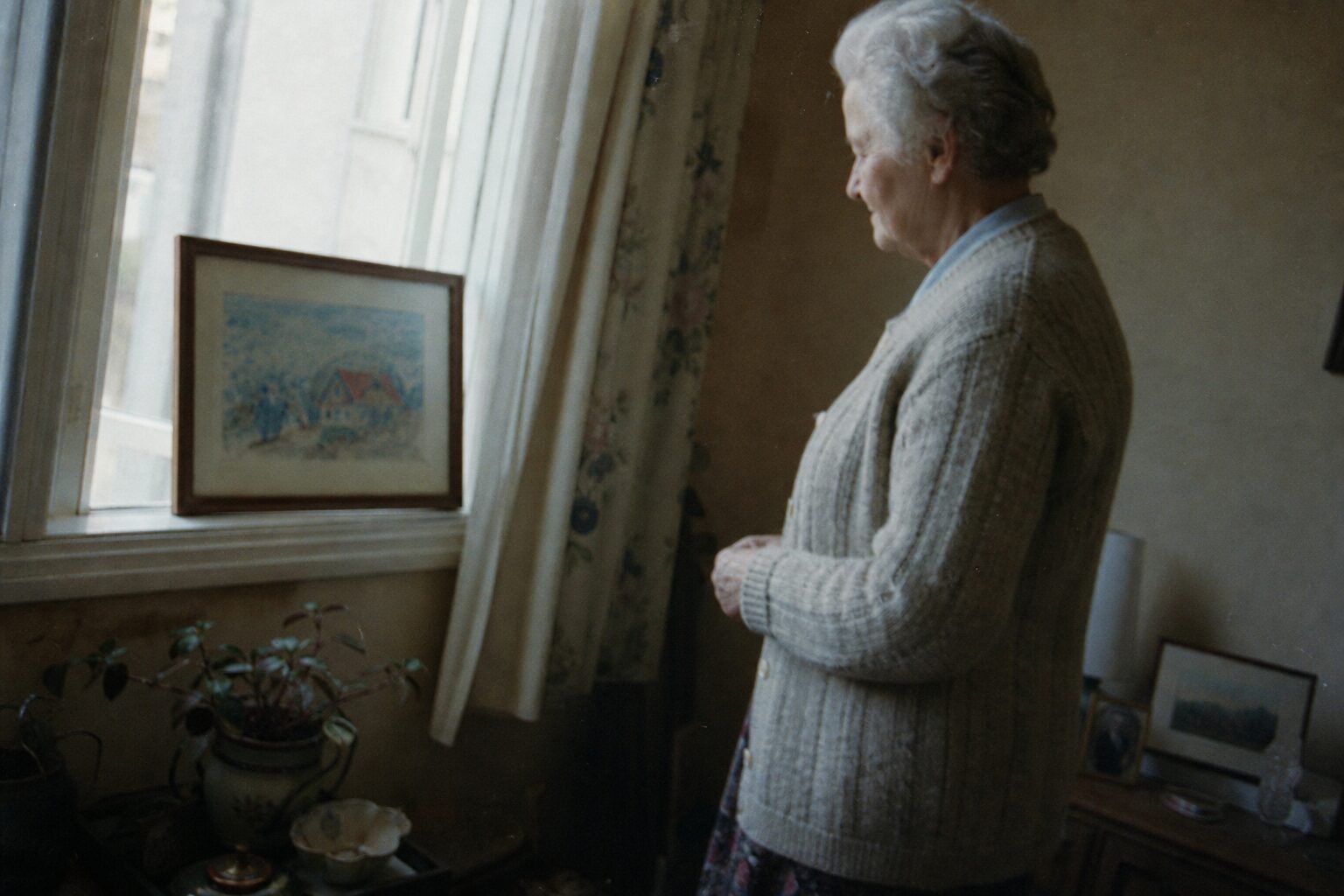
At home, Dorothy placed the painting in a bright window. In the light, the thinned watercolor colors bloomed softly. The figure with the red umbrella, seen from behind. Her grandmother Edna had always stood just like that. Dorothy closed her eyes. She seemed to hear the sound of waves. Seemed to hear Edna’s voice. “Dorothy, you’ve come again.” Susan asked: “What will you do with it? Hang it somewhere?” Dorothy thought for a while. Where should you put a painting that someone had kept safe for seventy years?
21. A Letter to Jack
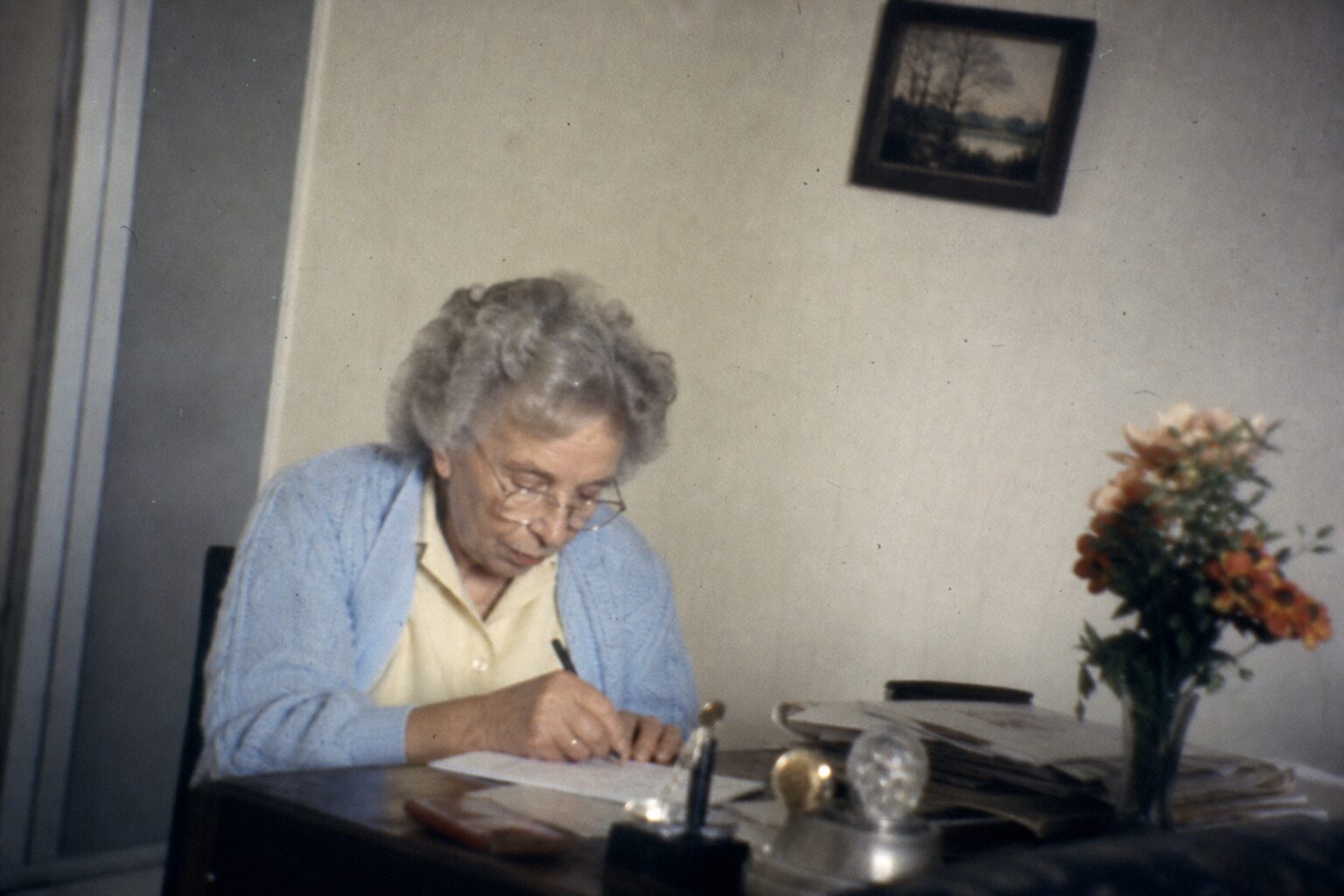
Dorothy wrote a letter to Edward. “To your grandfather. Thank you for taking care of this painting. Because of what you did, seventy years later, I was able to see my grandmother’s face again. I would be so glad if you could pass along my gratitude to Jack Thornton.” A reply came from Edward: “My grandfather passed away twenty years ago. But I will deliver this letter to my grandmother. I’m sure she’ll be happy. And I think my grandfather will be too, wherever he is.”
22. Margaret’s Call
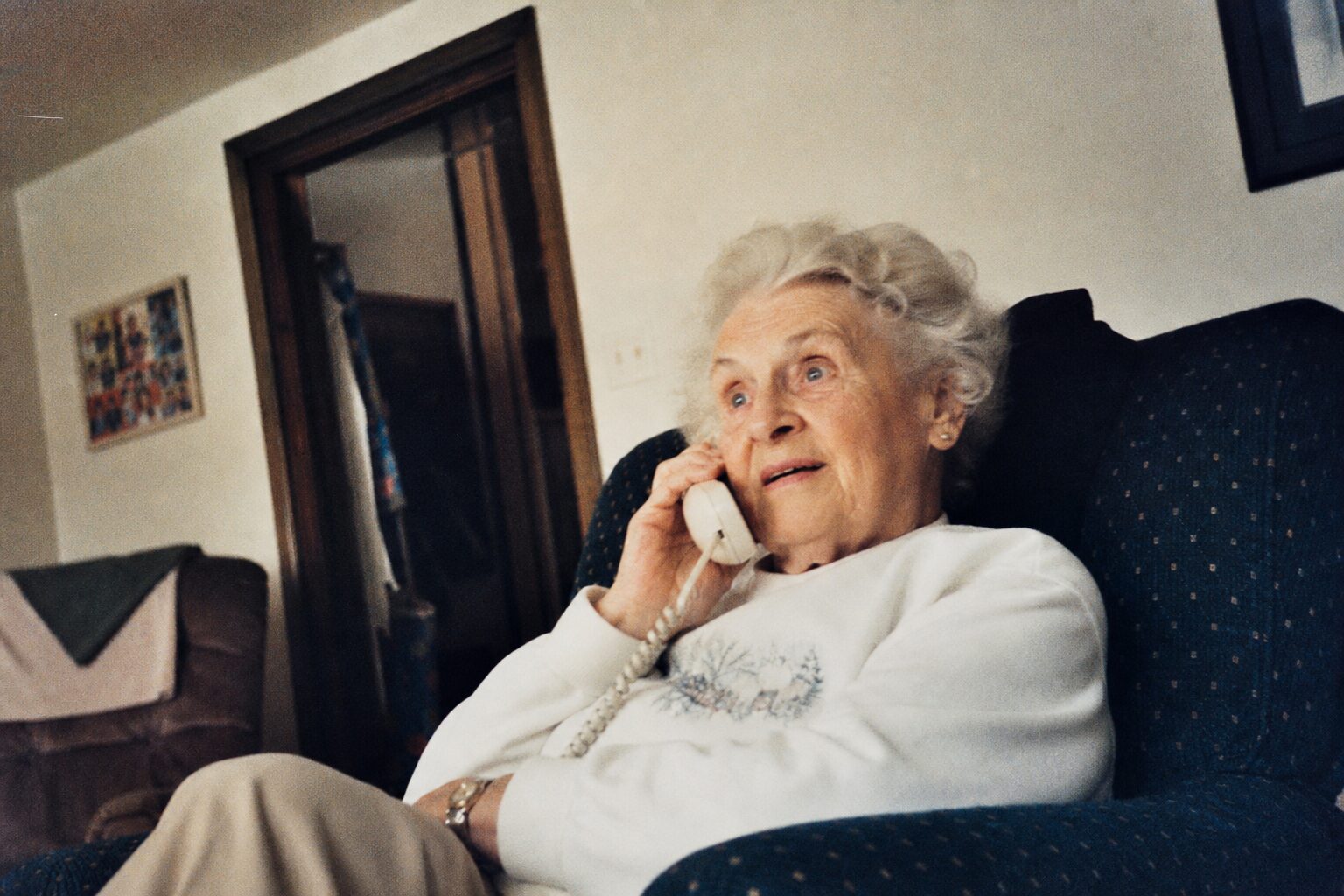
A week later, Dorothy received a phone call. It was Margaret — Edward’s grandmother, Jack’s wife. “Dorothy? This is Margaret. Jack’s wife.” Margaret’s voice was trembling. “Jack always said it — he said, Dorothy must be out there somewhere, doing just fine. He said he was sorry he could never find you.” Dorothy lost her voice too. “You did find me,” Dorothy said. “It just took seventy years.” Margaret said nothing for a long time. Was she crying?
23. Two Old Women
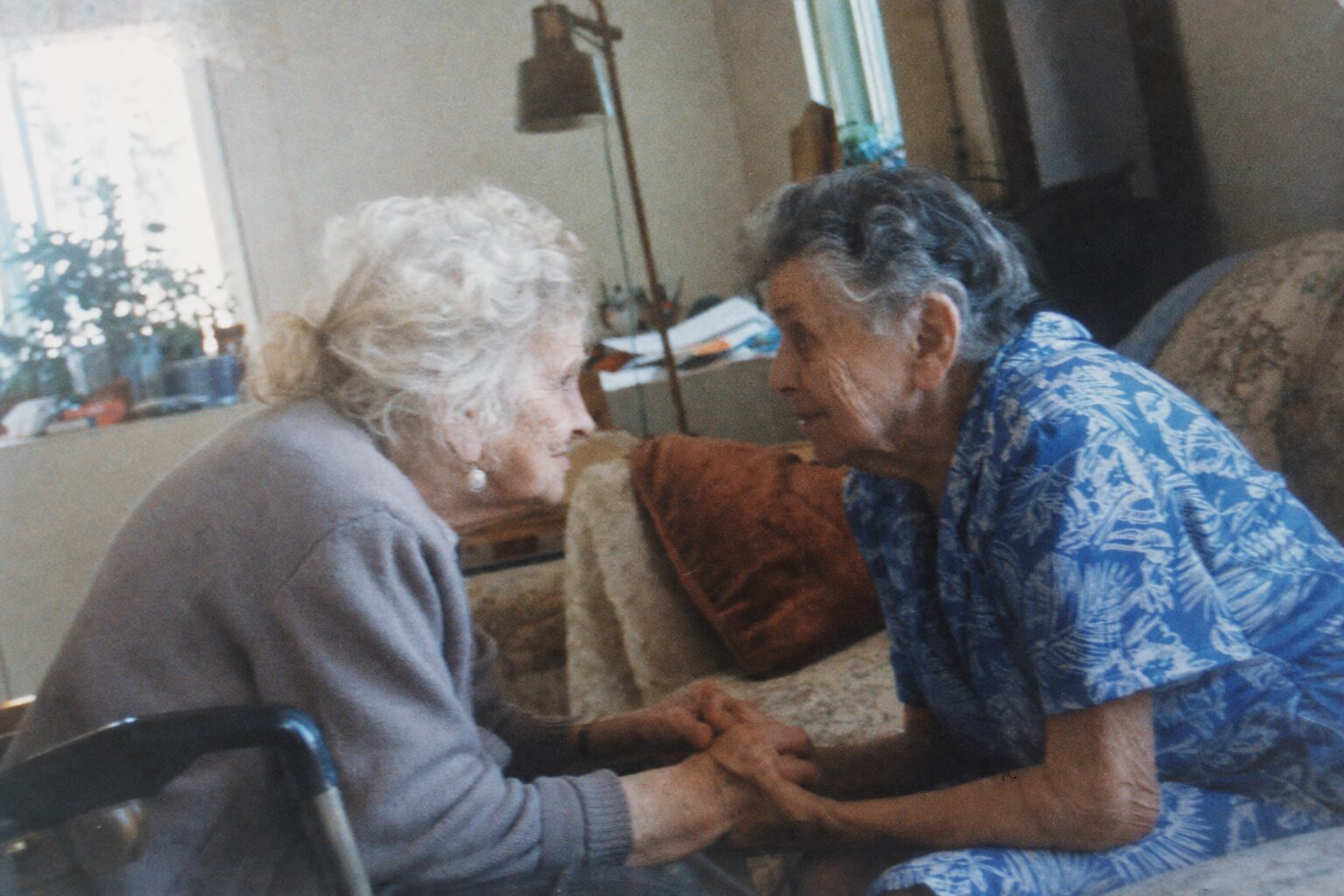
Edward arranged for Dorothy and Margaret to meet in person. Margaret was eighty-nine years old, living in New Jersey; Edward drove her to Dorothy’s home. The two women sat across from each other in the living room. Margaret took Dorothy’s hands in both of hers. “Are you Dorothy?” she asked. “I am,” Dorothy said. Margaret’s face tightened. “I think Jack is so happy right now. He really is.”
24. The Red Umbrella
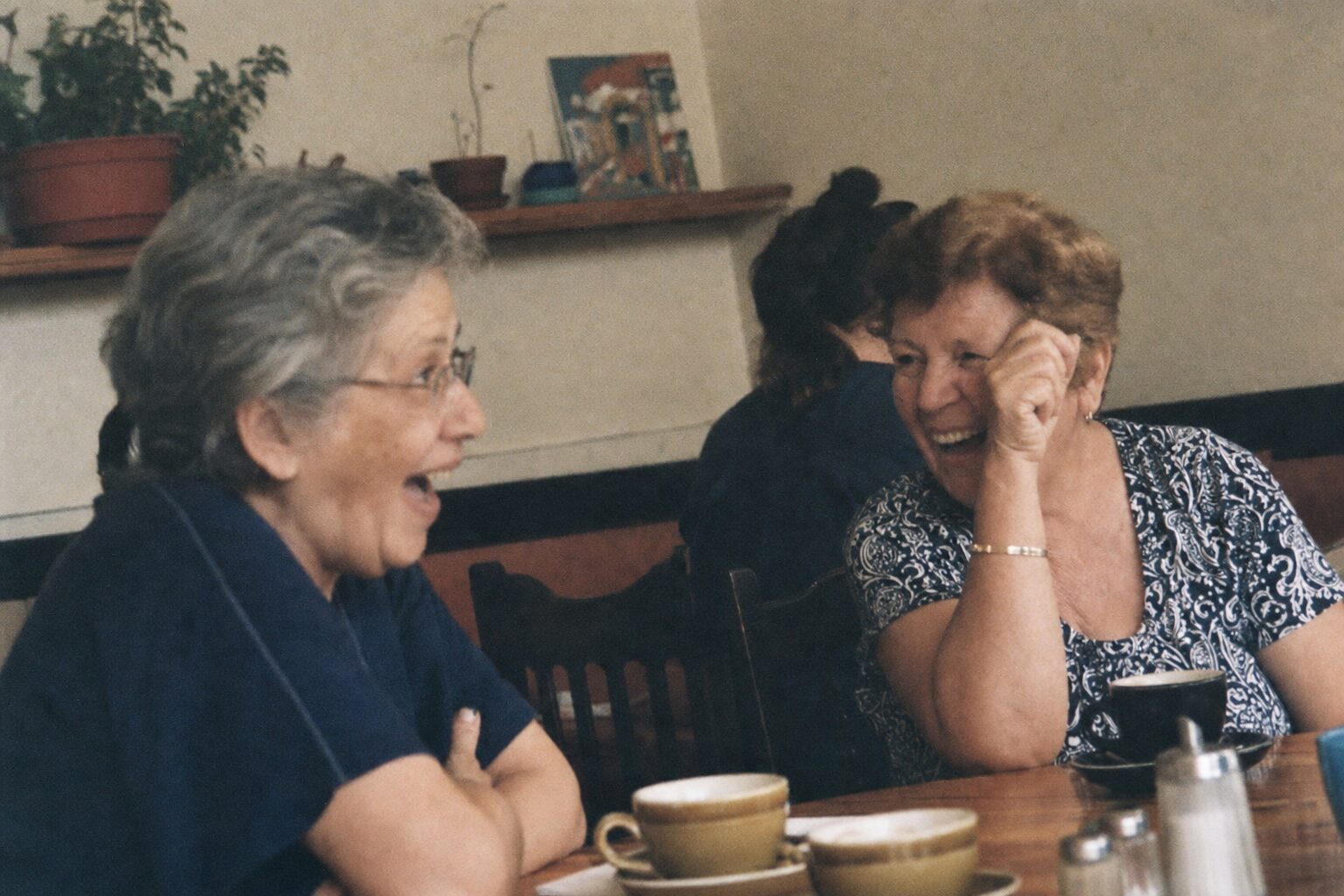
Margaret said: “Jack treasured that painting. He always said it didn’t look like something a child made — it had heart.” Dorothy said: “My grandmother always carried a red parasol. She liked standing out.” Margaret smiled. “Jack was the same. He liked being noticed — he always wore his army cap at an angle.” Both women laughed. Two people who had never been in the same room for even a second — brought this close to each other through a red umbrella, seventy years later.
25. A Second Painting
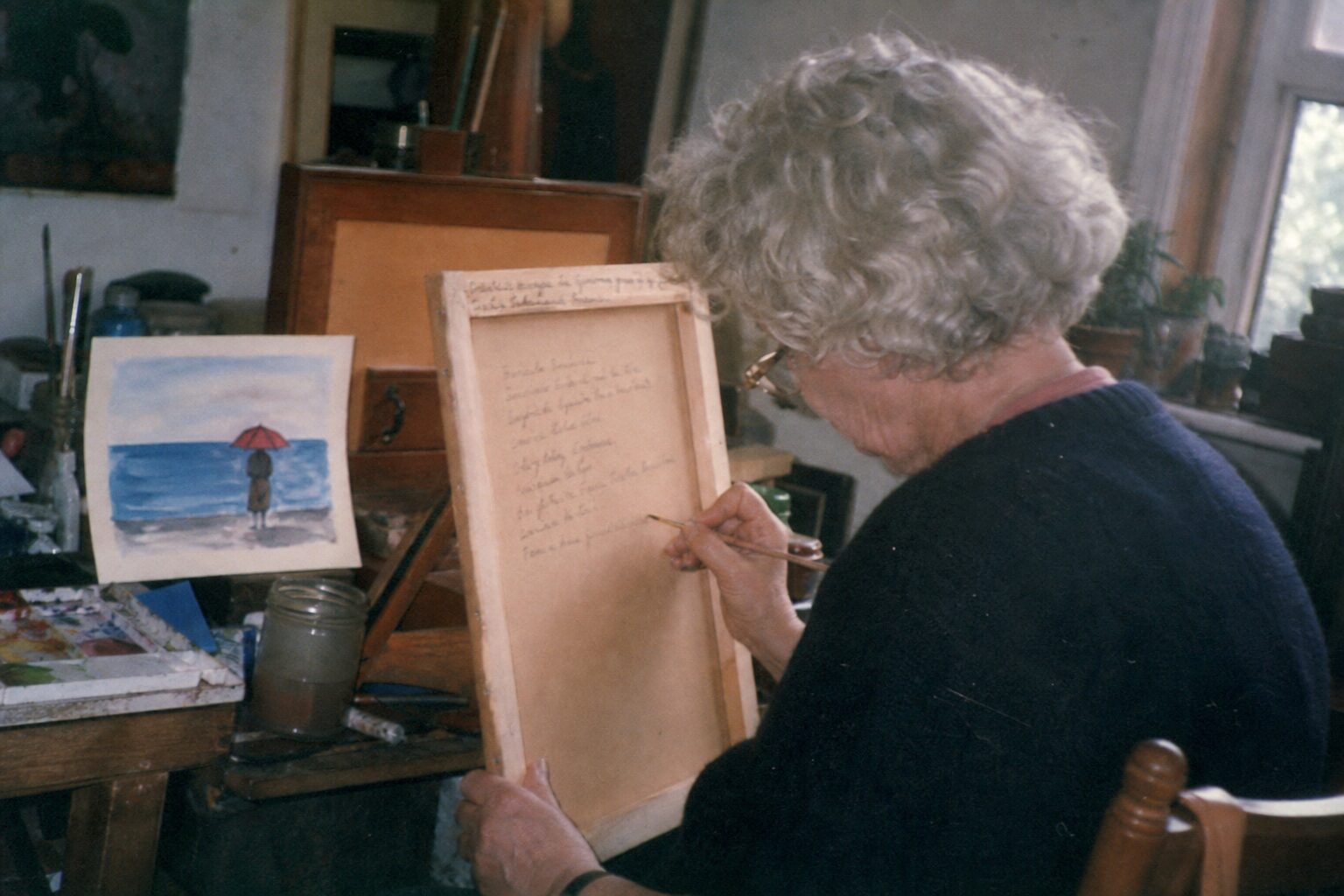
Afterward, Dorothy made a decision. About two months after the painting was returned to her, she painted another one — same composition. A blue sea, a white beach, a figure with a red umbrella seen from behind. She took her time with colored pencils. On the back she wrote: “For Jack Thornton. From Dorothy Harper, 2014. Thank you.” She sent it through Edward to Margaret. The reply came back: “I will hang it beside a photograph of Jack.”
26. A Conversation with Emily
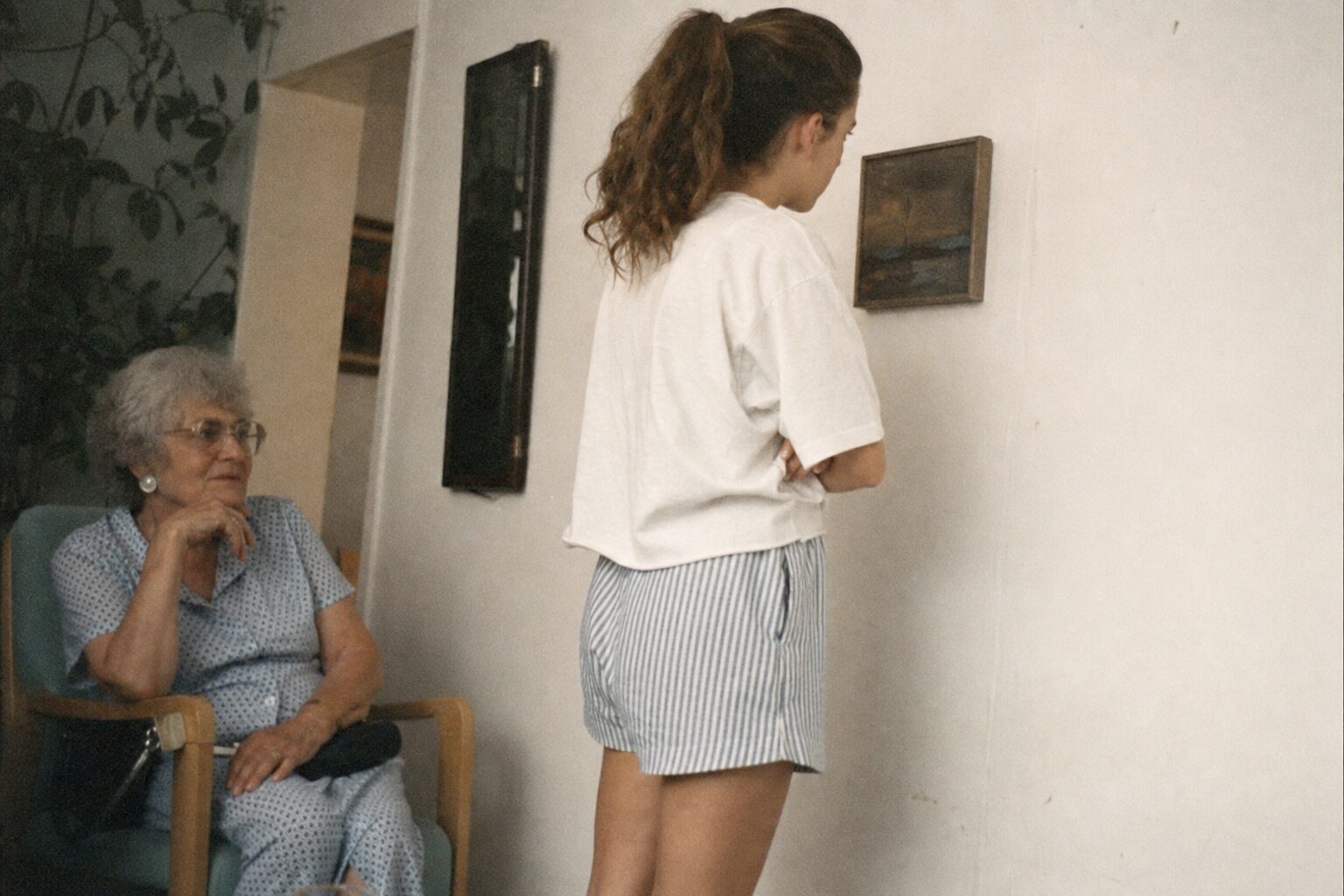
One day when Susan’s daughter Emily — fourteen years old — came to visit, she looked at the painting and asked: “Did you paint that, Grandma?” Dorothy told her the story. The evacuation morning. The inn. The seventy years. Emily listened in silence all the way through. When it was done, she said: “That soldier sounds like a good person.” “He was,” Dorothy said. “I never met him, but I think he was a good person.” Emily looked at the painting a while longer, then said: “I want to draw like that too.” Had the painting reached another heart?
27. October Light
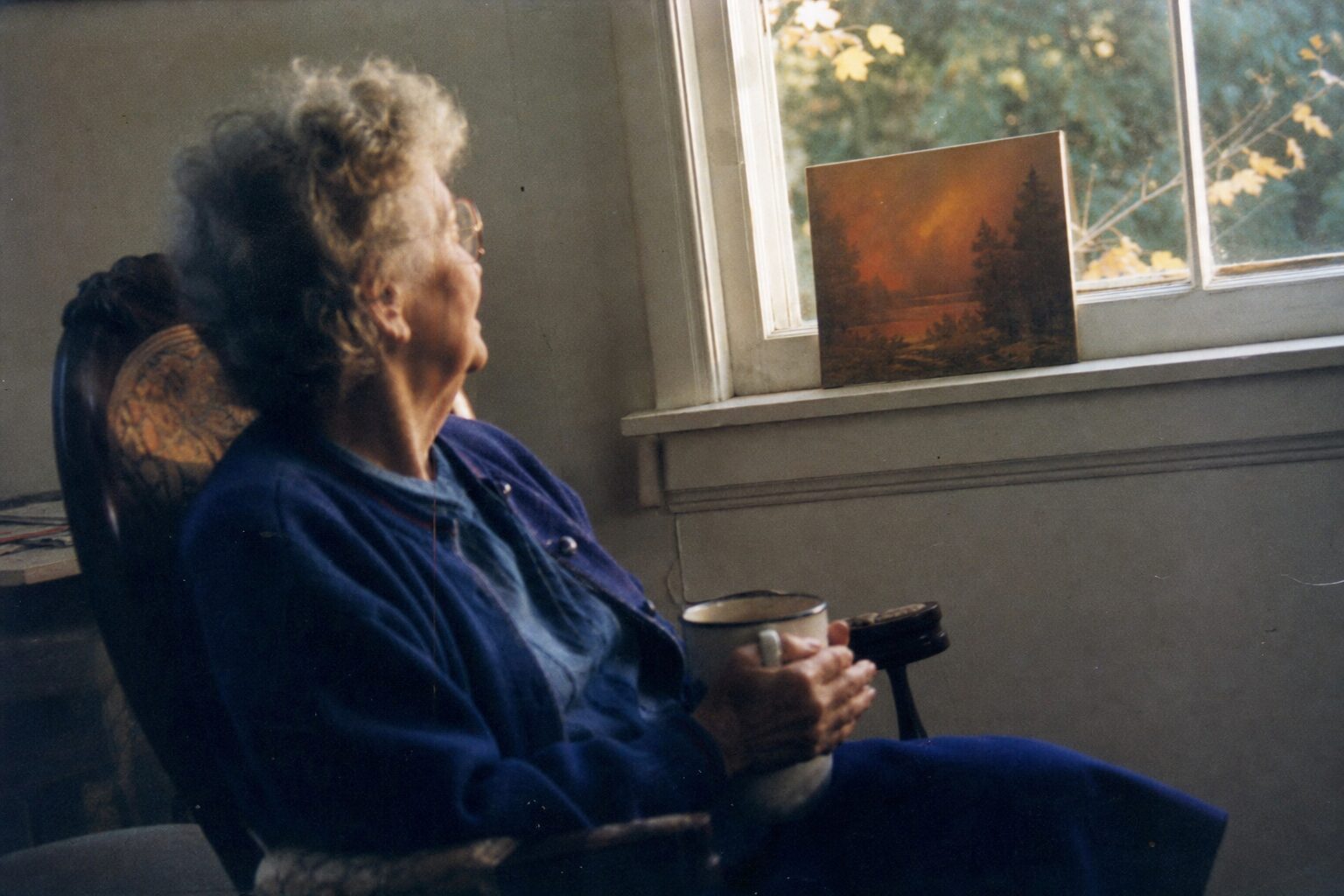
When October came, the light through the windows changed. The morning sun came in at a lower angle and reached further into the room. Dorothy placed the painting in that morning light every day. For a few minutes, the faded blue looked a little brighter. In the morning light, the red of the umbrella had more depth. Dorothy sat in her chair with her coffee and looked at it. October. Seventy years since that summer. The painting had come home. Grandmother’s red umbrella was here.
28. A Letter
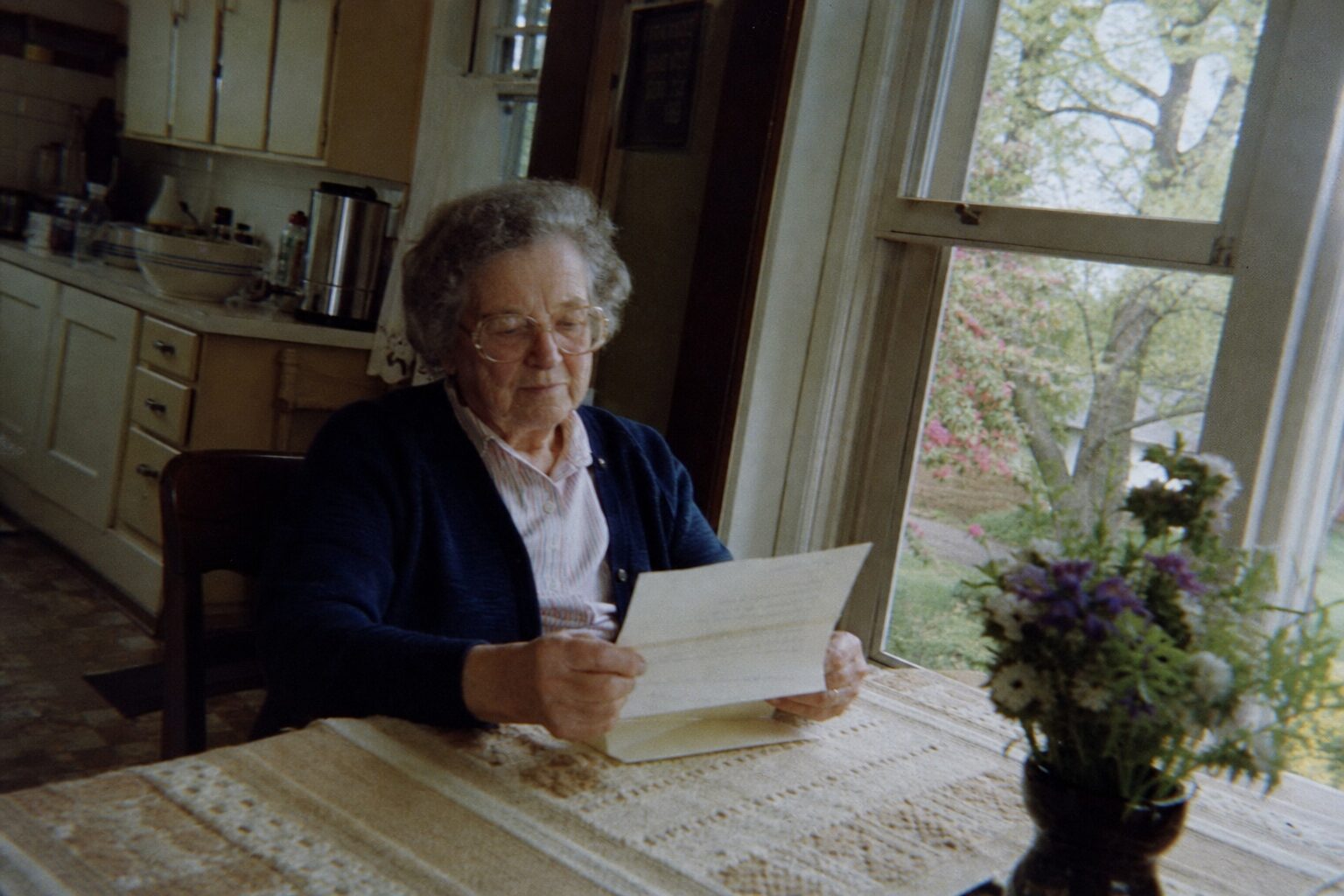
The following spring, a letter arrived from Edward. “My grandmother Margaret passed away last month, quietly. She was ninety years old. She was in good health until the end and spoke of you many times. She went in the room where my grandfather’s photograph and your painting hung side by side. She was so glad to have met you.” Dorothy finished the letter and sat very still for a long time. What had Margaret been thinking, at the very end?
29. The Museum in Spring
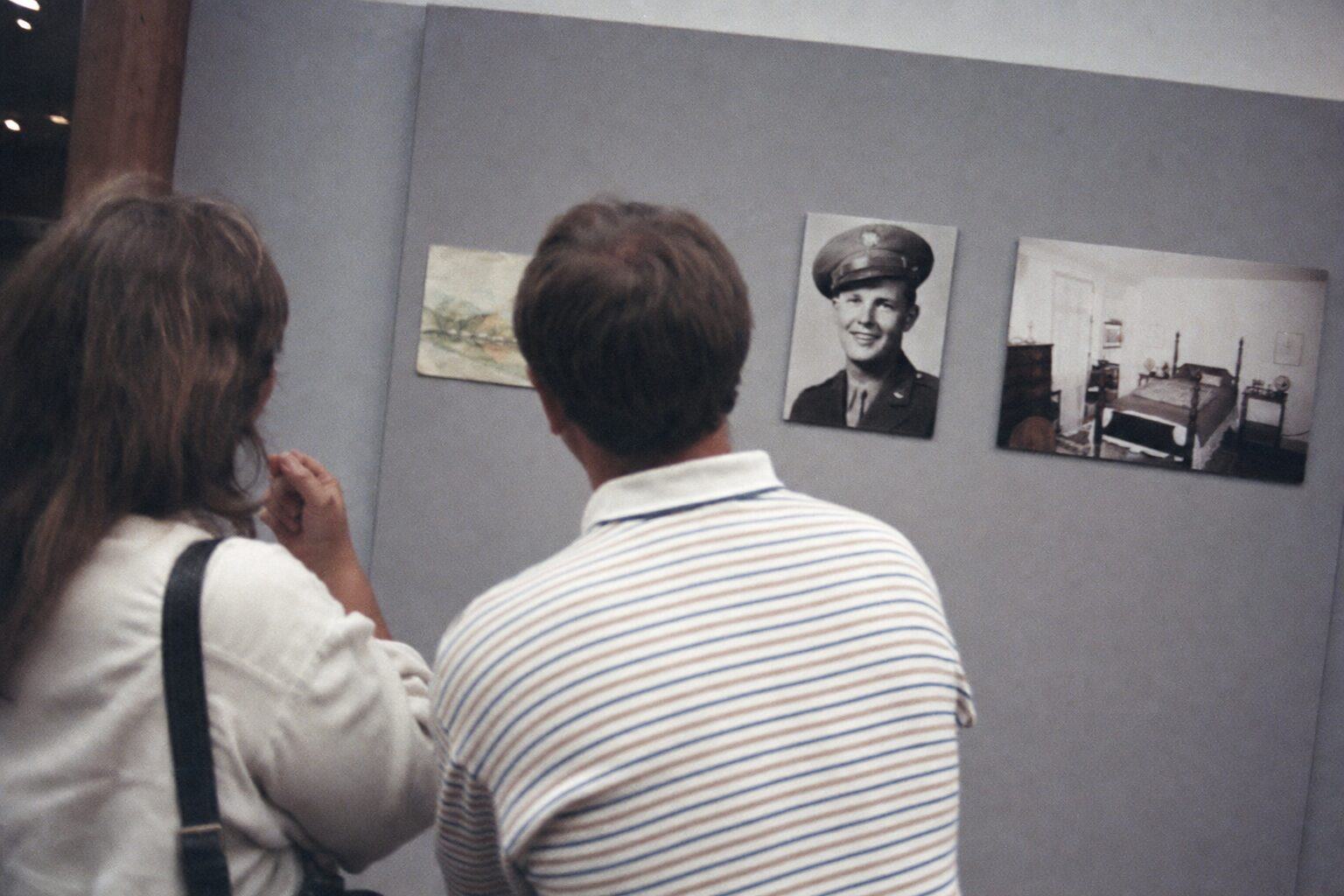
In the summer, Dorothy visited the museum again with Edward. In one corner of the gallery, a small display panel had been added. Dorothy’s watercolor, a photograph of Margaret’s bedroom, and a wartime military photograph of Jack Thornton were arranged side by side. It had become part of an exhibition called “Postwar Connections.” The text told the story of Dorothy, Jack, and Margaret. Dorothy stood before the panel and looked at Jack’s photograph. A smiling soldier.
30. The Way Home
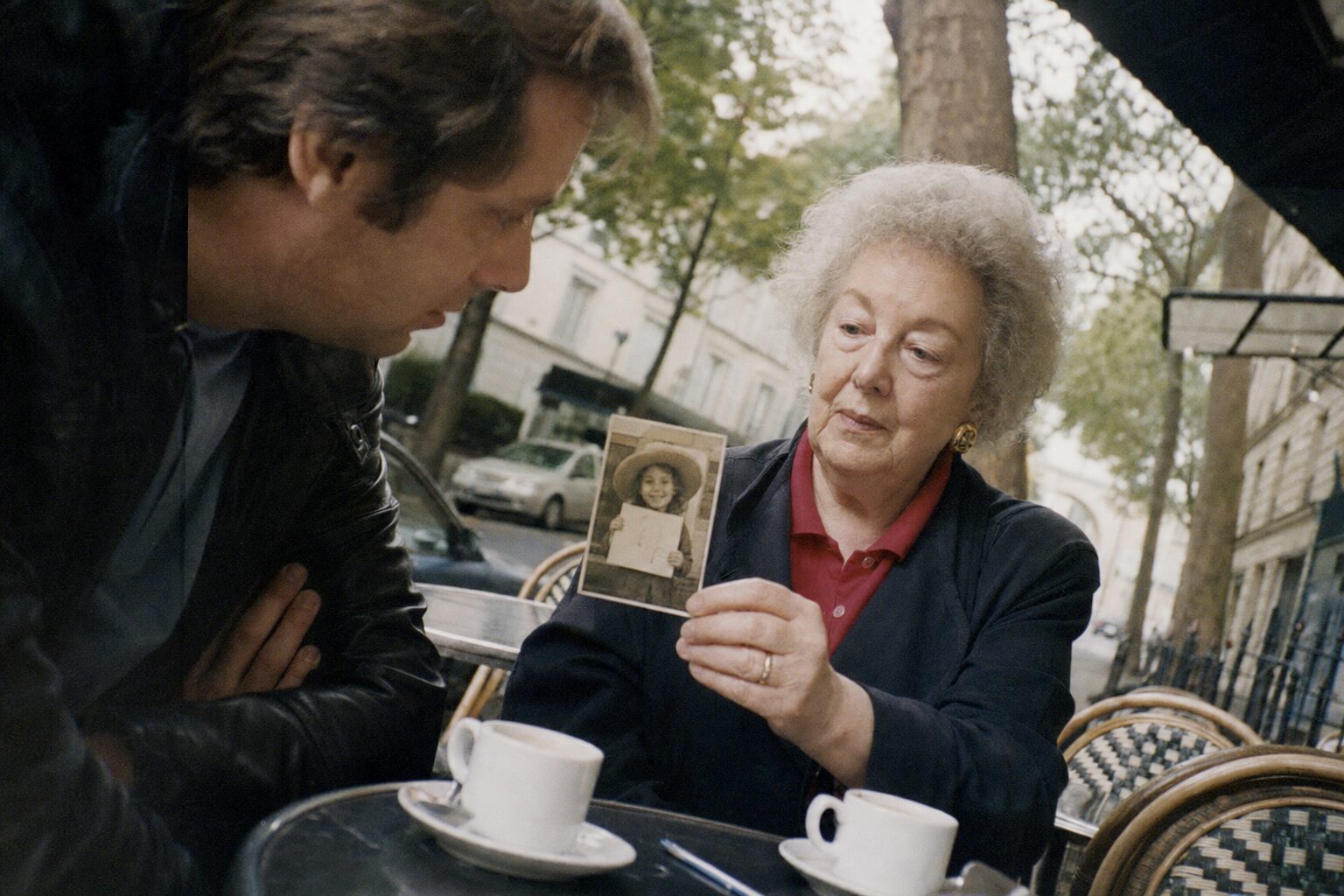
After leaving the museum, Edward took Dorothy to a café. They sat at an outside table and had coffee. The May breeze was pleasant. “I think my grandfather is glad it worked out,” Edward said. “I think so too,” Dorothy answered. For a while they both drank their coffee in silence. Dorothy reached into her bag and took out a small old photograph — a girl in a straw hat, holding a piece of drawing paper, laughing. “This is me, that summer,” Dorothy said. Edward looked at the photograph and smiled. A connection made by a single painting, reaching across seventy years — perhaps it would go on from here. *This story is fiction. All characters and events are entirely imaginary and bear no relation to any real persons or events. Photos are for illustrative purposes only.