※This article is intended to provide tips for maintaining good health and is not intended to serve as a substitute for medical diagnosis or treatment. If you have any symptoms that concern you, please consult a doctor.
1. Check the “back of the tongue” in front of a mirror every morning.
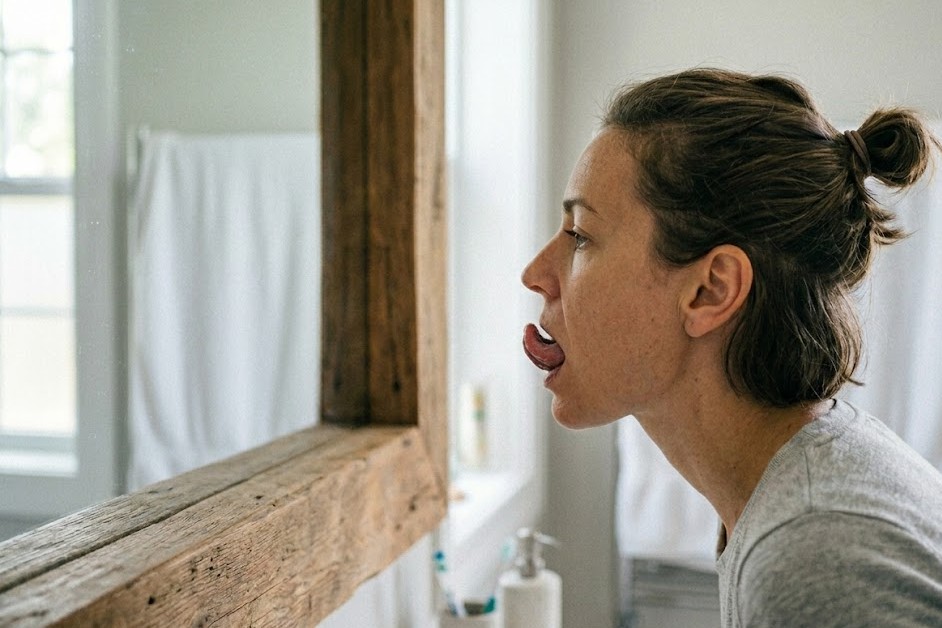
Every morning, roll your tongue up in front of the mirror and look at the back side. If you see thick, swollen, bluish-purple blood vessels clearly visible there, or if they are bumpy and twisted, be careful. This is said to be a sign of poor blood circulation in Oriental medicine. The back of the tongue has thin skin and is a “window into the body” where the condition of blood vessels can be clearly seen. Recently, it has also been noted as a sign of blood vessel bumps in the legs and a sign that the blood vessels are at risk for hardening diseases. If you see an abnormally swollen purple streak, please consult your doctor.
2. Look in a mirror to see if there are any “diagonal wrinkles on the earlobe.
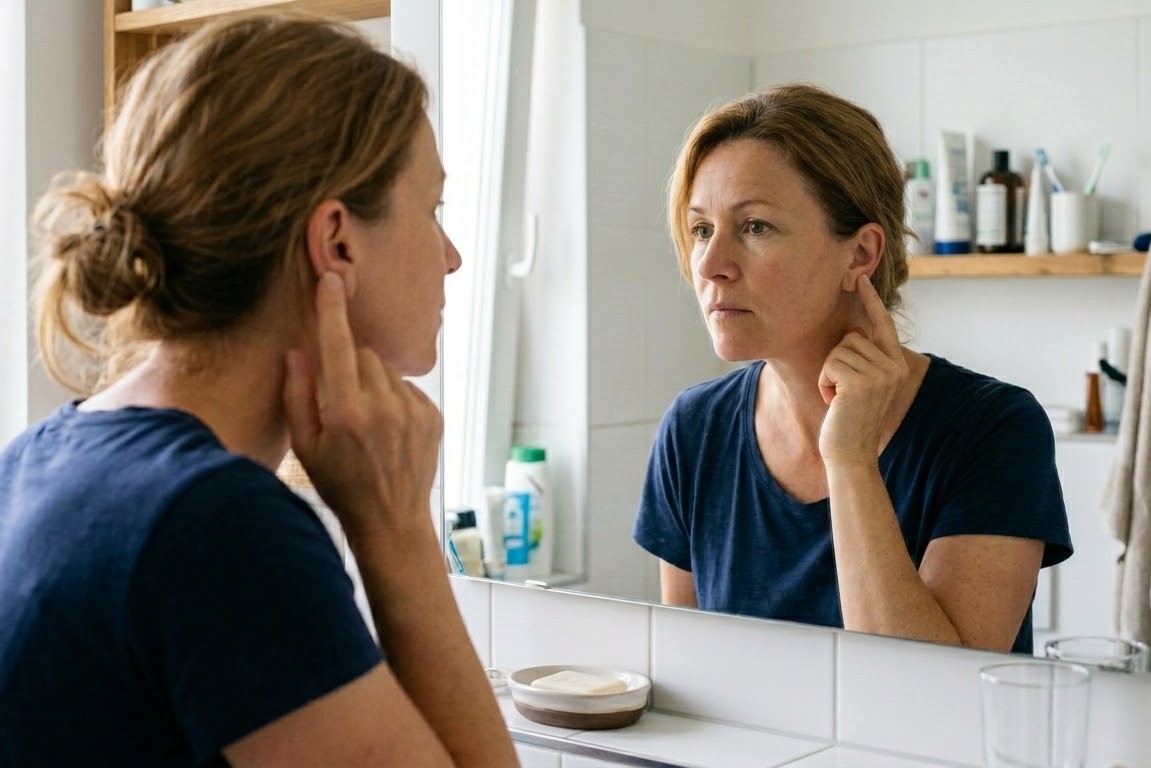
This is an easy health check you can do using a mirror. Look at your “earlobe”. If you see “deep diagonal wrinkles” across your earlobes, don’t dismiss it as just a sign of age. The earlobe is full of small blood vessels, and when blood circulation is poor, fat can be squeezed out of the earlobe without nourishment, causing deep wrinkles. This can be a sign of hidden heart or blood vessel problems. Check regularly as you look in the mirror.
3. Snap the left and right “index fingernails” together.
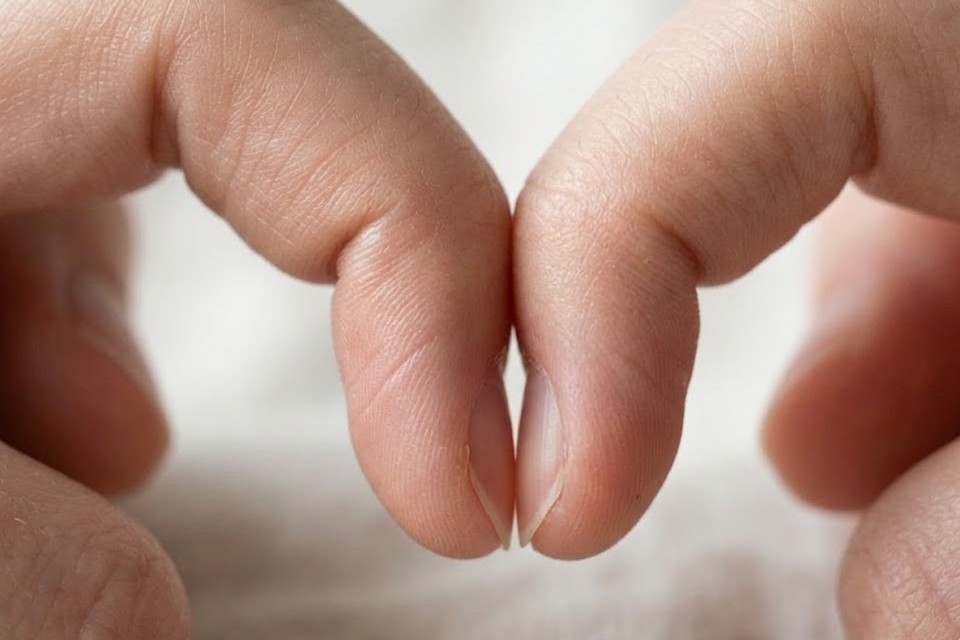
Lightly bend the first joints of the index fingers of both hands and try to snug them together so that the nails are facing each other. If it is healthy, a “diamond-shaped gap” will form at the base of the nail. But if there is no gap at all, and the entire nail is sticking together, be careful. This may be a phenomenon where not enough oxygen reaches the blood vessels in the fingertips, causing the fingertips to curl and swell. This could be a sign of insufficient oxygen due to lung or heart problems, so please try this test, which takes only a few seconds.
4. Fold a “string” the same length as your height in half and wrap it around your waist.
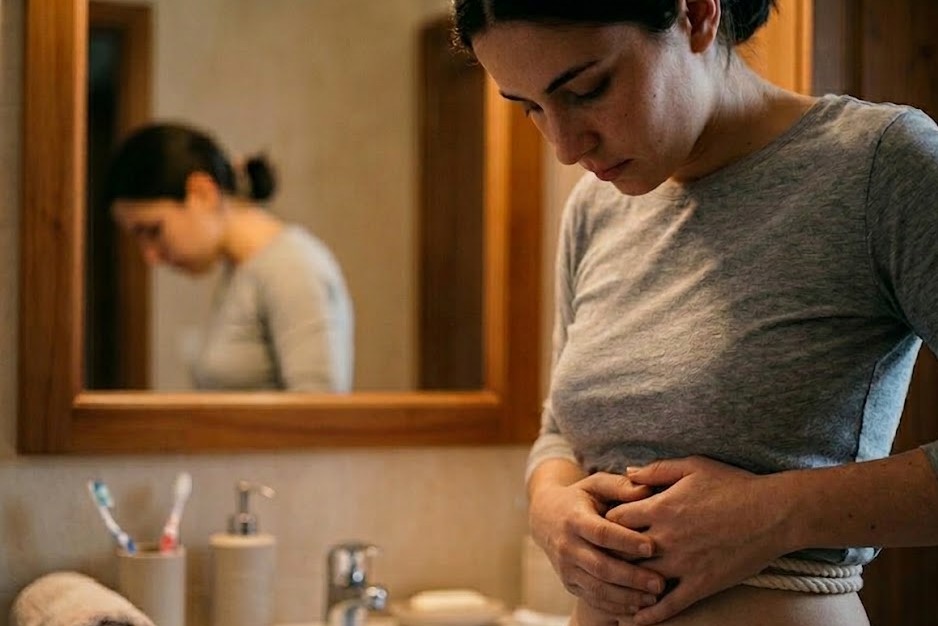
This is a way to check the risk of belly fat, which cannot be detected by a scale. All you need to prepare is a long piece of string. First, cut the string to exactly the same length as your height. Next, fold the string in half and wrap it around your waist at the navel. If the ends of the string do not reach each other, be careful. This test is based on the standard that the waist should be less than half your height. It is said to be an easier way to check for excessive “visceral fat,” which can easily affect your health, than measuring your weight. Please take the measurement once.
5. Smell “coffee” with your eyes closed.
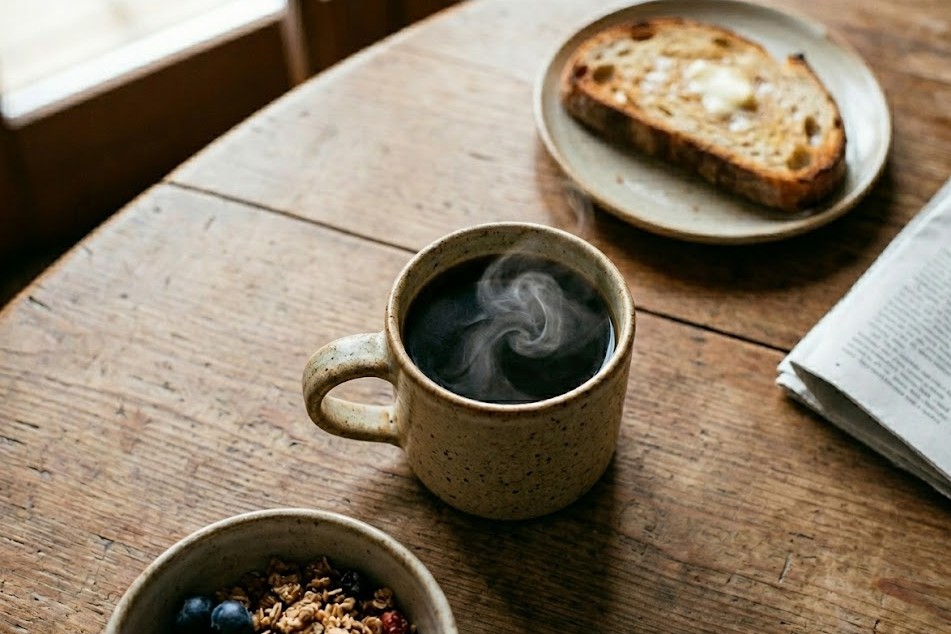
This is a slightly different test to test the youthfulness of the brain. Close your eyes, cover your left nostril with your finger, and smell a strong odor such as coffee or peanut butter with your right nostril only. Then try the same sniff with the opposite nose. This has been noted as a clue to detecting early signs of brain dysfunction, such as memory loss. Brain function may weaken from the “ability to sense smell” before memory. If there is a clear difference in “smell intensity” between left and right sides, it may be a sign that the brain is tired.
6. Lick your wrist, dry it for 10 seconds, and smell it.
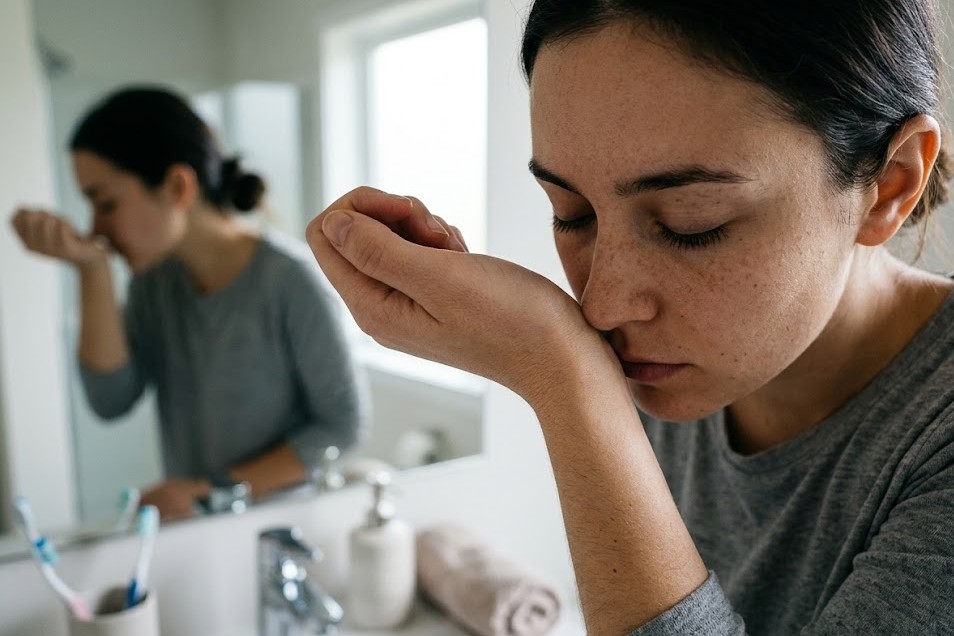
It is known that bad breath appears as halitosis when there is a disorder in the internal organs, but it is difficult to notice one’s own bad breath. So, lightly lick the inside of your wrist with your tongue, wait 10 seconds for the saliva to dry, and then smell it directly. It is easier to notice the signs inside the body by drying saliva than by sniffing the breath. If it smells like sweet and sour fruit, it may be a sign that sugar is not being processed properly. If it smells like ammonia, your liver and kidneys may be tired. If it is odorless, you can rest easy. This is a secret technique to check the health of your internal organs.
7. Count how many seconds you can stand on one leg with “eyes closed”.
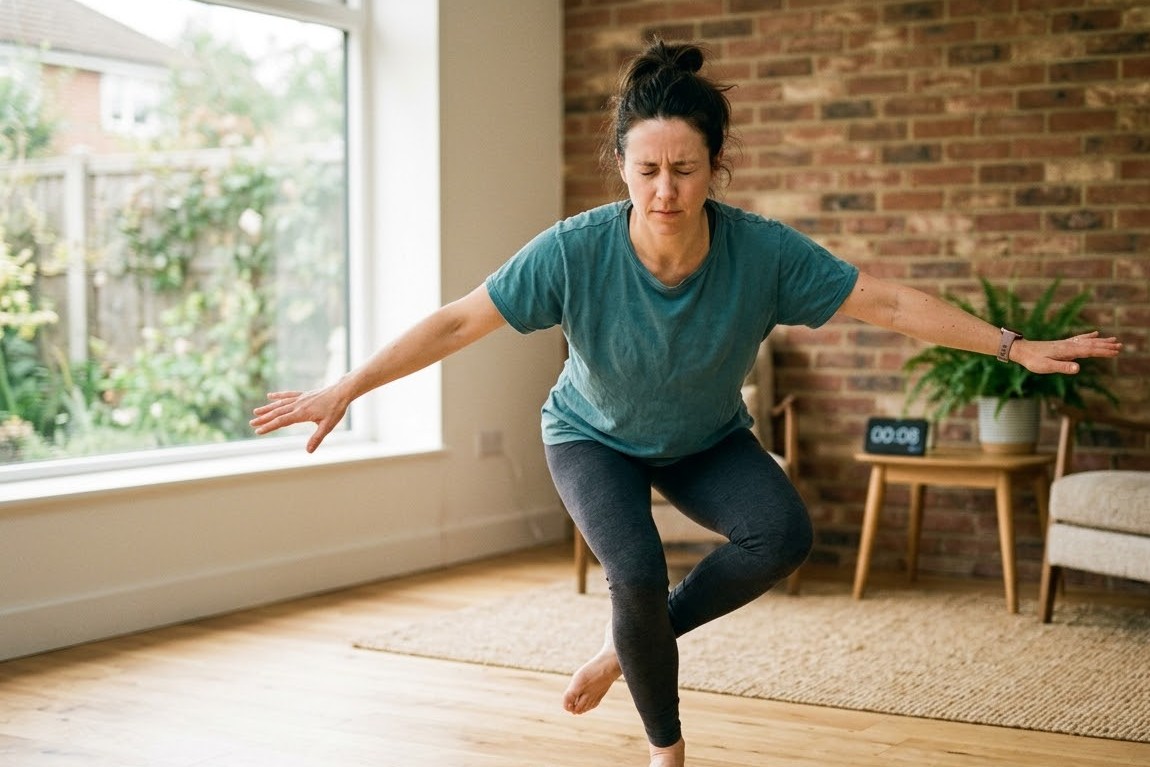
This is a test to determine your brain age in a surprising way. Stand on one foot with “both eyes closed” and measure the number of seconds it takes for you to wobble and get to your feet. This is easy if you keep your eyes open, but with your eyes closed, you need to use a lot of brain power to keep your balance. This test is said to be a good predictor of how young and healthy the brain is for a period of time. If you cannot hold a one-legged stand with your eyes closed for “10 seconds,” your brain may be in a little tired mode. Try it in a safe place, taking care not to fall.
8. “Without using hands,” quickly stand up from the “Awaza” position.
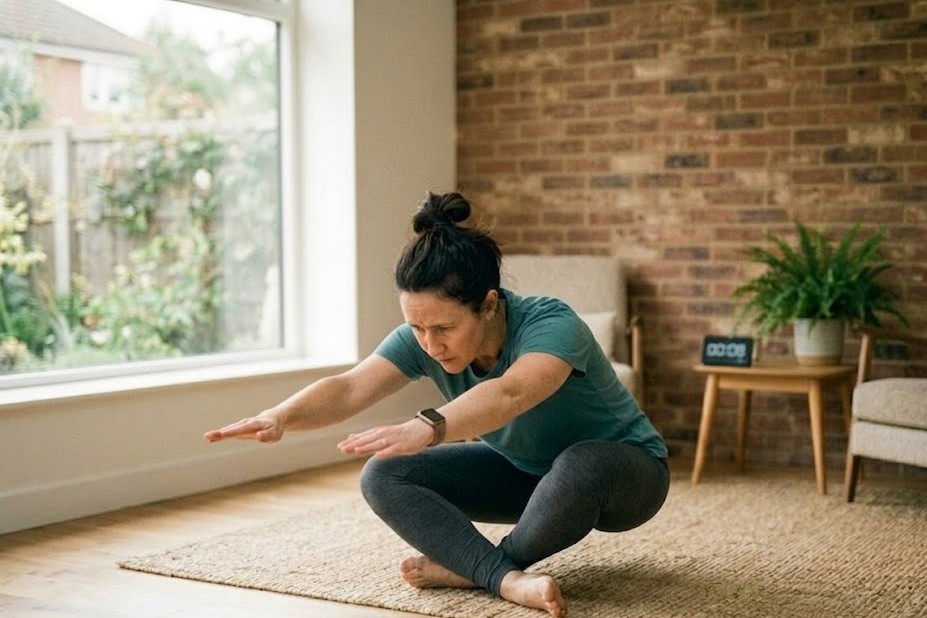
This is another simple test to assess your health based on your body balance. First, sit cross-legged on the floor. From there, try to stand up quickly, without putting your hands and knees on the floor, and without using any recoil. This is an excellent way to measure your overall muscle strength, joint softness, and sense of balance all at once. If you can’t do it smoothly, and you end up on your hands or off balance, the data suggests that your future health risks are slightly higher. This is a test of the true strength of your legs and feet, so please try it with care and take it easy.
9. “Pinch” the skin on the back of the hand for 3 seconds and poof!
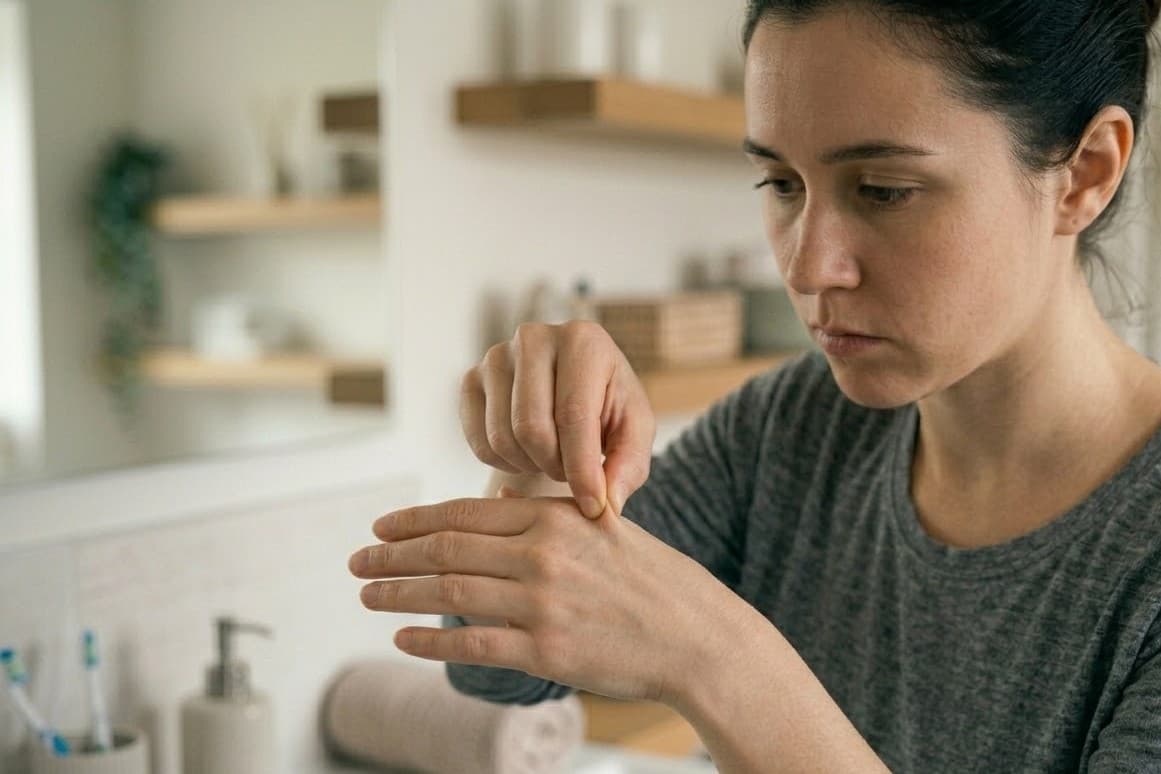
It takes only 3 seconds to check for “water deficiency” in the body. Pinch the skin on the back of your hand with your thumb and forefinger a little harder, hold it for 3 seconds, and then quickly release it. If there is enough moisture in the body, the skin will return to normal in an instant. However, if the skin does not return immediately and remains raised like a tent, it may be a sign of hidden moisture deficiency. Even if you are not aware of it, your blood may be on the verge of becoming sludgy, and your body may be under strain. If you feel that it is slow to return, drink water immediately.
10. Press the nail for 5 seconds “until it turns white” and then poof, release.
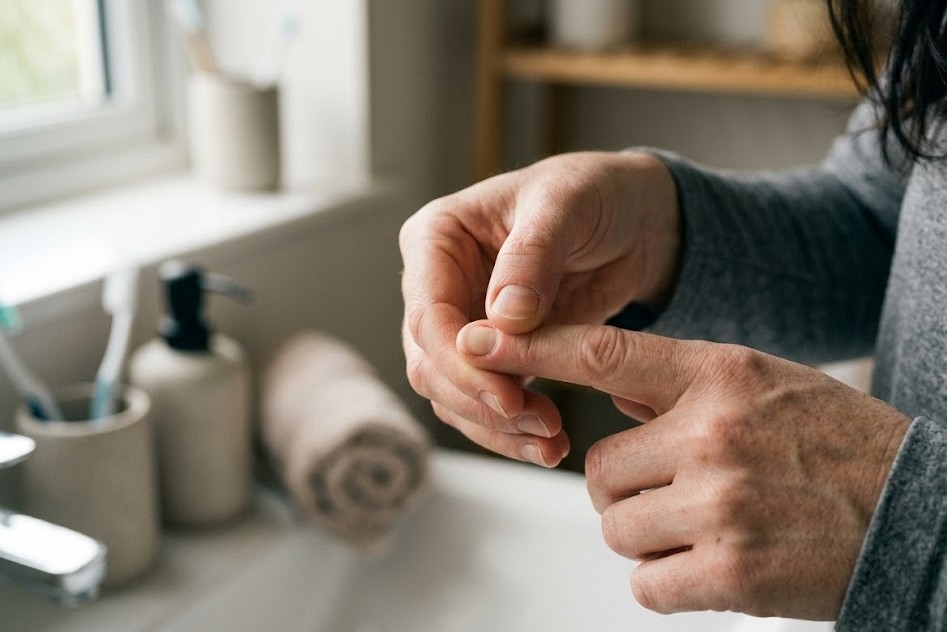
This is a method used in the medical field to check blood circulation. The procedure is simple. Press the pink part of your index fingernail with the opposite finger for 5 seconds until it turns white. Then release your finger and count the time it takes for the nail to return to its original pink color. If you are healthy, it will return in an instant (within 2 seconds). If it takes more than 2 seconds, it may be a sign that blood is not circulating smoothly to all parts of the body. If you suffer from coldness or body fatigue, please check frequently after taking a bath to warm up your body.
*This article is a collection of tips for maintaining good health and is not intended for diagnosis or treatment.
If you have any symptoms of concern, please be sure to consult your doctor.