Place a “cup of water with a coin on it” in the freezer.
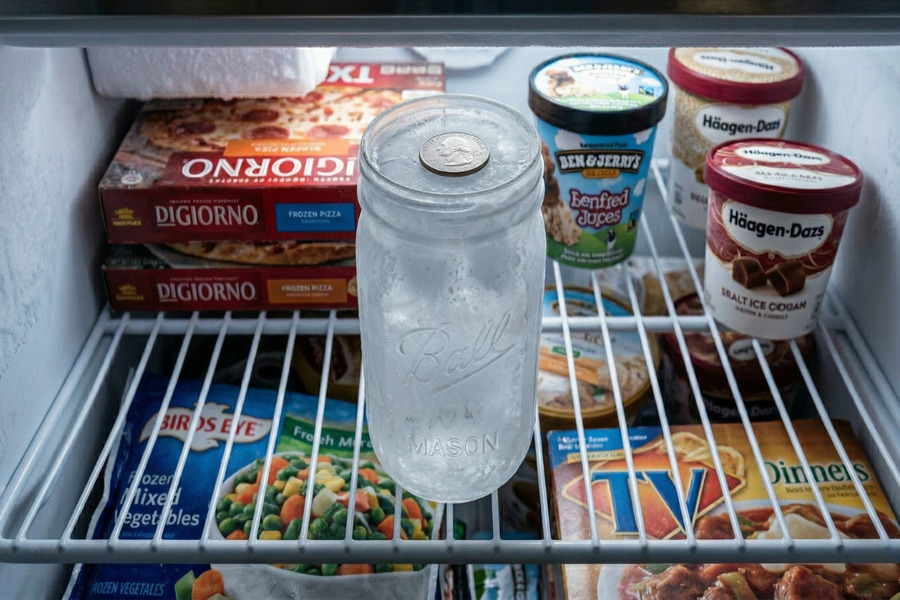
Fill a glass with water, freeze it, and place your coins and money in it before you leave. If there is a power outage during your trip, such as a lightning strike, and your freezer thaws and refreezes once, the coins will freeze again while submerged in the water. If the coins are at the bottom or in the middle when you return home, it is a sign that they have “melted once. It functions as a simple and reliable power failure detector that allows you to determine at a glance whether foodstuffs are at risk, which cannot be determined by appearance. Please make it a habit to protect your family from food poisoning.
Cover the bathroom drain with plastic wrap.
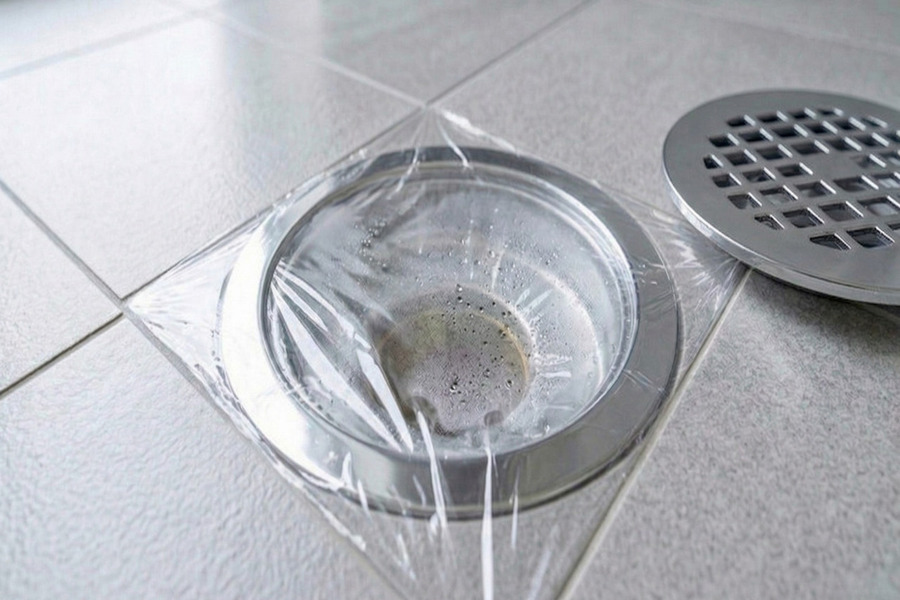
Drains that are not used for long periods of time can cause the “sealant” that prevents odors and insects from entering from sewage to evaporate. Applying food wrap tightly and snugly to the drain can be a countermeasure to reduce odor and insect entry pathways. Especially during periods of high temperatures, small insect infestations and odors are likely to occur, so it is a good idea to address these issues in advance. In addition, the drain hose of a washing machine is often plugged into the drain and not completely sealed, making it an often-overlooked entry route. By taking countermeasures in this area as well, it will be easier to prevent unpleasant problems after returning home.
Place “new toilet paper” in the refrigerator.
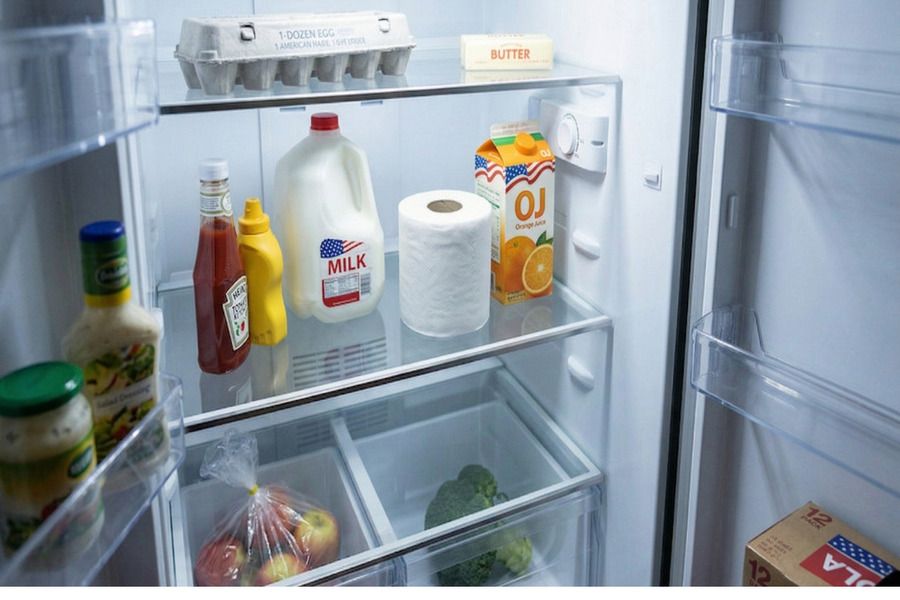
You may be surprised to find paper in the refrigerator, but the paper fibers of toilet paper act as an excellent moisture absorber that loosely absorbs excess moisture in the cabinet. The longer you are away and the less food is in the fridge, the easier it is to upset the humidity balance, but you can counteract this problem by simply placing a whole roll of this in the fridge. Used in combination with commercially available deodorizers for refrigerators, it can suppress unpleasant odors that waft in after you return home.
Turn all cushions/pillows “inside out”.

Unlike futons, cushions and pillows tend to be left damp during travel. Simply turning them inside out before departure will change their ventilation surface and inhibit the growth of dust mites and mold. Pillows that absorb perspiration well are especially effective when turned inside out with the cover removed. When you lie down immediately after returning home to relieve travel fatigue, you can prepare an environment in advance that is free from unpleasant odors and steam.
Leave the “AM radio” on at low volume instead of the TV.
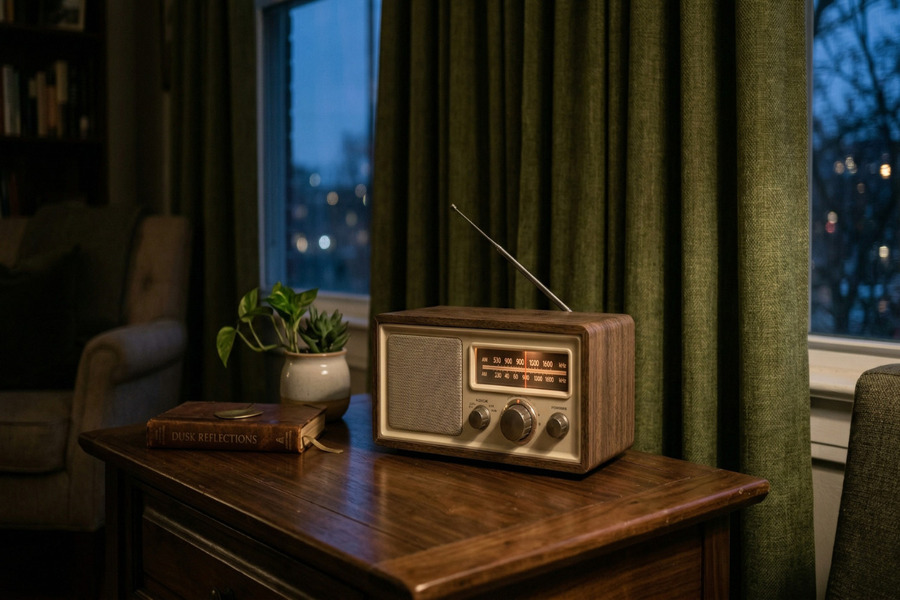
Making household noises as a security measure is an effective means against professional burglars. Television light flashes irregularly, making it easy to detect an absence, while the sound of people talking on a radio is intermittent, creating a realistic sense of home. Compared to TVs, radios consume less electricity and pose less risk of fire, making them safe to use. A radio with a timer function that can be set to emit sound only at night is an even more effective security measure.
Turn off the exhaust fan “completely” and blind it.
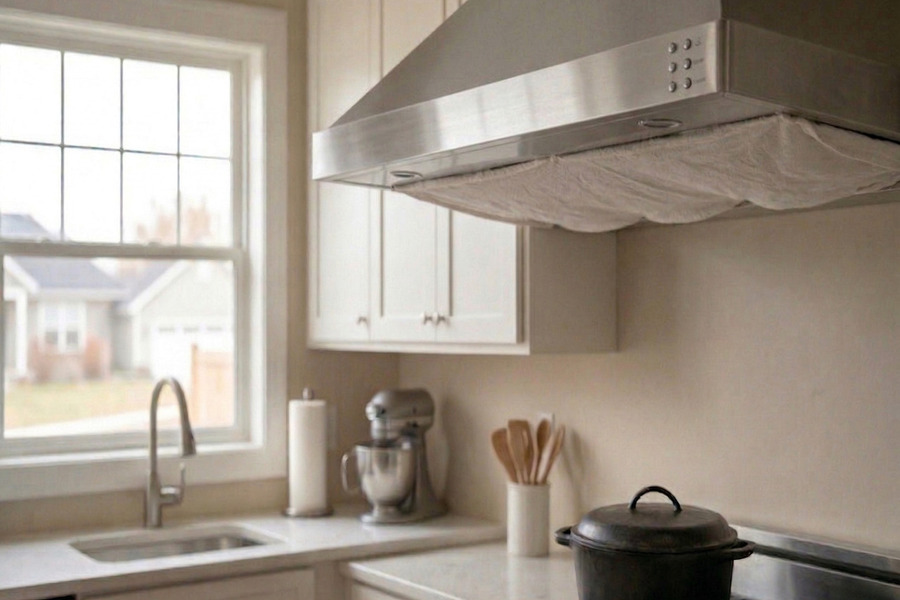
Although it is often thought that it is better to keep the fan running for ventilation, prolonged use of a large exhaust fan may continue to bring outside moisture, dust, and small insects into the room. Daring to stop the system when you are away for long periods of time and lightly covering the filter area can prevent the indoor environment from deteriorating. However, be careful not to stop the system in houses with 24-hour ventilation systems.
Leave a “bowl of vinegar” in the kitchen.
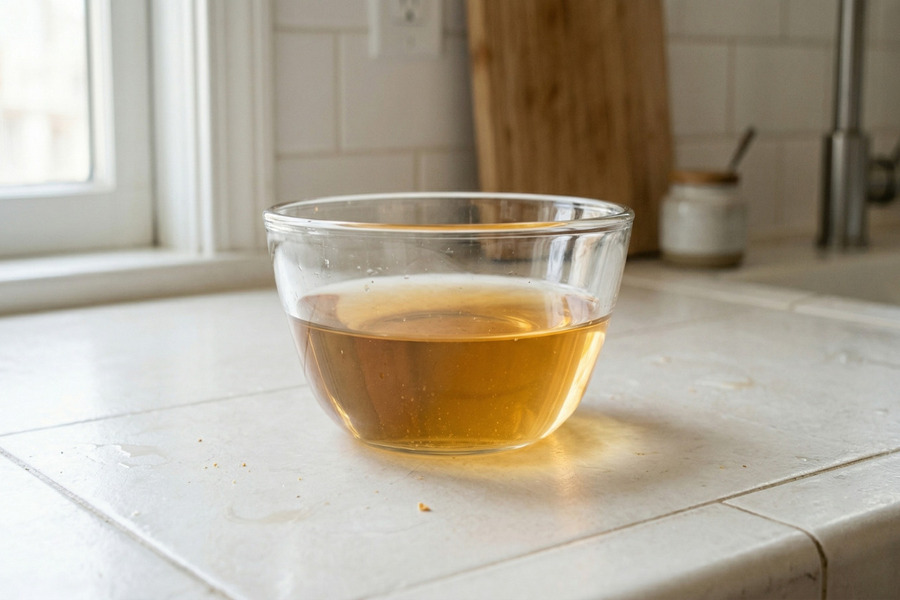
Have you ever come home and felt that your house somehow smells bad even though it is your house? Acetic acid, the main ingredient of vinegar, neutralizes alkaline odors in the air, such as garbage and ammonia odors. Simply place vinegar diluted with water in a bowl and leave it in the kitchen for effect; for trips longer than a week, open the lid of the sealed container slightly to allow it to slowly volatilize for long-lasting deodorizing effects.
Place three “one cent coins” in a row down the drain.
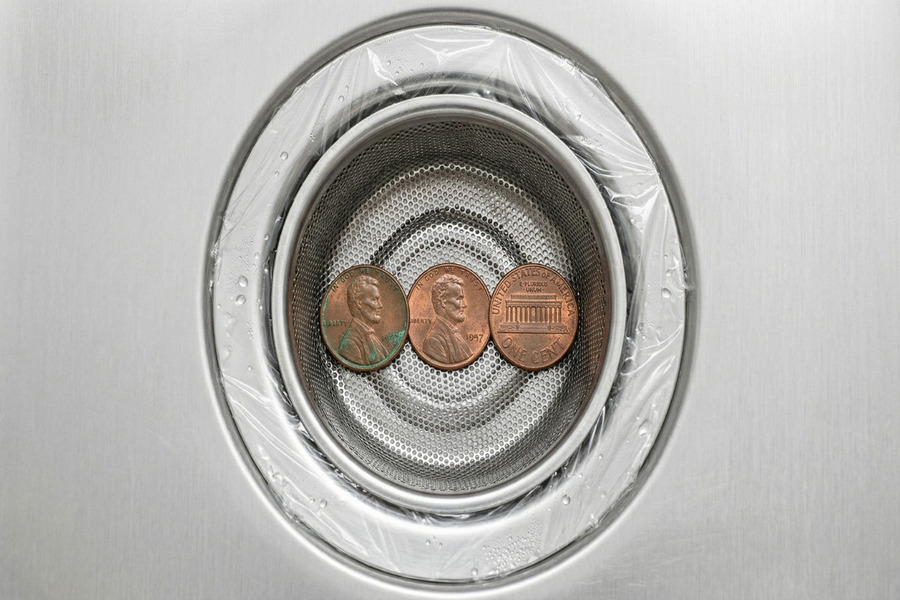
The copper in one-cent coins has antibacterial properties, and placing a few coins in a drain receptacle or other location can be effective in reducing the growth of slime and bacteria. Current coins are copper-plated only on the surface, so their effectiveness is limited, but they are useful as a supplementary cleaning measure. Blocking the drain with plastic wrap, etc., will have the opposite effect and cause malfunctions, so it is best to combine this with measures to maintain ventilation, such as frequently disposing of waste and draining water, to be most effective in preventing odors and insects.
Close curtains “only” 80% of the time.

Many people close their curtains without gaps for security purposes, but a completely closed curtain can be read by a burglar as a sign that you are not home. By daring to close the curtain only 80%, you can create a sense of home that there are people inside and they just happen to be in a blind spot, while keeping the interior of the house invisible from the outside. This “exquisite opening” acts as a psychological deterrent that makes burglars hesitate to break in.
Put a few drops of “salad oil” in the bathroom and toilet drains
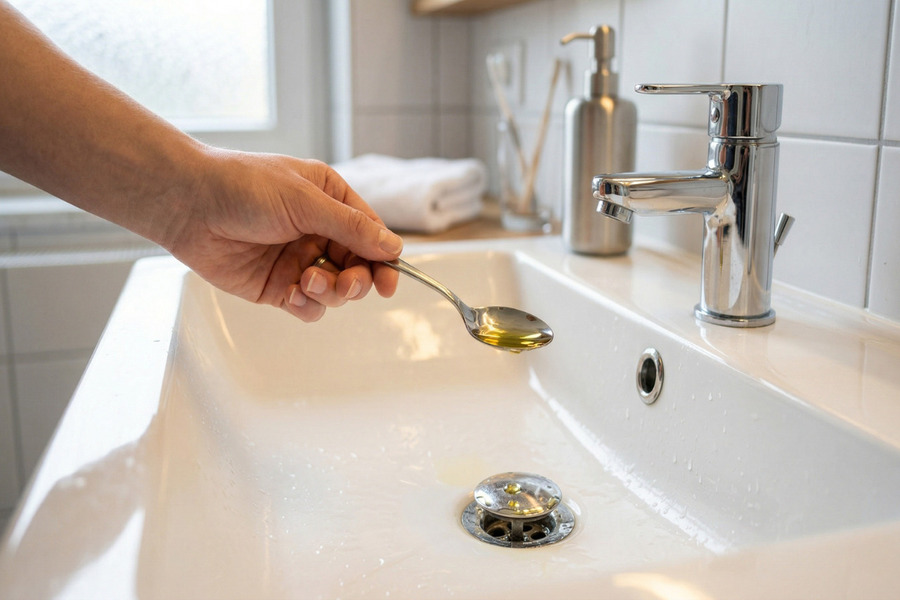
There are many ways to prevent drains, but one method for small drains such as sinks is to put a few drops of salad oil on the surface of the drain. The oil creates a thin film on the surface of the water, which helps to reduce water evaporation. This will help prevent odors and insect infestation from sewage. When using this method, be sure to use only a small amount and not to flush a large amount.