Chapter 1 – The Beginning of the Anomaly
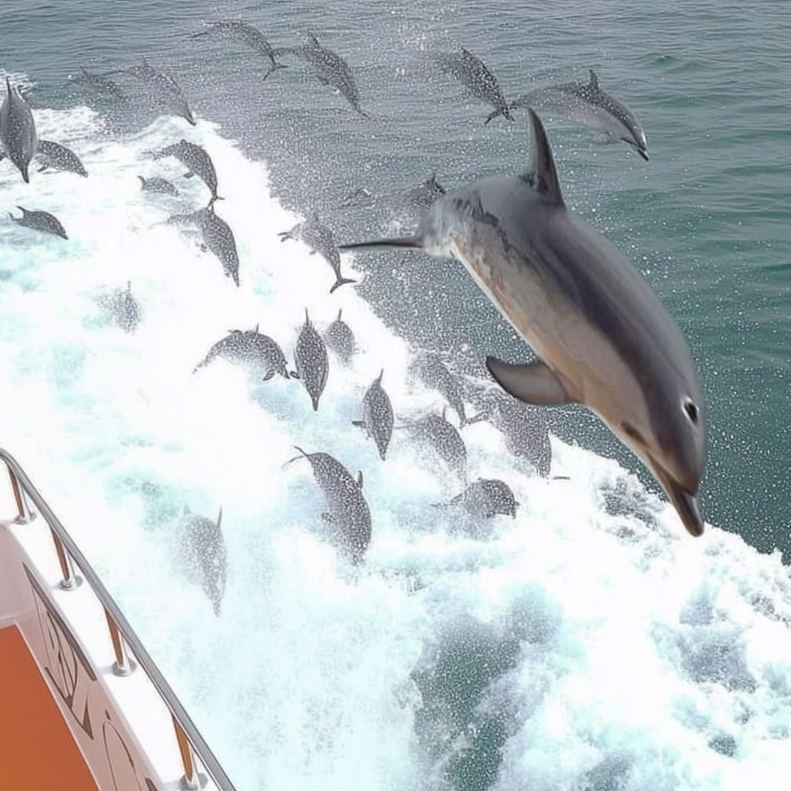
Marine biologist Sarah Coleman was aboard the research vessel Neptune off the coast of California.
It was a calm morning when suddenly a dozen dolphins began to circle the ship.
“That’s not so unusual,” her assistant Jake Marshall remarked.
But even after thirty minutes, the dolphins didn’t leave.
They kept swimming around the vessel in a steady, deliberate rhythm.
Sarah felt a twinge of unease.
Their behavior didn’t seem playful — it looked purposeful.
“Activate the hull camera,” she ordered Jake.
When the image appeared on the monitor, both of them gasped.
Chapter 2 – The Discovery Beneath

The camera showed a huge fishing net tangled around the ship’s underside.
But that wasn’t all — inside the net, a young dolphin was struggling to break free.
“Oh no…” Sarah whispered.
The pod had surrounded the boat to ask for help.
Captain Michael Donovan came down from the bridge.
“What’s our move?” he asked.
“Help it. Immediately,” Sarah answered without hesitation.
Jake was already preparing the diving gear.
Outside, the dolphins called out again and again, their cries almost pleading.
It was as if they were begging the humans to act.
Chapter 3 – The Rescue

Sarah and Jake plunged into the sea.
In the clear water, the young dolphin was plainly visible — about a meter long, probably less than a year old.
The net was wrapped tightly around its pectoral and tail fins.
“Easy does it,” Sarah said through the underwater microphone.
Jake began slicing the ropes with his knife.
The other dolphins drew nearer, not to attack but to watch anxiously.
After fifteen minutes, the last strand came free.
The calf darted toward a larger dolphin — its mother, perhaps — and pressed against her side.
Then the entire pod began circling Sarah and Jake, surrounding them in graceful motion.
Chapter 4 – The Dance of Gratitude

When they surfaced, the dolphins leapt repeatedly into the air, again and again — almost like dancers performing a celebration.
“They’re … thanking us,” Sarah said, her voice trembling.
Back on deck, the crew burst into applause as the two divers climbed aboard.
Yet Sarah’s expression remained thoughtful.
“This may happen more often than we realize,” she said quietly.
“Perhaps we simply don’t notice.”
Captain Donovan nodded.
“The ocean still holds stories we’ve never heard.”
The dolphins swam alongside the ship for a while before slowly fading into the distance — as if bidding farewell.
Chapter 5 – The Video Goes Viral

Jake’s footage was submitted to the research institute — and uploaded to social media with the title “Answering the Dolphins’ SOS.”
Within two days it surpassed ten million views.
Messages of wonder poured in from around the world.
At the same time, people began discussing the problems of marine pollution and abandoned fishing nets.
“This is only the tip of the iceberg,” said Emma Thompson, director of an environmental organization, when she phoned Sarah.
“Your footage could spark global change.”
Sarah sensed that her work — and her role — was beginning to shift.
Chapter 6 – The Media Storm

Sarah soon found herself surrounded by media attention.
She was invited onto television interviews, including a live appearance on CNN with the famous anchor Jennifer Wright.
“What went through your mind in that moment?” Jennifer asked.
Sarah replied softly, “I felt that the dolphins were clearly asking for help. They trusted us.”
The studio audience fell silent.
“Marine mammals are far more intelligent than we imagine,” she continued.
“We must start listening to their voices.”
Her words resonated deeply with viewers across the country.
After the broadcast, donations flooded her research institute.
Chapter 7 – Past Cases

Driven by curiosity, Sarah began searching through scientific records.
To her surprise, she found dozens of reports from around the world describing dolphins seeking help from humans.
Most had never been verified scientifically.
“This isn’t coincidence,” she said with conviction.
She contacted Dr. Kevin Nakamura, a marine researcher in Hawaii.
“Ten years ago,” he told her, “an injured dolphin approached my boat, as if asking for treatment.”
The two agreed to collaborate — a joint study on dolphin cognition and their trust in humans.
It was a step into uncharted waters.
Chapter 8 – Voices of Opposition

Not everyone welcomed her ideas.
Some scientists accused Sarah of anthropomorphism — of projecting human emotions onto animals.
“It’s dangerous to interpret dolphin behavior as deliberate communication,” argued Professor Robert Harris, a leading marine biologist, at a conference.
“There isn’t enough scientific evidence.”
Sarah felt hurt, but she stood her ground.
“Then how do you explain their pattern of behavior?” she countered.
“They circled our boat for thirty minutes — that’s not random.”
The debate grew heated, without conclusion.
But Sarah understood something important: every new truth meets resistance.
She would not let that stop her.
Chapter 9 – Another Encounter

Two months later, Sarah returned to the same waters, this time equipped with advanced instruments to record the dolphins’ every movement.
To her astonishment, the same pod appeared again.
“It’s them! The same group!” Jake shouted.
By the markings on their dorsal fins, they even identified the young dolphin that had once been trapped.
The dolphins swam close to the boat, leaping joyfully as if to celebrate their reunion.
“They remember us,” Sarah said, eyes glistening with emotion.
That day she realized something profound — dolphins possess memory, gratitude, and the capacity to form bonds with humans.
Chapter 10 – The Underwater Recording

Sarah used a high-sensitivity underwater microphone to capture the dolphins’ sounds.
Back in the lab, acoustic analysis revealed something extraordinary.
The dolphins were repeating specific sound patterns at consistent frequencies.
“This is communication,” said Alicia Lee, an acoustic expert assisting Sarah.
“They’re exchanging information — and this sequence…” Alicia paused. “It resembles human linguistic structure.”
Sarah’s heart raced.
Could dolphins have a language?
Were they trying to speak to humans?
Chapter 11 – The International Symposium

Sarah’s research soon drew worldwide attention.
She was invited to deliver the keynote address at the International Symposium on Marine Biology in Sydney, Australia.
The hall was filled with scientists from every corner of the globe.
Though nervous, Sarah stepped onto the stage with quiet confidence.
“Dolphins,” she began, “are not merely intelligent animals. They possess self-awareness, plan their actions, and attempt interspecies communication.”
The screen behind her played the footage from that fateful day — the dolphins encircling the Neptune.
The audience watched in awe.
When her presentation ended, a long silence filled the hall, followed by thunderous applause.
So many hands shot up during the Q&A that people stood in the aisles.
Something had shifted — the scientific community was finally taking her work seriously.
Chapter 12 – The Funding

The symposium’s success led to major breakthroughs in support.
A large foundation known as the Ocean Voice Foundation announced a five-million-dollar grant for dolphin and whale communication research.
Its chairman, William Sanders, told her,
“Your research could redefine humanity’s relationship with marine life.”
With the new funding, Sarah purchased a state-of-the-art research vessel and expanded her team.
Jake was promoted to chief researcher, and young scientists from across the world applied to join them.
“This is only the beginning,” Sarah said as she stood on deck, gazing out over the vast ocean.
Chapter 13 – A Rival Emerges

But success also brought challenges.
A rival research group began to question her findings — led by none other than Dr. David Crawford, Sarah’s former mentor.
“Her work is sentimental and lacks scientific rigor,” Crawford told reporters.
The words stung deeply. He had once been her teacher, even her role model.
“Why would he do this?” Jake asked.
Sarah gave a faint, resigned smile.
“He belongs to an older generation. Sometimes, people can’t accept new discoveries.”
Ironically, the controversy only increased public interest.
Suddenly, dolphin communication had become a topic of global discussion.
Chapter 14 – Letters from Children

Soon, letters began pouring into Sarah’s laboratory — from children around the world.
“Thank you for helping the dolphins.”
“When I grow up, I want to protect the ocean too.”
Each message reminded Sarah of the weight of her responsibility.
One letter, from a ten-year-old girl named Emily, touched her the most.
“My brother can’t speak,” Emily wrote.
“But like the dolphins, he finds other ways to express himself. Your research taught me that communication isn’t just about words.”
Sarah cried as she read it.
Her work, she realized, was not only helping dolphins — it was giving people hope, too.
Chapter 15 – Government Intervention

As her research continued to gain traction, governments began to take notice.
The head of the Marine Conservation Agency, Nancy Collins, paid Sarah a visit.
“Dr. Coleman,” Nancy said, “we want to base new marine protection policies on your findings.”
Sarah was taken aback.
“There’s growing debate,” Nancy explained, “about recognizing dolphins and whales not merely as wildlife, but as intelligent beings.”
Sarah listened, amazed. Could her discoveries truly influence national law?
“But we’ll need irrefutable evidence,” Nancy added.
“We’re prepared to support your research — and we’re counting on you to change the world.”
Sarah felt a surge of purpose. Her mission had become bigger than science.
Chapter 16 – The Deep-Sea Challenge
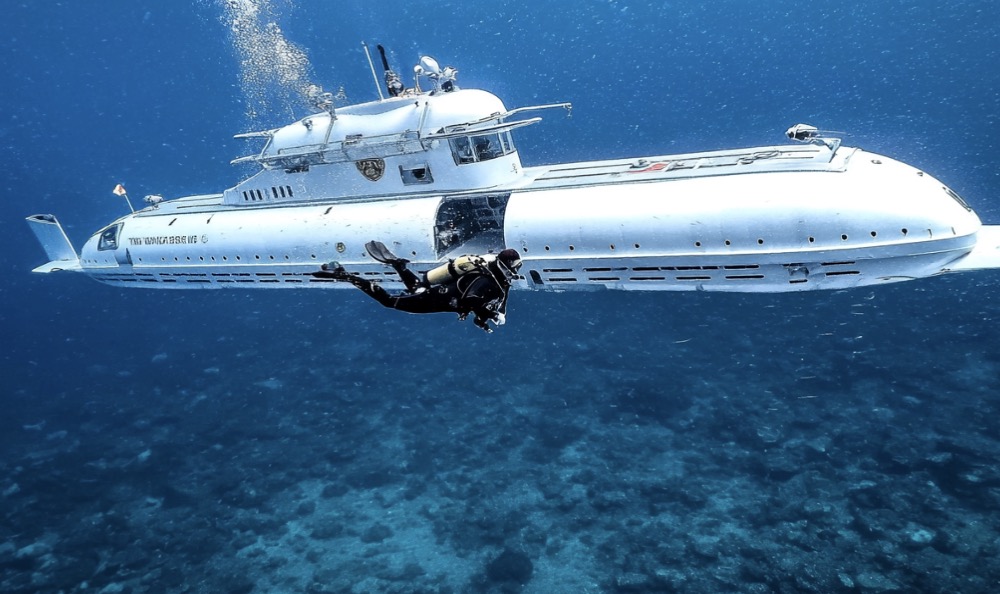
Sarah’s team decided to go deeper than ever before.
They planned a new expedition to observe dolphins in their natural environment far beneath the surface.
Using a newly built submersible, they could descend to depths of three hundred meters.
The pilot, Tony Rodriguez, was a seasoned diver.
“We’ll finally see how they hunt and cooperate in the deep,” he said confidently.
During three days of observation, the team witnessed astonishing scenes.
The dolphins worked together to herd schools of fish, each taking on a clear role.
Their coordination resembled human teamwork.
“This is culture,” Sarah said quietly in the sub’s dim cabin.
“Behavior that’s learned and passed down through generations.”
She realized they were watching not mere instinct, but an organized society beneath the waves.
Chapter 17 – The Sick Dolphin
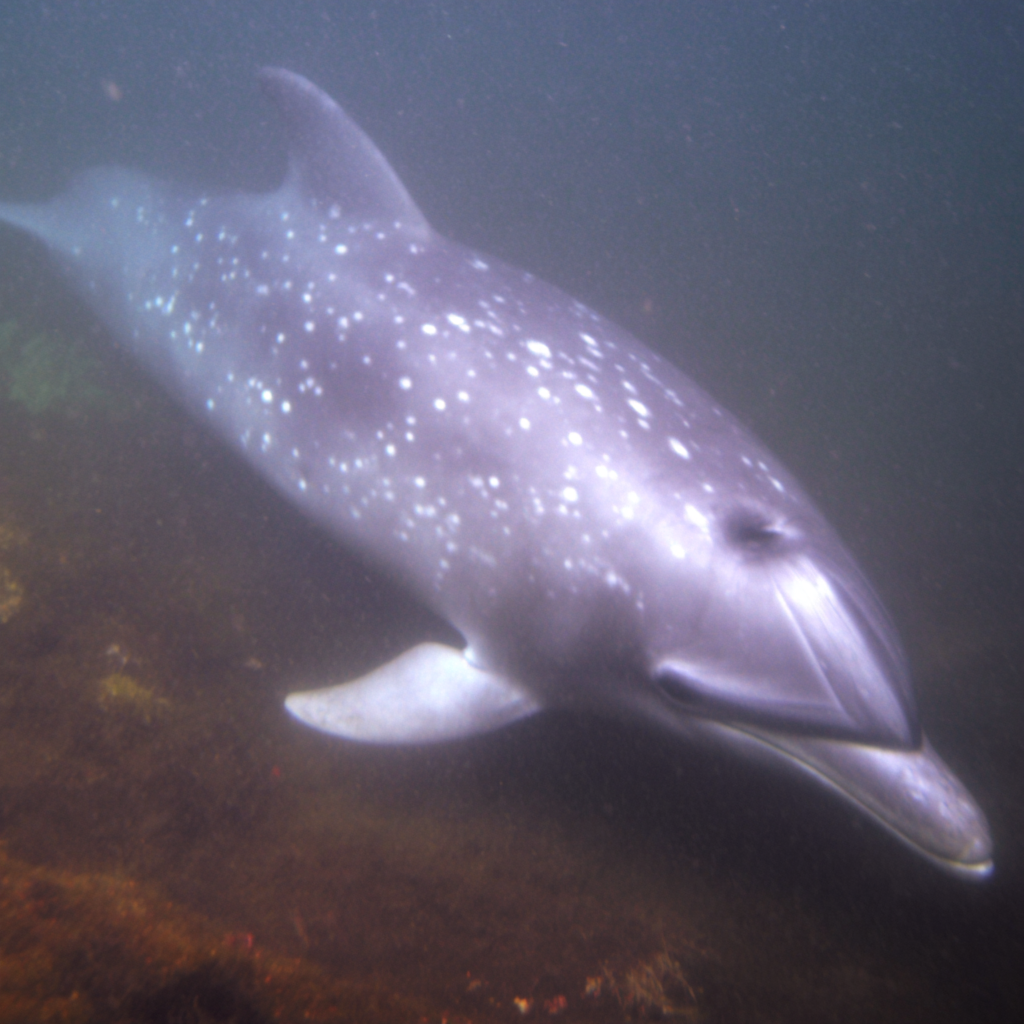
One afternoon, Sarah noticed an adult dolphin behaving strangely.
White patches covered its skin, and its movements were sluggish.
“It’s sick,” she said immediately.
Later that day, the same dolphin appeared near the research ship, as if seeking help.
“It’s happening again—they’re asking us for aid,” Jake exclaimed.
Sarah turned to Olivia Chen, a marine veterinarian on the team.
“It looks like a fungal infection,” Olivia said after examining footage.
“Can you treat it?”
“I can try.”
In the water, Olivia approached the dolphin gently and applied a special medicinal compound to the infected area.
The dolphin remained calm the entire time, showing remarkable trust—almost like a patient submitting to a doctor’s care.
Chapter 18 – Results of the Treatment
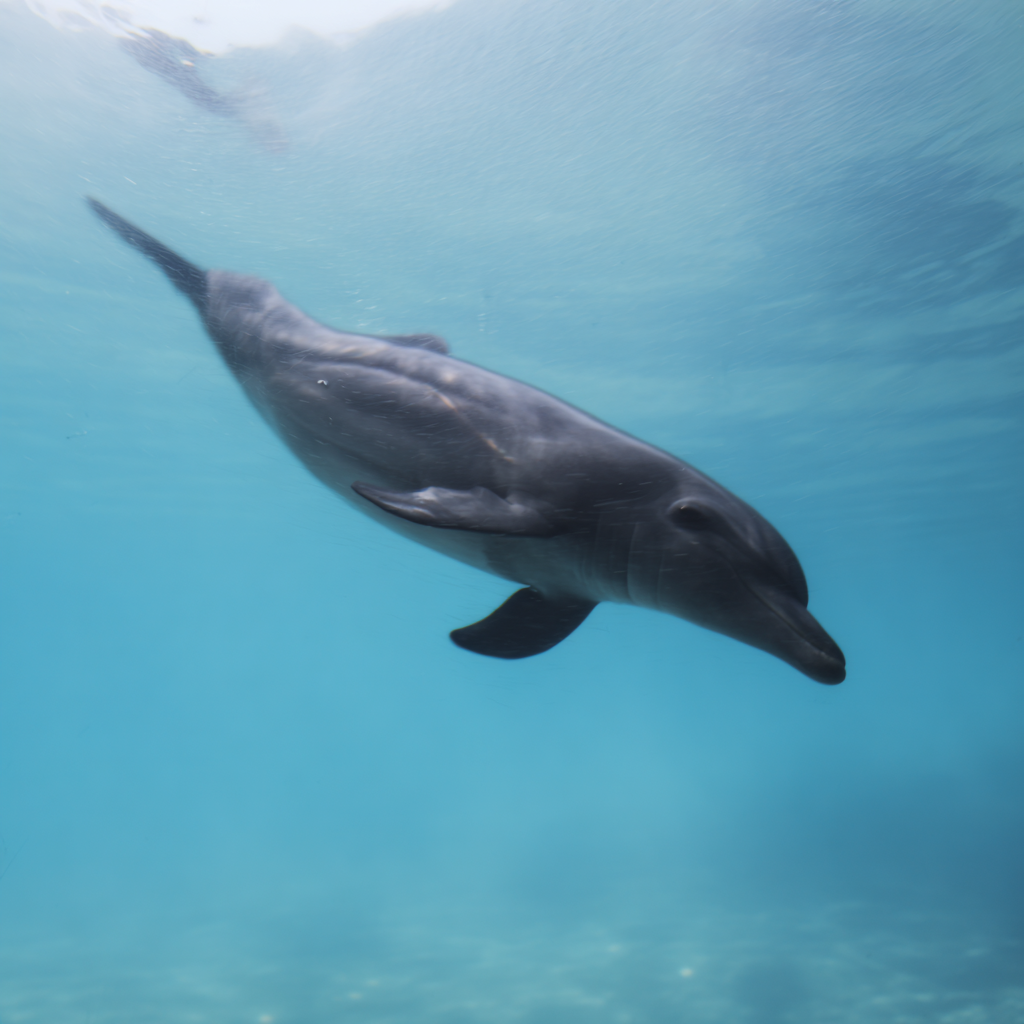
Two weeks later, the same dolphin returned.
The white patches had nearly disappeared.
“The medicine worked!” Olivia shouted with joy.
The dolphin swam around the boat energetically, leaping into the air again and again.
“He’s expressing gratitude,” Sarah murmured.
This became the first documented case of successful medical cooperation between humans and wild dolphins.
“Think about it,” Jake said excitedly.
“If we could monitor the health of wild dolphins, we might extend their lifespan and help preserve their species.”
Sarah nodded.
A new possibility was unfolding—true coexistence between humans and dolphins.
Chapter 19 – Reconciliation with David

At the next academic conference, Sarah came face-to-face once more with Dr. David Crawford.
This time his expression was gentler.
“Sarah, may we talk?” he asked.
They sat together in a small café.
“I was wrong,” David admitted.
“Your research opened my eyes. My own rigid thinking blinded me.”
Sarah was taken aback.
“Dolphins are far more complex than I ever believed—and you proved it,” he said.
“If you’ll have me, I’d like to collaborate with you.”
Sarah smiled warmly.
“Of course, Professor. Let’s search for the truth together.”
They shook hands.
The tension of the past gave way to a renewed partnership.
Chapter 20 – Decoding the Language
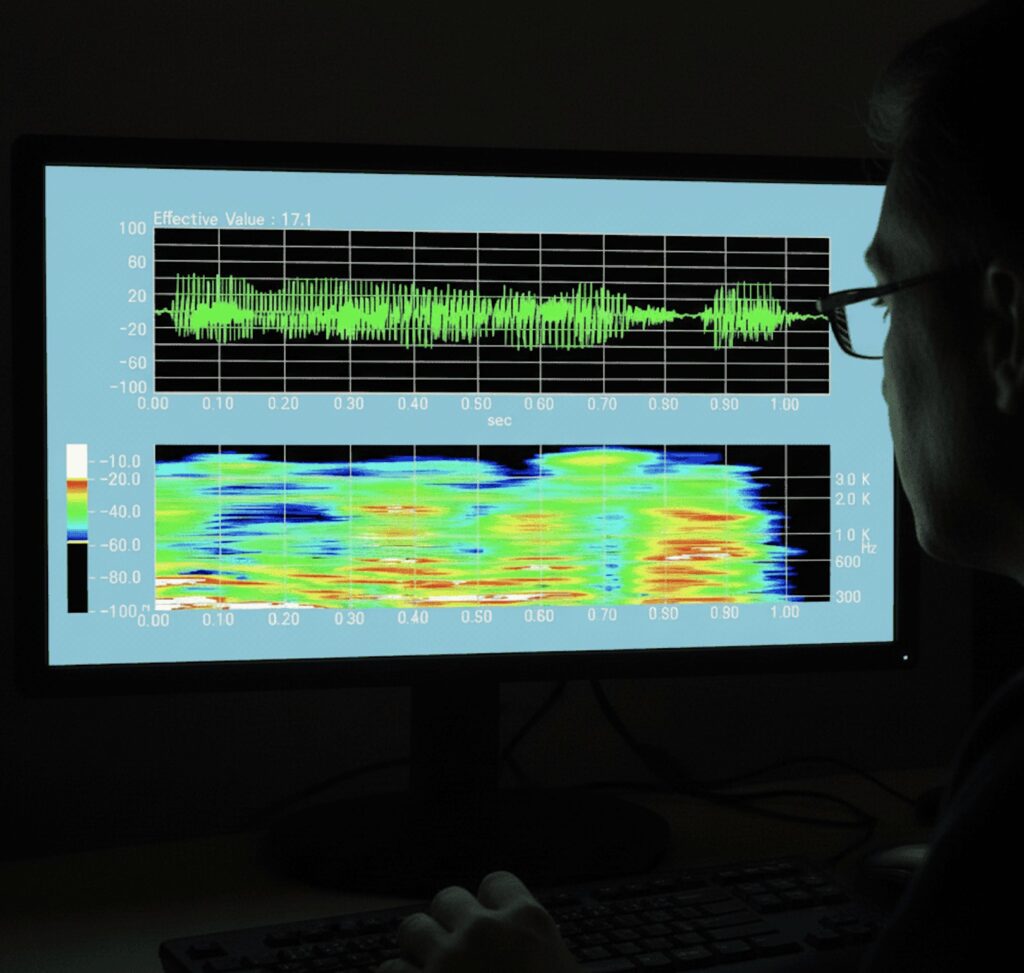
With David on board, the research progressed rapidly.
His linguistic expertise combined with Sarah’s fieldwork brought new breakthroughs.
“This sound pattern seems to mean danger,” David noted one evening.
“And this high-frequency call—perhaps it signals companions or friends.”
After months of analysis, the team compiled the first basic dolphin lexicon:
around fifty distinct sound patterns, each with a probable meaning.
“This is historic,” David said, barely containing his excitement.
“For the first time, humanity is beginning to understand the language of another species.”
Sarah’s thoughts drifted back to that day off the California coast—the dolphins’ SOS that started it all.
From that single act of trust, an entirely new world had opened.
Chapter 21 – Two-Way Communication
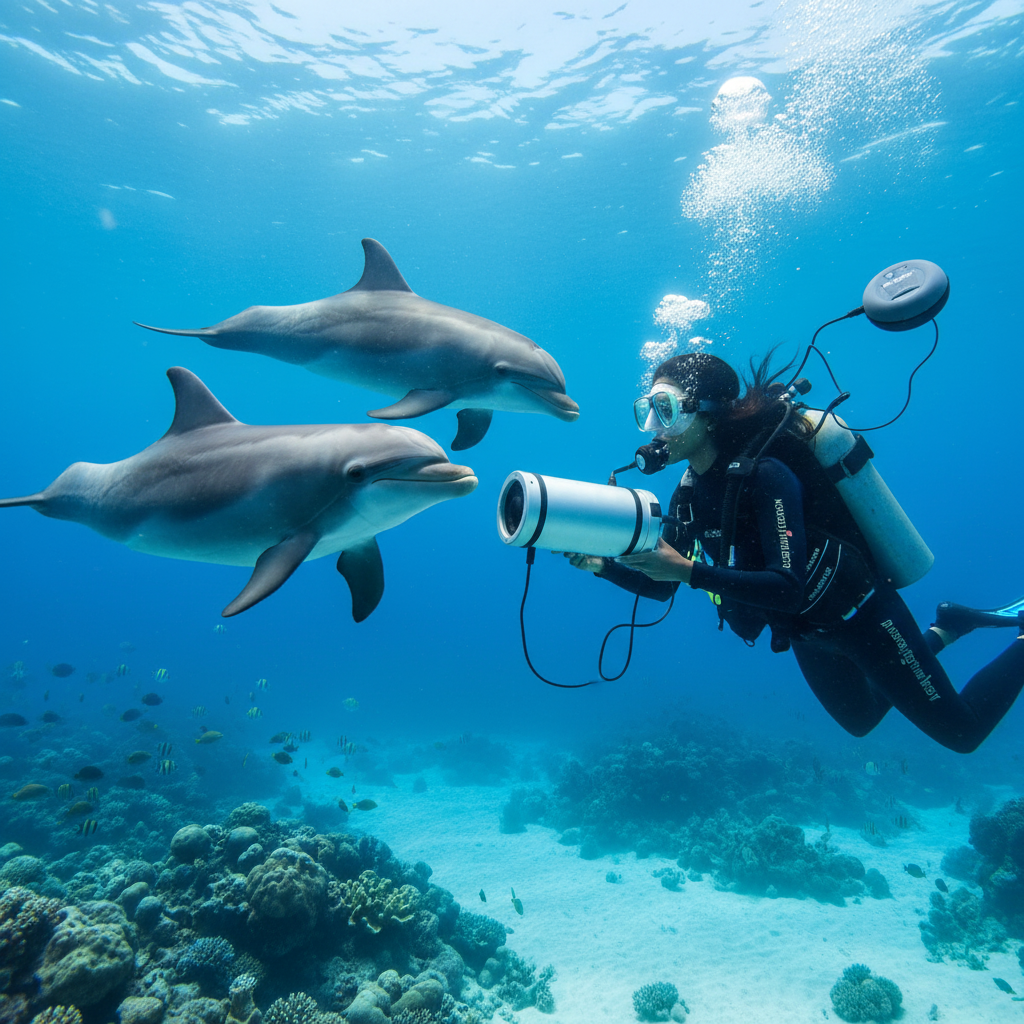
The next step was daring: to send a message to the dolphins.
Sarah set up an underwater speaker and played one of the sound patterns they had decoded — one that seemed to mean hello.
Minutes passed.
Then, from beneath the waves, the same pattern echoed back.
“They responded!” Jake shouted.
Excitement rippled through the team. Sarah replayed another sound — one believed to mean friend.
Again, the dolphins answered.
Suddenly, the pod produced a new sequence of tones that no human had ever recorded.
“They’re teaching us a new word,” David whispered, his voice trembling.
For the first time in history, a true conversation had begun between human and dolphin — a dialogue that bridged two worlds.
Chapter 22 – A Message to the World
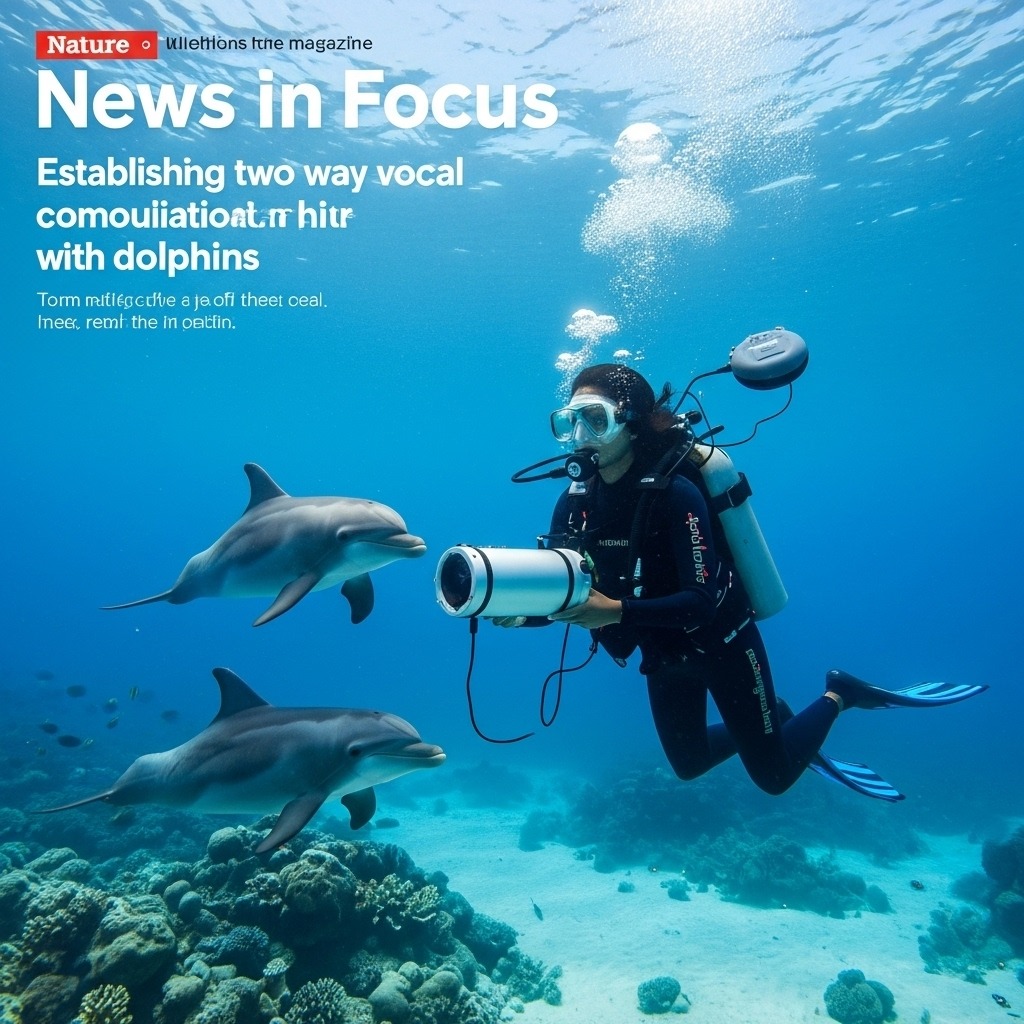
Sarah and David co-authored a paper titled “Establishing Two-Way Vocal Communication with Dolphins.”
It appeared on the cover of Nature.
The global reaction was explosive.
News outlets everywhere hailed the discovery as one of the greatest scientific milestones of the century.
Sarah was invited to the United Nations Environmental Summit, where she addressed world leaders:
“Dolphins are intelligent life forms.
They possess consciousness, dignity, and the ability to communicate with us.
It is time we protect them not merely as animals, but as fellow beings.”
Her words left the audience in stunned silence, followed by a standing ovation.
A paradigm shift had begun.
Chapter 23 – Criticism and Challenge

But fame also brought envy.
Some researchers claimed they could not reproduce Sarah’s results.
Online, anonymous accusations spread — whispers of falsification and luck.
Though hurt, Sarah remained calm.
“All of our data are publicly available,” she said firmly.
“Anyone may verify them.”
Her transparency inspired others to conduct their own studies.
Gradually, labs across the world confirmed similar findings.
“Sarah’s work is genuine,” declared Dr. Kevin Nakamura.
“The problem is that not everyone understands her methods.”
Little by little, the truth emerged once again.
Chapter 24 – The Temptation of Commerce

Then came offers — not from scientists, but from corporations.
A major entertainment company proposed a lucrative partnership.
“We’d like to commercialize an experience where guests can talk to dolphins,” the executive said.
“The profits will be enormous.”
Sarah didn’t hesitate.
“No,” she said quietly but firmly.
“Dolphins are not products. My mission is to protect their dignity.”
The company increased its offer, but her resolve never wavered.
“There are things money can’t buy — trust and friendship.”
Her refusal won widespread respect.
“The true scientist resists profit,” wrote one newspaper.
Sarah never forgot her purpose: everything she did was for the dolphins, not for fame or fortune.
Chapter 25 – The Grown Calf
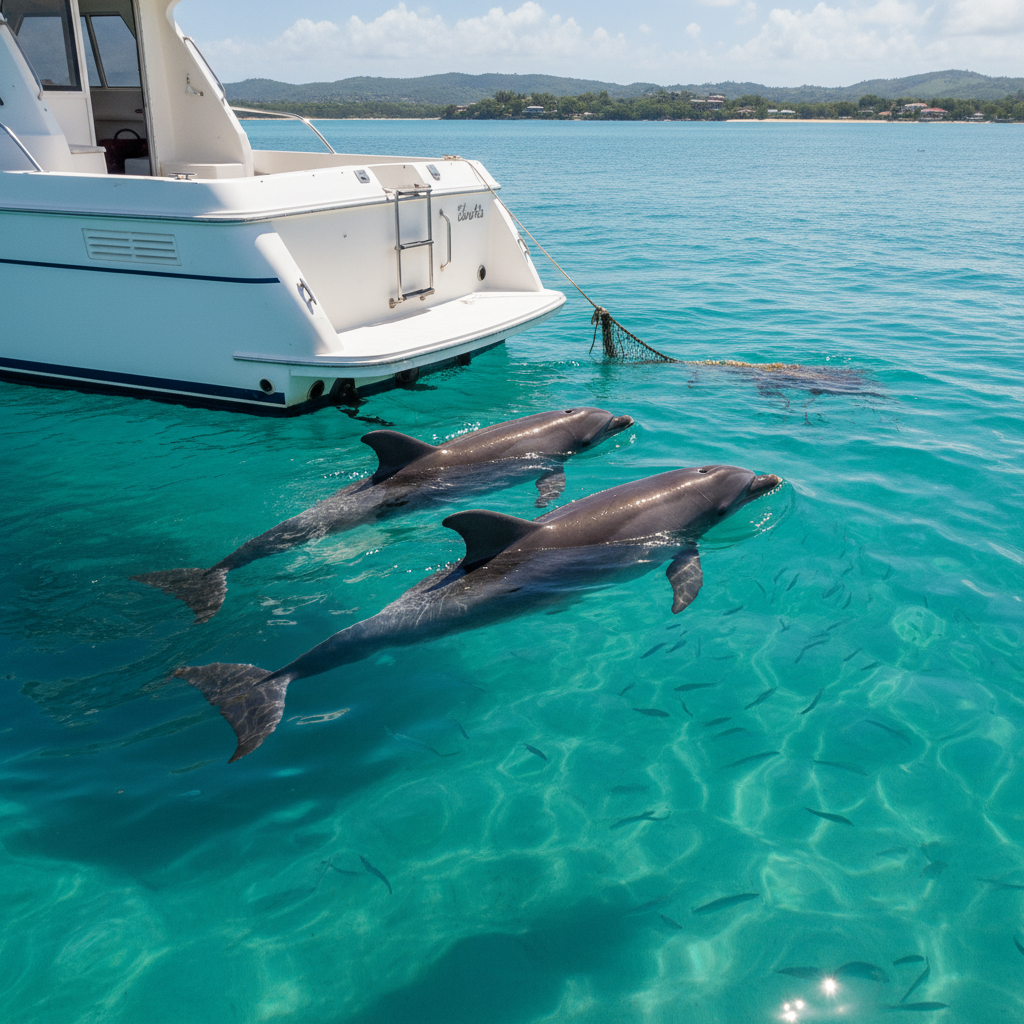
Years passed. The young dolphin Sarah had rescued long ago had grown into a strong adult.
She called him Hope.
Hope was special — bold, curious, and always the first to greet the research vessel.
One morning, Hope appeared with a smaller dolphin beside her.
“A calf,” Jake said softly.
Sarah’s heart swelled.
“New life,” she whispered.
Hope was introducing her child — presenting the next generation to the humans she trusted.
“This is cultural transmission,” David observed.
“Hope is teaching her offspring that humans are friends.”
Trust, passed from mother to child — a bond enduring across generations.
It was exactly what Sarah had always dreamed of.
Chapter 26 – The Arrival of Crisis

The days of peace ended abruptly.
News broke that a large-scale oil drilling project had been approved in the same waters where Sarah’s team conducted their research.
“The environmental impact will be minimal,” claimed the company’s spokesperson.
Sarah’s eyes hardened.
“That area is a crucial habitat for dolphins. Drilling will destroy their way of life.”
She joined forces with environmental organizations to protest.
They organized campaigns, petitions, and rallies.
But the oil company had government permits and powerful backers.
Construction was already underway.
“What can we do?” Jake asked helplessly.
Sarah fell silent.
Ordinary methods wouldn’t stop them.
Then an idea came — bold, impossible, yet undeniable.
“If they won’t listen to us,” she said quietly, “then the dolphins themselves must speak.”
Chapter 27 – The Dolphins’ Testimony
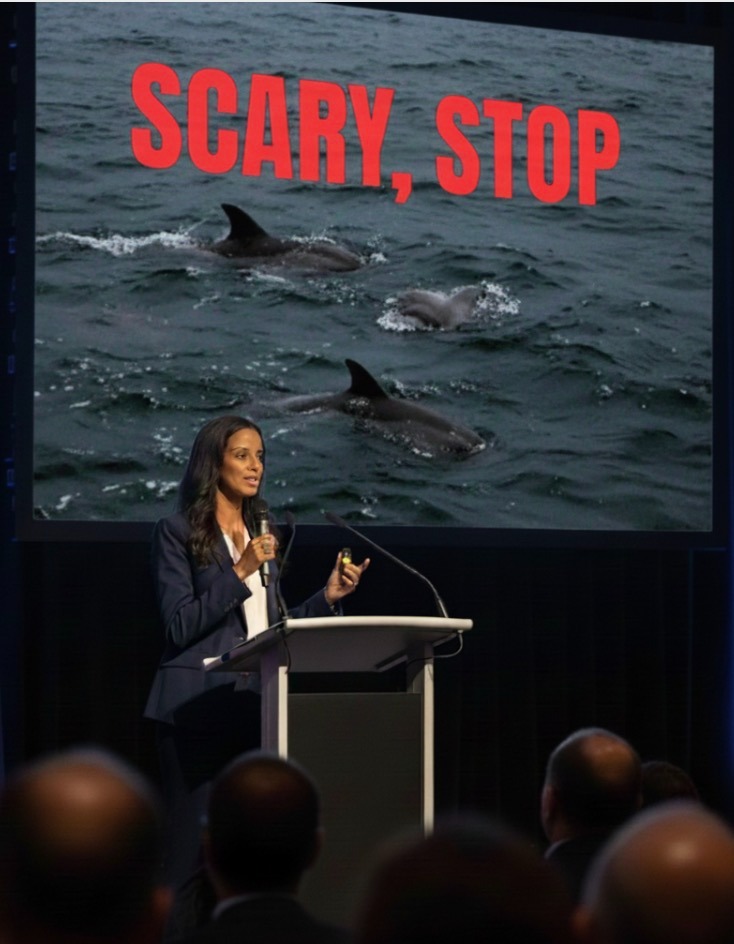
Sarah proposed a daring plan: at the upcoming public environmental hearing, she would let the dolphins’ voices be heard.
Her team worked around the clock to develop a real-time translation system linking underwater microphones to AI software trained on the dolphin lexicon.
On the day of the hearing, the hall was packed with government officials, scientists, and journalists.
Sarah stood before them, calm but resolute.
“Today,” she said, “we will hear directly from the dolphins.”
Gasps rippled through the room.
The underwater mic transmitted live sounds from the sea, and the translation system began displaying words on a large screen:
Danger. Fear. Home.
Then came a familiar voice — Hope’s.
Friends. Help.
The hall fell utterly silent.
Tears welled in the eyes of many present.
It was simple, but it pierced the human heart.
Chapter 28 – The Miracle Decision

A few days later, the government made a stunning announcement.
“The oil drilling project will be canceled.
The region will be designated a Marine Protected Area.”
Nancy Collins, head of the Marine Conservation Agency, declared at a press conference,
“Coexistence with dolphins is more valuable than economic gain.”
Sarah was speechless.
The dolphins’ own voices had changed national policy.
The story made headlines worldwide — “The Day Dolphins Defended Their Own Rights.”
The oil company protested, but public opinion was overwhelming.
The decision held firm.
Sarah stood on the deck at sunset and called out to the sea,
“Hope — you did it!”
From far offshore came the sound of splashing — dolphins leaping as if cheering in triumph.
Chapter 29 – The New Law

The event became the catalyst for a groundbreaking piece of legislation:
the Marine Intelligent Life Protection Act.
The law recognized dolphins and whales as intelligent beings, granting them special protection and banning development in their habitats.
“This is the first law of its kind,” explained Marcus Williams, one of the lawyers who drafted it.
“It legally acknowledges the rights of intelligent marine life.”
Sarah was invited to the signing ceremony.
As she shook hands with the president, he said,
“You have changed the world.”
But Sarah smiled modestly.
“I didn’t change it,” she replied. “The dolphins did.
I only became their voice.”
Chapter 30 – A Wave Spreading Worldwide

Sarah’s success inspired the entire planet.
Countries such as Australia, New Zealand, Japan, and many across Europe began passing similar laws.
The International Whaling Commission adopted a resolution banning all commercial use of dolphins and whales.
“The relationship between humanity and marine life is undergoing a fundamental transformation,” declared the UN Secretary-General.
Sarah traveled from nation to nation, sharing her research and experience.
“This is only the beginning,” she told scientists everywhere.
“One day, we may communicate with other species too.”
The dream of genuine coexistence between humans and animals no longer felt like fantasy — it was becoming reality.
Chapter 31 – Jake’s Departure

Time passed, and with it came change.
Jake made a decision that surprised everyone:
he would join a whale research project in Antarctica.
“Sarah,” he said, “I want to share what I’ve learned from you — to carry your mission forward.”
On the day of his departure, the two met at the harbor.
“You’ve been the best assistant I could ask for,” Sarah said, her voice thick with emotion.
Jake smiled.
“No, I’ve been your student — and I always will be.”
They hugged tightly.
“Let’s stay in touch. And one day, we’ll work together again.”
“Of course,” Sarah replied.
The ship pulled away from the dock, slowly shrinking against the horizon.
Sarah kept waving until it vanished.
The farewell was bittersweet, but she was proud — proud of the new path he was taking.
Chapter 32 – The Next Generation

To fill Jake’s role, Sarah welcomed a new researcher — Maya Patel, a young scientist from India.
“Dr. Coleman,” Maya said eagerly, “I read your paper, and it changed my life.
That’s why I chose this field.”
Her eyes shone with the same curiosity and passion Sarah once had as a young scientist.
Sarah smiled.
“Then let’s push the boundaries of understanding even further — together.”
The two bonded immediately and soon launched a new project:
a detailed study of dolphin society and culture.
“They have a world richer than we can imagine,” Maya said.
“Our job is to uncover it.”
Sarah nodded.
The journey of discovery continued, now guided by new hands and minds.
Chapter 33 – The Death of Hope

Ten years later, heartbreaking news arrived.
Hope, the dolphin Sarah had rescued so long ago, had died of old age.
Sarah was devastated.
“She changed my life,” she said through tears.
The dolphins mourned too. For days, the pod gathered around Hope’s body, floating silently —
a ritual of farewell.
“This is a mourning ceremony,” Maya whispered, recording the scene.
Sarah scattered flowers into the sea.
“Thank you, Hope. You were the bridge between humans and dolphins.”
As the petals drifted, Hope’s descendants appeared and swam around the ship in gentle circles —
a wordless goodbye, a living bond passed to the next generation.
Hope’s legacy lived on, not just in memory, but in the hearts of all who followed her.
Chapter 34 – The Memorial Center
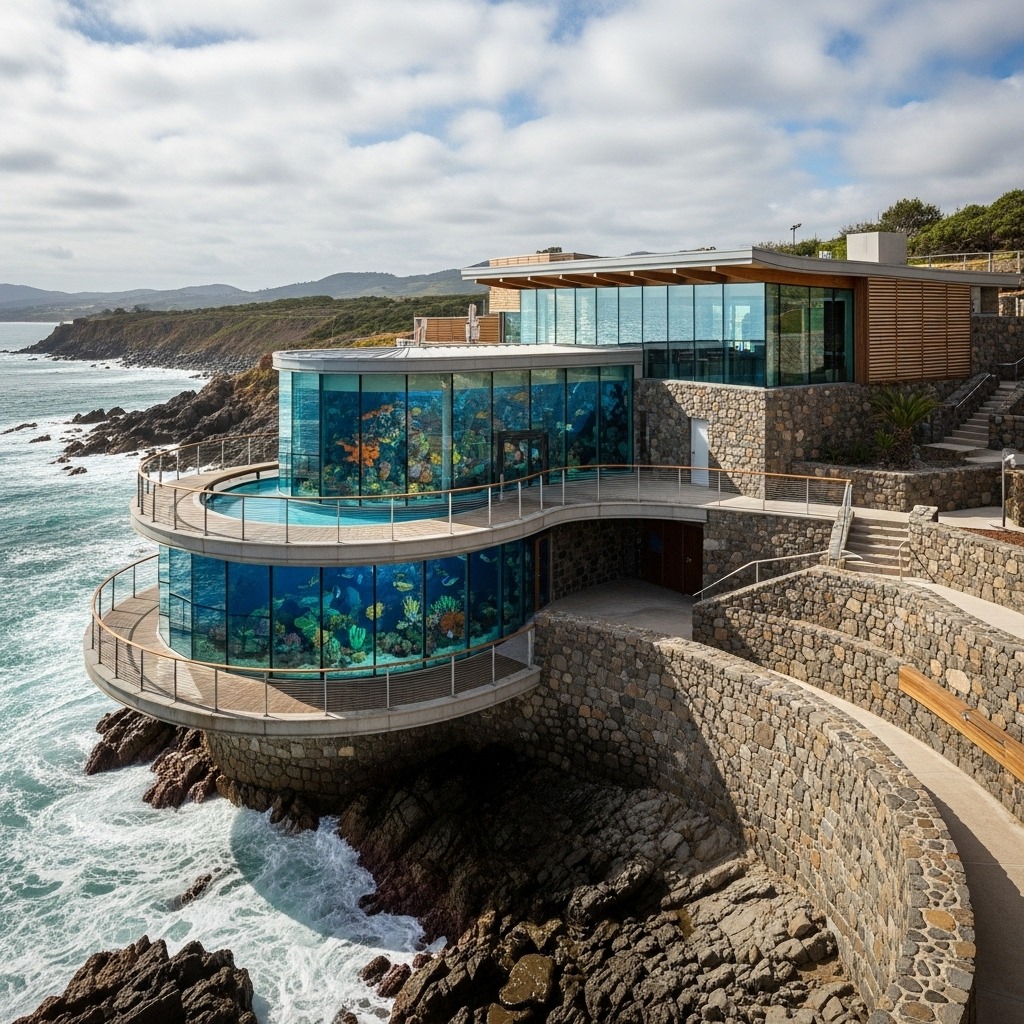
To honor Hope, Sarah decided to establish a marine education center.
Donations poured in from around the world, quickly surpassing expectations.
Soon, a beautiful facility stood along the coast — the Hope Marine Communication Center.
The center featured interactive exhibits, educational programs, and real dolphin recordings for children to study.
At the opening ceremony, guests came from across the globe.
“This center,” Sarah said in her speech, “is both a place of learning and a place of hope.
May the next generation grow here — as guardians of the sea.”
A bronze statue of Hope stood proudly at the entrance, welcoming all who came to listen to the voices of the ocean.
Chapter 35 – The Power of Artificial Intelligence
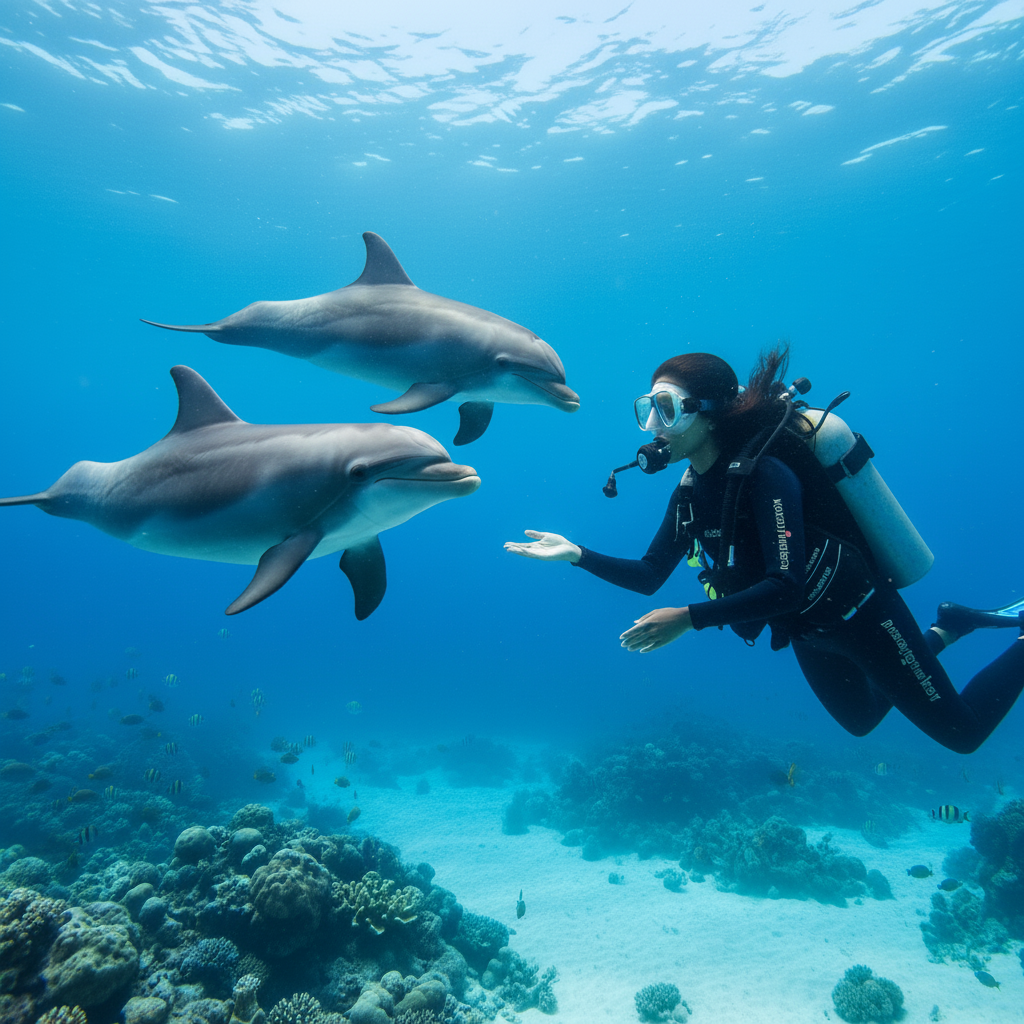
As technology advanced, Sarah’s research reached new frontiers.
AI engineer Raj Mehta developed a machine learning system capable of analyzing dolphin sounds with astonishing precision.
“This system can detect subtle nuances we’ve never noticed,” Raj explained.
The AI could even estimate emotional states — joy, curiosity, affection, anxiety.
“It’s like glimpsing into their inner world,” David marveled.
Using this new technology, Sarah deepened her connection with the dolphins.
Technology and nature were no longer opposites — they were partners.
A new door to the future had opened.
Chapter 36 – A View from Space

One day, Sarah received an unexpected message from NASA.
“Dr. Coleman,” said Dr. Eric Chan, an astrobiologist, “we’d like your expertise for our extraterrestrial communication project.”
He continued, “Your work with dolphins — establishing contact with a nonhuman intelligence — is the perfect model for preparing to communicate with life beyond Earth.”
Sarah was astonished, but intrigued.
“You’re right,” she said thoughtfully. “The methods might be similar.
To reach the unknown, we must begin with empathy, not conquest.”
She joined NASA’s research team, bridging ocean and space.
“What the dolphins have taught us,” Sarah reflected,
“is that when there is a genuine desire to understand, no barrier is insurmountable.”
The dream of space exploration had found its roots — in the sea.
Chapter 37 – Sarah’s Book
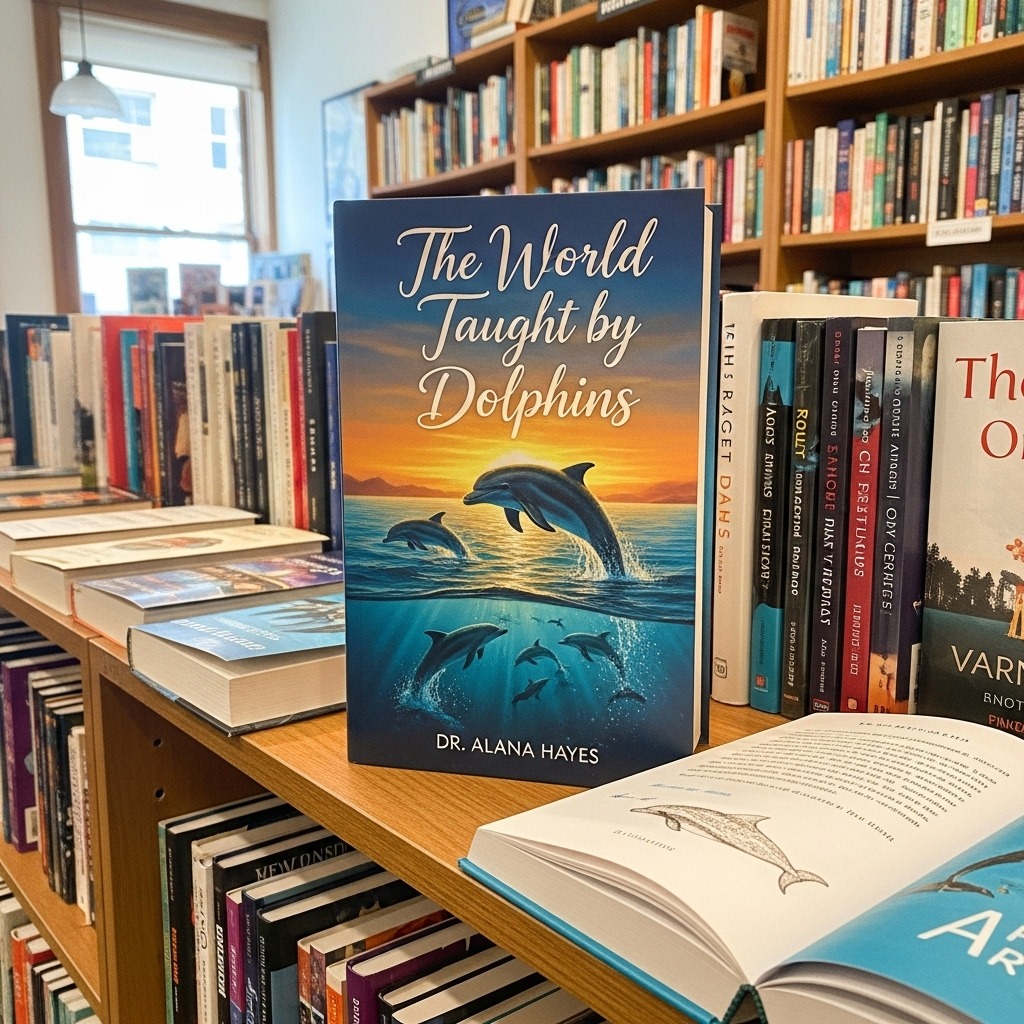
Sarah decided to record her journey — from the first encounter to the scientific revolution that followed.
Her book, titled “The World the Dolphins Taught Me,” blended science with personal reflection.
Upon publication, it became a global bestseller, translated into thirty languages and read by millions.
Letters poured in from readers everywhere:
“This book changed my life.”
“I see the ocean and all living things differently now.”
Sarah embarked on a world lecture tour.
Crowds filled auditoriums to hear her speak.
She was no longer only a scientist — she had become a storyteller, a teacher, and a messenger of hope.
Her influence now reached far beyond academia.
Chapter 38 – The Final Voyage
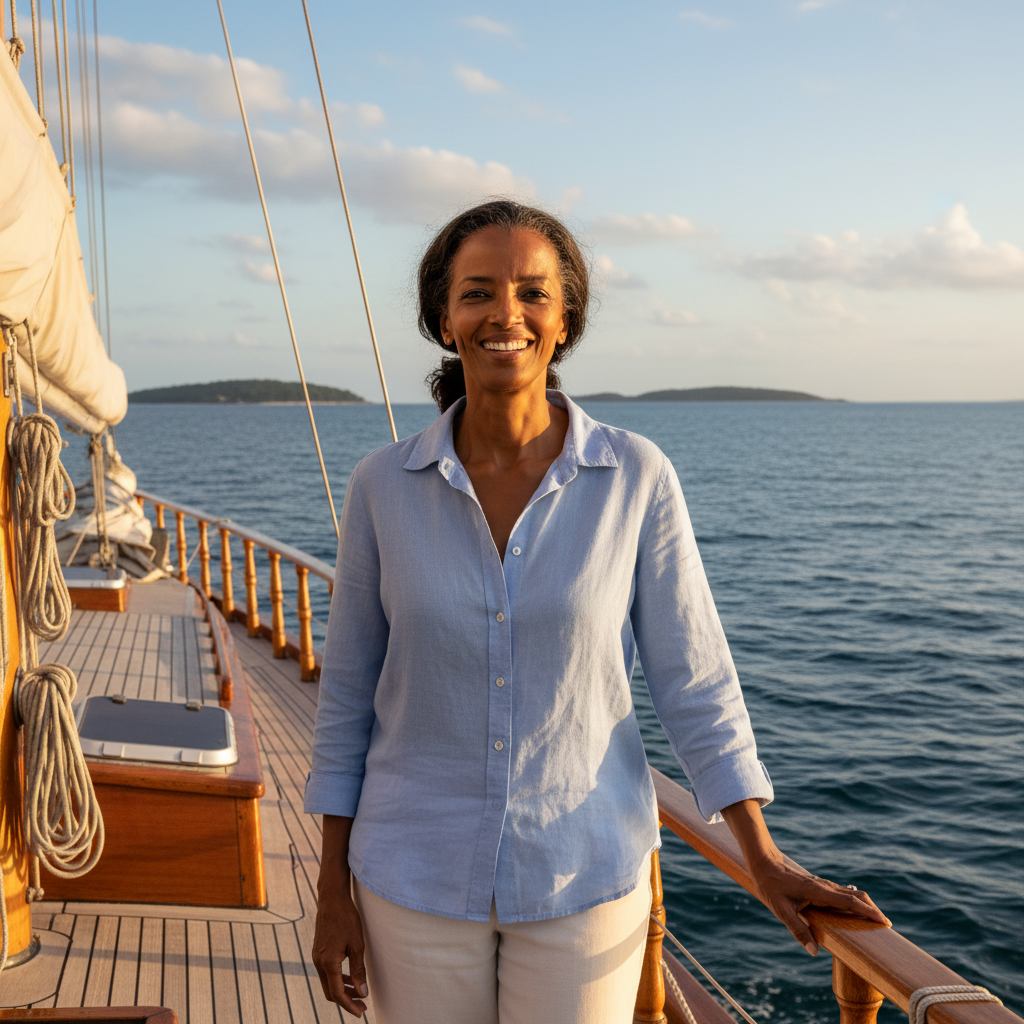
At the age of seventy, Sarah began her last great project —
a six-month expedition to follow the Pacific migration routes of dolphins.
“This will be the culmination of my life’s work,” she told Maya.
By then, Maya had become an accomplished researcher herself.
“I’ll come with you,” she said.
Even David Crawford, now elderly, insisted on joining.
“Let me see it through — to the very end.”
Old friends and new students gathered aboard the ship.
On the day of departure, thousands came to the harbor to see them off.
As the vessel glided from shore, a pod of dolphins appeared, escorting them —
as if offering their blessing for the journey ahead.
Chapter 39 – The Final Discovery
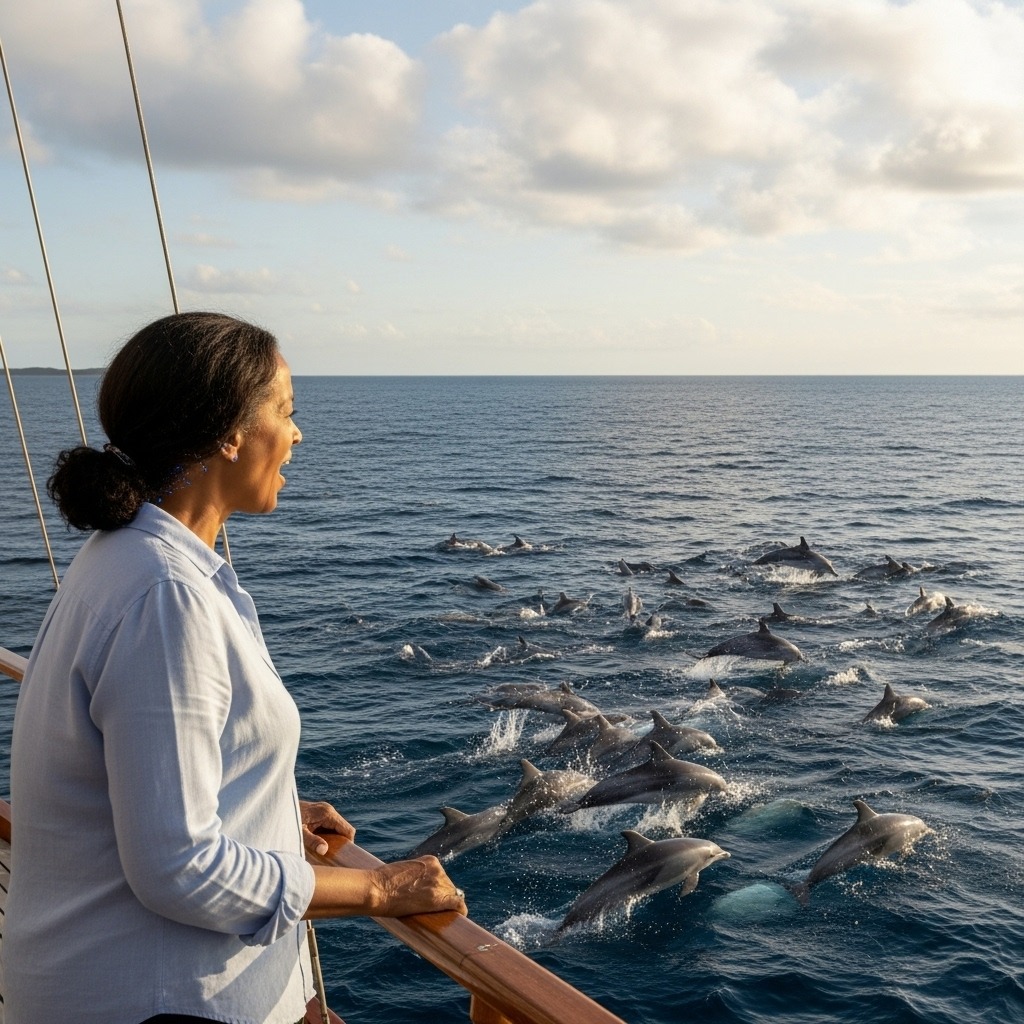
On the last day of the voyage, something extraordinary happened.
Hundreds of dolphins gathered, forming intricate patterns across the sea’s surface.
At the center of the formation were Hope’s descendants.
“This is… a gathering,” Maya whispered, awestruck.
The underwater microphones picked up a complex series of sounds — unlike any they had heard before.
The AI translator began to process the data, and words appeared on the screen:
“Long ago, humans saved one of us.
We remember.
We tell the story.”
Tears streamed down Sarah’s face.
That single act of compassion years ago had become legend —
passed down through generations of dolphins as living history.
Their gratitude had become part of their culture.
Chapter 40 – An Eternal Bond

When Sarah’s ship returned to port, the world awaited her report.
“Dolphins have history,” she told the press.
“They remember the past and pass it on to the future — just like humans do.”
Her discovery shook the world.
The United Nations created a new category: “Trans-Species Cultural Heritage.”
The stories of dolphins were now recognized as treasures to be preserved.
Sarah felt her mission was complete.
The journey that began with a desperate SOS had transformed humanity’s understanding of life itself.
She retired to a small house by the sea.
Each morning, she would gaze at the horizon — and without fail, dolphins would appear.
Among them were Hope’s descendants.
“Thank you,” she whispered.
“You gave my life meaning.”
The sound of waves blended with the dolphins’ calls —
a conversation without end, between human and ocean.
Sarah smiled.
Her life, she knew, had been truly fulfilled.
And the bond between humans and dolphins would live on — forever, carried by the tide and by memory.