
Earth is full of weird stuff that even today’s scientists can’t figure out. These mysterious spots keep researchers scratching their heads, asking the same questions: Why does this happen? How is this even possible? Here are 15 places around the world where nature throws science a curveball, and we’ve ranked them from strange to absolutely mind-blowing.
About the Author
Former Journalist
Lily Parker
Hi, I’m Lily Parker from the Planet Life editorial team. As a former journalist, I’ve honed my research skills, and I’m passionate about exploring global cultures. I write about unique traditions and fascinating customs from around the world. My goal is to spark your curiosity and show you a different side of the planet.
No. 15: Fly Geyser (USA)

Appearing out of nowhere in the desolate Black Rock Desert of Nevada is a brightly colored geyser unlike any other. This is the Fly Geyser. It’s not a natural wonder; it was accidentally created in 1964 during an attempt to drill for geothermal energy. The well struck high-temperature water about 40 meters underground, and for over 60 years, it’s been continuously spouting a column of water up to 1.5 meters high.

The geyser’s most striking feature is the vibrant mineral terraces it has created. The brilliant colors of red, green, and yellow are produced by a chemical reaction between the minerals in the hot water and various types of algae and bacteria, making the landscape look otherworldly. However, why such a wide and vivid array of colors appears is not yet fully understood by scientists. Furthermore, the fact that this specific spot continues to have geothermal activity even without a clear heat source nearby is another one of its great mysteries.
Today, the Fly Geyser is located on private property and is inaccessible to the public, though it can be viewed from a distance or on platforms like Google Earth. Dubbed a “miracle of the desert,” this sight is a testament to the unexpected beauty that can arise from a human mistake.
No. 14: Valley of Thunder (Venezuela)

In Lake Maracaibo in northwestern Venezuela, a phenomenon unlike any other in the world is taking place. Known as “Catatumbo’s Lightning,” it’s a series of lightning strikes that occur with an unbelievable frequency. The lightning can appear for up to 10 hours a day on about 250 days a year, with up to 300 lightning strikes per minute.
This lightning is particularly unique because it’s almost always silent, creating a mesmerizing light show over the lake at night. While it is thought that the Andes Mountains and humid air from the Caribbean Sea play a role, it remains a mystery why the lightning is so heavily concentrated in this one specific location.

This phenomenon has been known for over 500 years, with local indigenous people revering it as “the battle of the gods.” According to NASA observations, Catatumbo’s Lightning also plays an important role in the global environment by helping to regenerate the ozone layer, suggesting it is more than just a simple weather event. After the lightning temporarily stopped in 2010, sparking fears of a link to climate change, it has since returned and is now as active as ever.
No. 13: Gates of Hell (Turkmenistan)
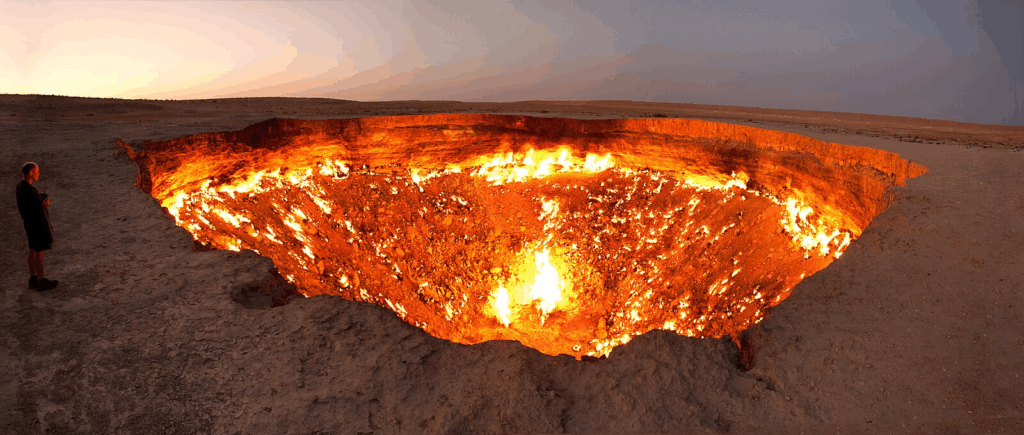
In the Karakum Desert of Turkmenistan, a scene unfolds that looks as if the gates of hell have opened up on Earth. This is the Darvaza gas crater, an enormous 70-meter-wide crater that has been on fire for over half a century, since 1971.
The crater was originally a sinkhole that formed during a natural gas drilling expedition. To prevent the spread of toxic gases, geologists decided to set the gas on fire, thinking it would burn out in a few days. Instead, the flames have been burning continuously ever since. While geologists initially thought the fuel would be depleted in a few years, the underground gas field turned out to be far more abundant than expected, causing the fire to intensify rather than diminish.
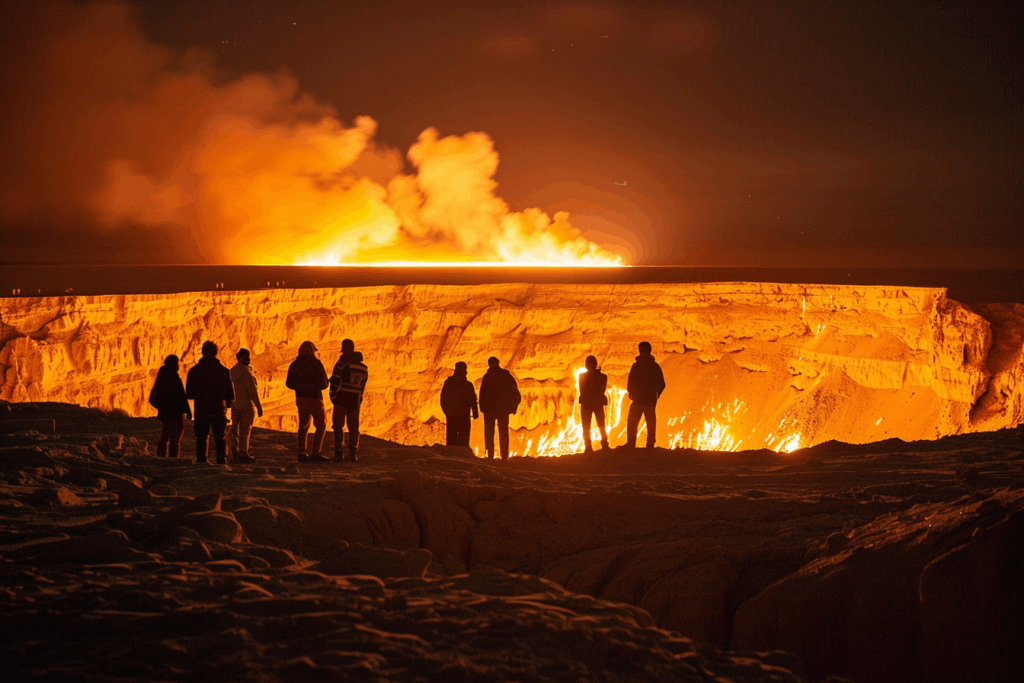
At night, the massive flames illuminate the desert, creating a spectacular scene that truly earns its nickname, the “Gates of Hell.” The temperature around the rim can exceed 50 degrees Celsius (122°F), making it difficult to approach, but tourists from all over the world still flock to see this otherworldly sight. The government has considered extinguishing the fire to prevent the waste of fuel, but it has not yet been able to due to a number of technical challenges.
No. 12: Eternal Flame Falls (USA)
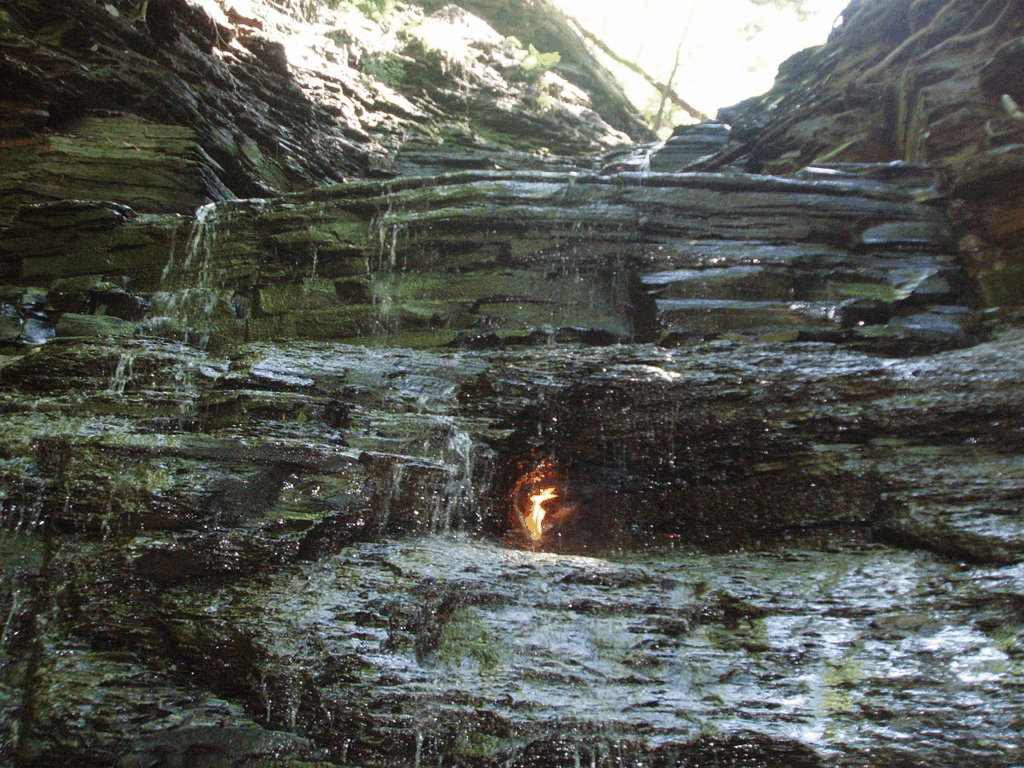
In the Shale Creek Preserve in New York State, you’ll find a place where natural wonder and scientific mystery collide. It’s the Eternal Flame Falls, a strange phenomenon where a small flame burns continuously behind a waterfall. The fire, about 20 centimeters tall, glows without fail as water cascades down the rock face in front of it.
The cause of the flame is natural gas—mostly methane—seeping from a crack in the rock. However, geologists are puzzled because this type of rock formation doesn’t typically produce a continuous gas flow. What’s even more fascinating is the way the fire and water coexist. The flame is thought to be burning in a small, cave-like recess, shielded from the water’s direct flow, a breathtaking balance that seems like a true miracle of nature.
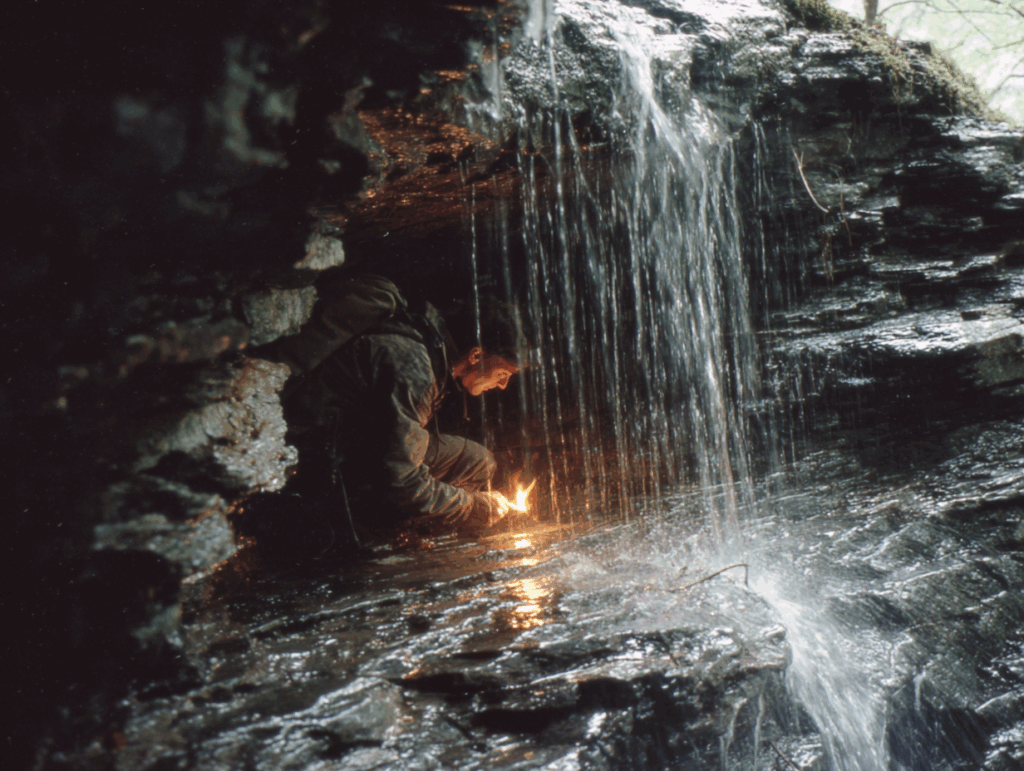
While strong winds can sometimes extinguish the flame, it can be easily reignited, a testament to the wonders of this place. The Eternal Flame Falls is a compelling reminder that the Earth’s internal processes can manifest as small, ongoing miracles right before our eyes.
No. 11: Horsk Song (Denmark)

Source:opdagdanmark
On Denmark’s Bornholm island, there’s a massive granite formation that literally makes music. When weather conditions are just right, these rocks produce beautiful, haunting sounds that actually sound like hymns. Locals call them the “Singing Stones.”
Scientists think wind blowing through holes and cracks creates the sound, but they can’t explain why it sounds so much like actual music or why it only happens sometimes. Vikings knew about this centuries ago, and it still only happens a few times a year.
The craziest part? Even if you record it, you can’t recreate the sound artificially. It’s like the rocks are performing live concerts that can’t be reproduced.
No. 10: Spotted Lake (Canada)

Source:WIKIMEDIA COMMONS
Every summer, Canada’s Spotted Lake turns into nature’s polka-dot masterpiece. Hundreds of colorful spots—green, yellow, blue, white—cover the entire lake surface like a giant artist’s palette.

Source:WIKIMEDIA COMMONS
When the water evaporates, minerals like magnesium sulfate and calcium crystallize into these perfect circles. But nobody knows why the patterns are so regular and bright, or why they change size and color with the seasons.
The local Okanagan First Nation considers this lake sacred and keeps it off-limits to visitors. They call it a “living lake” because it’s constantly changing, and honestly, that’s a pretty perfect description.
No. 9: The Devil’s Millstone (USA)

Source:pixabay
At Judge C.R. Magney State Park in Minnesota, the Brule River splits around a rock. Half the water flows downstream like normal. The other half disappears into a hole called “The Devil’s Millstone,” and nobody knows where it goes.
Nobody knows how deep this thing goes. Scientists have dropped GPS trackers, dye, and ping-pong balls into it, but nothing ever comes back out. Normally, water travels through underground channels and pops up somewhere downstream, but not here.

Source:pixabay
The local Ojibwe people won’t go near it—they call it “the home of evil spirits.” After all the failed experiments, you can see why they’d think that.
No. 8: Lightning Field (USA)

Source:WIKIMEDIA COMMONS
In the New Mexico desert, artist Walter De Maria installed 400 stainless steel poles in a perfect grid back in 1977. It’s called “Lightning Field,” and during thunderstorms, it becomes nature’s most dangerous light show.

Image created by Midjourney
When storms roll through, lightning jumps from pole to pole, creating curtains of electricity that connect the ground to the sky. During summer storm season, people have counted dozens of strikes in a single night, with electricity literally dancing between the poles.
Since you can’t predict lightning, seeing this spectacle is pure luck. It’s like nature’s ultimate slot machine, except this jackpot could actually kill you.
No. 7: Magnetic Hill (Canada)

Source:WIKIMEDIA COMMONS
At Magnetic Hill in New Brunswick, Canada, cars appear to roll uphill by themselves when you put them in neutral. People have been reporting this since the 1930s, and it’s become a major tourist attraction.
Scientists say it’s just an optical illusion—the slope looks like it goes up when it actually goes down because of how the surrounding landscape tricks your eyes. But some visitors report weird compass readings and GPS glitches that suggest something else might be going on.
Even though geological surveys haven’t found any unusual magnetic fields, people keep insisting they feel some kind of mysterious force. It’s become a place where science meets the unexplained.
No. 6: Moving Stones (USA)

Source:WIKIMEDIA COMMONS
For the past 80 years, something absolutely bizarre has been happening at California’s Death Valley. Massive rocks—some weighing hundreds of pounds—slide across the desert floor by themselves, leaving mysterious trails behind them.
Scientists finally cracked this mystery in 2014. On rare winter nights, a thin layer of ice forms on the usually dry lake bed. When the sun comes up and the ice starts melting, gentle winds push the floating ice sheets, which then shove the rocks around.
But here’s the thing: the right conditions only happen every few years, so actually seeing it happen is incredibly rare. The rocks are still out there, still moving, still keeping Death Valley mysterious.
No. 5: Blood Falls (Antarctica)

Source:WIKIMEDIA COMMONS
Antarctica’s Taylor Glacier has what looks like a wound that bleeds bright red water through pure white ice. Scientists have been puzzled by it since it was discovered in 1911.
At first, people thought red algae caused it. Turns out, there’s a saltwater lake that’s been trapped under the glacier for 4 million years with no oxygen. When this ancient water hits air, the iron in it rusts instantly, creating that blood-red color.
Even cooler, there are microorganisms living in this extreme environment without any oxygen. This could help us understand alien life. The glacier basically acts like it’s alive, bleeding whenever it moves.
No. 4: Kawah Ijen Volcano (Indonesia)

Source:journeyera
Most volcanoes have red or orange flames, but Indonesia’s Kawah Ijen produces incredible blue fire at night. It’s like someone switched the color settings on a volcano.
Sulfur gas burning at about 1,100°F creates these electric blue flames. The crater lake is so acidic (pH below 0.5) that it’s basically a giant pool of battery acid. Local sulfur miners work in this hellscape without proper protection, which shows just how tough humans can be.
You can only see the blue flames at night during dangerous climbs, making it both beautiful and potentially deadly. It’s nature’s most extreme light show.
No. 3: Bioluminescent coast (Maldives)

Source::makemytrip
Around Vaadhoo Island in the Maldives, the ocean glows blue at night when waves crash on the beach. It looks like the sea is full of fallen stars.
Tiny organisms called dinoflagellates (basically “sea fireflies”) light up when disturbed by waves or footsteps. But nobody knows why they only show up consistently in certain spots around the Maldives, or why their glow changes so dramatically with the seasons.

Image created by Midjourney
Local fishermen call this the “stars of the sea.” It’s especially bright during full moons, creating a mind-blowing sight where the starry sky mirrors the glowing ocean below.
No.2 : The Silent Zone (Mexico)

Source:atlasobscura
In northern Mexico’s Bolsón de Mapimí desert, there’s a 20-square-mile area where radio, TV, and cell phone signals just die. A crashed U.S. missile in 1970 showed that nothing with a signal works here.
Scientists think underground magnetite deposits block radio waves, but they can’t explain why it affects such a huge area. Even weirder, plants and animals here show mutations—cacti grow abnormally large, and flowers bloom in colors that don’t exist anywhere else.
There have been tons of UFO sightings here too. Whether that’s connected or not, researchers around the world see this place as Earth’s own dead zone, completely cut off from modern civilization.
No.1 : Hesdalen Light (Norway)

Source:atlasobscura
Since the 1980s, Norway’s Hesdalen Valley has been home to mysterious lights that appear in the sky. White, yellow, and red orbs zip around at incredible speeds—some clocked at over 18,000 mph—stop on a dime, or just hover in place.
Research teams have studied these lights for decades, but nobody has a clue what’s actually causing them. Some theories include plasma phenomena, unknown atmospheric electricity, or lights from underground geological activity. But none have solid proof.
What’s really wild is that these lights seem to move intelligently, almost like they know they’re being watched. People still report dozens of sightings every year, and there’s a 24/7 monitoring station streaming live data. It’s science’s ultimate unsolved mystery, happening right now.
Did you enjoy the journey? Every single one of these places challenges our basic understanding of the world. It seems there’s still so much we don’t know about a world that science can’t fully explain.
Which of these places captured your imagination the most? This site has many more stories and wonders from around the world to explore, so be sure to check out our other articles.


.jpg)

